Newsletter
Newsletter Support JNS

Israel begins border negotiations with Lebanon

As a goodwill gesture, Israel transferred to its northern neighbor three Lebanese detainees.

Lebanon Border
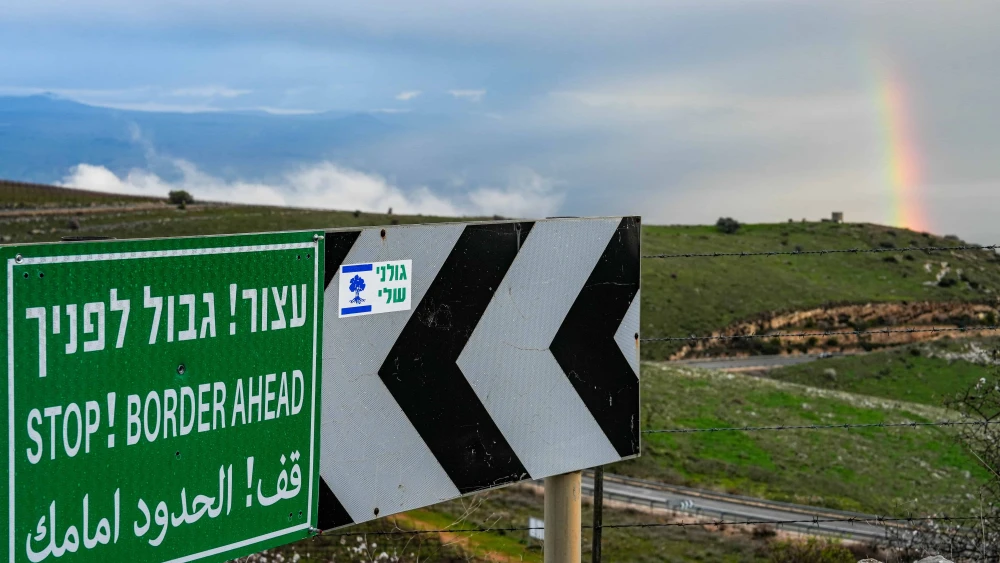
A warning sign on the border between Israel and Lebanon, Feb. 12, 2025. Photo by Ayal Margolin/Flash90.

Israel and Lebanon on Tuesday initiated negotiations towards settling the border between the two countries.

Representatives of the Israel Defense Forces, the United States, France and Lebanon agreed during a meeting in Naqoura in Southern Lebanon to establish three joint working groups aimed at stabilizing the region.

The working groups will focus on three main issues: The five strategic points in Southern Lebanon that remain under Israeli control following the expiration of the Israel-Lebanon ceasefire, discussions regarding the Blue Line and remaining territorial disputes between the two countries, and the status of Lebanese detainees held by Israel.

As part of these developments, and in coordination with the United States, five Lebanese detainees were transferred from Israel to Lebanon as a gesture of goodwill to Lebanon’s newly elected president. The detainees were transferred via the Rosh Hanikra crossing, escorted by a Red Cross convoy.

This is an edited version of a story originally published by Israel Hayom.

Shachar Kleiman is an Arab affairs correspondent for Israel Hayom.
“It looks as if the Genocide Caucus in Congress will continue to grow,” Dan Schnur, a political science lecturer, told JNS.
Ahead of the JNS Summit, the Bosnian Serb leader explains her strong support for the Jewish state and warns of Iranian influence in the Balkans.
A coalition of Jewish groups called the law “an important step forward, giving law enforcement and prosecutors additional tools to protect targeted communities and hold offenders accountable.”
The participation of campus-affiliated groups like CUNY for Palestine “openly encouraging and providing support for terrorism and extremist ideologies,” Jayne Zirkle of EndJewHatred told JNS, “represents a serious challenge that universities can no longer ignore.”
After 35 years working across the continent, entrepreneur Haim Taib tells JNS he sees it as the next frontier for Abraham Accords cooperation.
The Islamic Republic is seeking to recover economically and militarily through the memorandum of understanding with the U.S., while avoiding any relinquishment of long-term strategic assets.