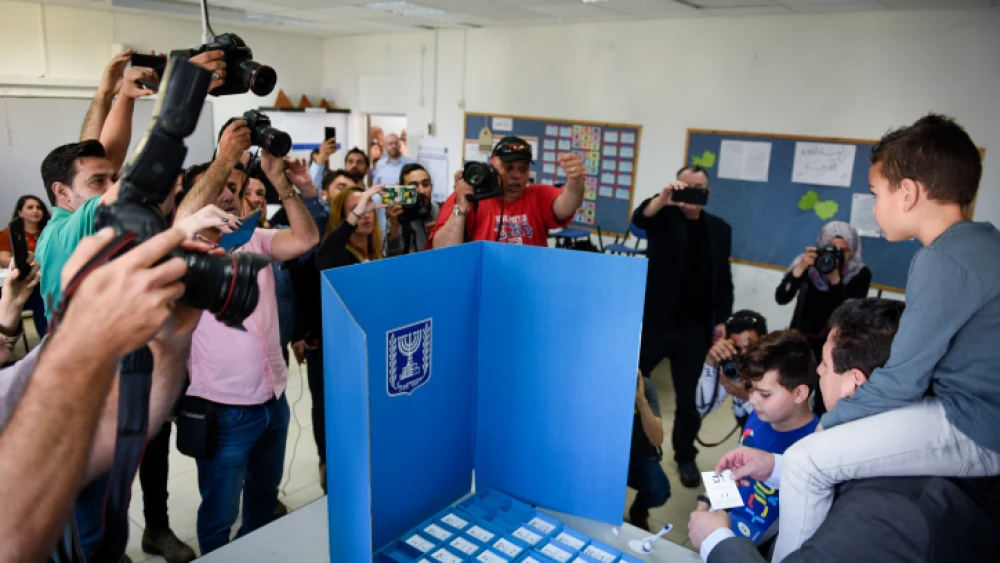
The Likud Party confirmed on Tuesday that it had deployed hundreds of cameras at polling stations, primarily in Arab voting centers, to record instances of voter fraud.
Likud attorney Koby Matza said the devices were visible, and put in place in areas “where there is a significant concern about fraud.” Police contradicted the assertion, saying the cameras were hidden in the shirts of Likud representatives at polling stations.
Representatives of all parties are stationed at polling stations around the country, in an effort to ensure fairness.
The Central Elections Committee banned the cameras, saying it was illegal to film voters at ballot stations, and that only police and elections officials could examine footage taken at the polls.
“The cameras were intended to ensure a fair vote,” said Matza. “The problem is in the behavior of those people in the Arab community. I’m getting reports from polling stations all over the country where our representatives, of Likud especially, are kicked out of the polling stations in the Arab sector.”
An estimated 1,200 polling station observers were found to possess cameras, which were subsequently removed in light of stricter guidelines on what is allowed and forbidden at the ballot box.
One young man was found trying to hide a camera in the Bedouin town of Rahat in southern Israel in an effort to record actions by voters, which would lead to the disqualification of the polling station.
“A notice to the Secretaries of the Legal Counsel to the Central Elections Committee Members of the Ballot Committee and/or other officials, including the Secretary: It is forbidden to photograph voters or the voting process,” the Elections Committee said in a statement. “It is permitted to take photographs only in cases of exceptional events in order to report an incident, and in the event of a forbidden photograph, the police or the committee’s representatives must be updated and reported to the committee’s event management room.”
The embedding of cameras was criticized by the Arab parties Hadash Tal and Balad, which accused the “extreme right” of trying to “deter the Arab pubic from voting.”
On Saturday, an anonymous Twitter user said the details of 6 million Israelis had been stolen, leading to concerns that the election-related system had been compromised.
Government officials told Ynet’s Calcalist that the election system was still safe and argued that the screenshot of personal information of several dozen Israelis, which had been allegedly posted online by hackers, was missing key data points, leading them to believe that the hack—named “OpIsrael”—may actually be fake.
The matter is under investigation by Israel’s Cyber Directorate.