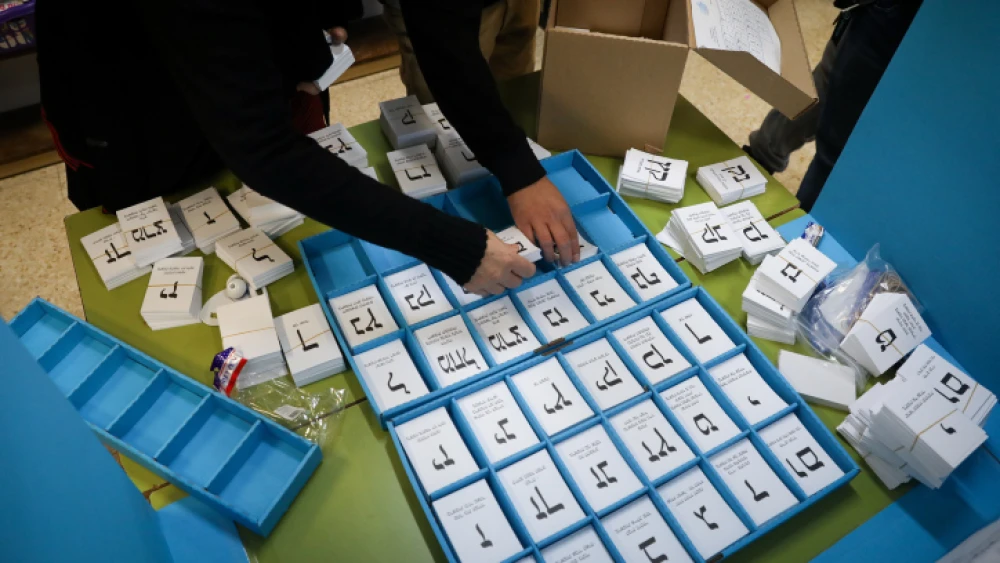
Israelis began voting at 7 a.m. local time on Tuesday in an election to determine the composition of the 25th Knesset.
Some 6,788,804 people are eligible to cast a ballot at more than 12,000 stations set up across the country. Thirty-nine parties are running in the election.
The polling stations will be operated by some 60,000 officials, as well as more than 70,000 polling committee members.
Voting closes at 10 p.m., at which point preliminary exit polls will be released.
Some 4,500 Israelis, including diplomats and their family members, security personnel and emissaries of the quasi-official Jewish Agency, were eligible to vote ahead of Nov. 1.
Otherwise, Israel does permit absentee voting.
Three separate final polls prior to Tuesday’s vote showed opposition leader and Likud Party head Benjamin Netanyahu’s right-wing/religious bloc standing one seat shy of a parliamentary majority.
Polls by Channel 12, Channel 13 and the Kan public broadcaster all predicted the Netanyahu-led bloc securing 60 mandates, one short of a majority in the 120-member Knesset.
The surveys all found Prime Minister Yair Lapid’s current coalition partners together garnering 56 seats, with the Arab-majority Hadash-Ta’al faction forecast to receive four mandates.
The election is expected to cost over $150 million, according to the Knesset’s Finance Committee, or about $22 per eligible voter.
Election day is a paid holiday in Israel, and will in addition cost the economy between $733 million and $837 million in lost productivity, according to a June estimate by the Israel Democracy Institute.
Tuesday marks Israel’s fifth national vote in less than four years.