Israeli farmers from Judea and Samaria, the Golan Heights and the Jordan Valley have decided to combat boycott efforts more strongly by more aggressively appealing to consumers.
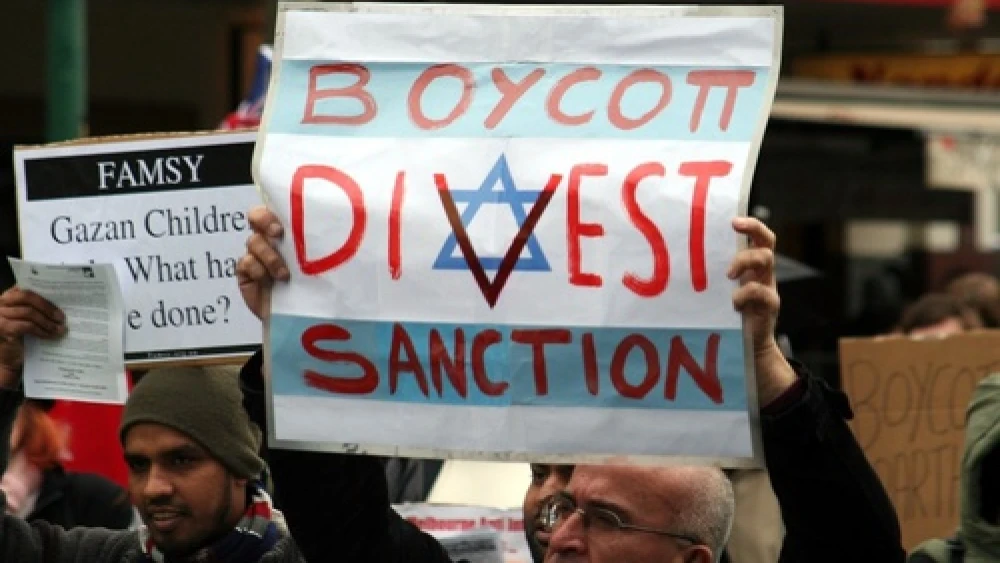
Farmers living in these areas have seen their marketing efforts in Europe suffer repeated blows over the BDS movement’s calls for a consumer embargo on their products, which is in line with the anti-Israel organization’s efforts to delegitimize the Jewish state and especially Jewish communities beyond the Green Line.
Among other things, sales of such products have suffered over the European Union’s demand to label them as originating from beyond the Green Line.
So far, Israeli authorities and farmers have tried to deal with the problem by bypassing export destinations in Western Europe in favor of Eastern Europe and Russia.
Now, the farmers say it is time to “stop hiding.” They plan to move the E.U.-required label—until now made as small as possible—to the front of their packaging and enlarge it. They also plan to invite leaders of public opinion from around the world to visit their facilities.
The new initiative is backed by Strategic Affairs Minister Gilad Erdan, whose office oversees Israel’s battle against the BDS movement.
Jordan Valley Regional Council head David Elhayani, who is promoting this initiative, explained Sunday that “the farmers’ losses have reached 100 million shekels [$27 million] this year alone,” adding that it was “time to do something.”
The two-pronged initiative focuses on marketing and public diplomacy.
Elhayani stressed that proactive marketing efforts were paramount, saying, “We’re already marketing produce from the Jordan Valley around the world, and we plan to push it even more in conferences in the U.S. and Europe. From past experience, we know it works.
“People like our dates, and when they taste them and hear our stories about reality on the ground, we can reach them above the leaders’ heads,” he said.
From a public diplomacy standpoint, the Strategic Affairs Ministry has invited five delegations of public-opinion leaders to visit Judea and Samaria. Each delegation is expected to visit Israel for a week and receive a tour of Israeli farms in the area.