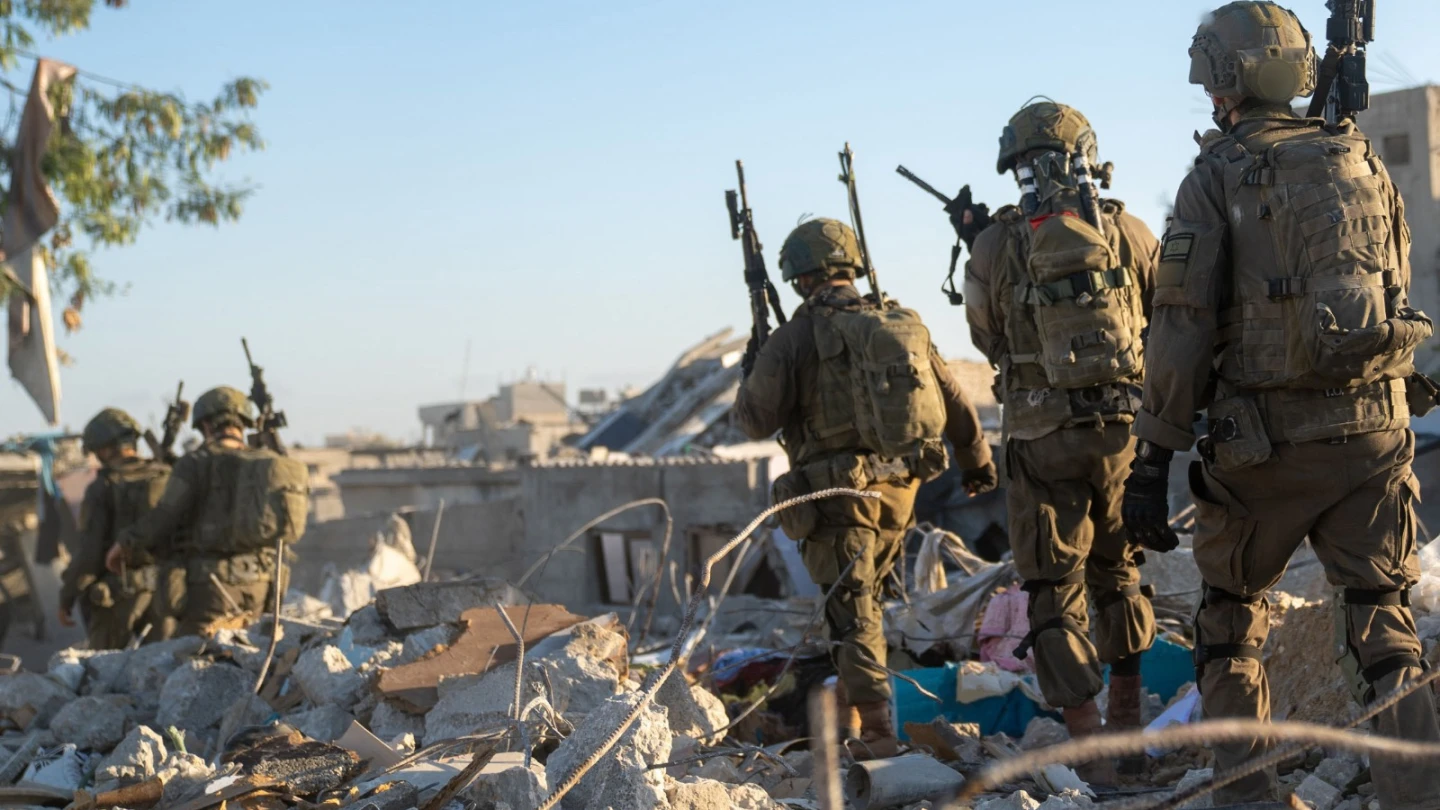
On Israel’s Memorial Day in April, I attended ceremonies in different places across Israel. I stood at the graves of young soldiers in the Israel Defense Forces—those who fell on Oct. 7, like my 21-year-old son Yuval, and those who were killed later, during what are called “days of ceasefire.”
The word “ceasefire” feels almost unbearable in such moments. This essay is an attempt to make sense of it.
There are two ways to look at life. One can see it as a biological fact—an organism exists until it ceases to exist. Or one can understand life as a continuous act of choice—every day, every moment.
Jewish tradition stands firmly with the latter.
Preserving life is not only rational. It is a commandment. “Take great care of yourselves,” the Torah instructs. Maimonides clarifies: Anyone who knowingly endangers himself violates a prohibition.
Life is not our possession. It is entrusted to us. And yet, here a paradox emerges.
The same tradition that elevates life above almost everything else also recognizes kiddush Hashem, the willingness to sacrifice life itself.
How are these two ideas to be reconciled? The answer is complex, and its complexity is part of its integrity.
There are three cases in which one must accept death rather than transgress: idolatry, murder and forbidden relations. In all other situations, live.
The Torah was given so that one may live by it, not die by it. And still, there is a limit.
When a person is asked not merely to survive but to abandon the very core of who he is, when life is offered at the price of meaning, then death may become an expression of fidelity. But here, precision matters.
Heroism is not a goal in itself. Self-sacrifice without clear moral awareness is not a kiddush Hashem, but a tragic mistake.
Jewish classical literature draws this line with clarity. Jonah flees his mission and asks for death. Moses is willing to give up his life for his people. One escapes responsibility. The other embraces it fully.
Today, these questions are no longer theoretical.
War, danger, the tension between life and honor; this is lived reality.
And each time, the tradition responds in the same way: life is sacred—therefore, its preservation is a commandment. But the willingness to give it up for something higher may also be a commandment of a different order.
What unites these two responses?
Awareness. Not impulse. Not fear. Not the pressure of the crowd. But a human being standing before eternity, accountable to himself, aware of what he is doing and why.
Here, the thoughts of Austrian Holocaust survivor Viktor Frankl, a psychiatrist and psychotherapist, become strikingly relevant. Man, he argued, is driven not by pleasure or power, but by the search for meaning. He can endure almost any “how” if he has a “why.”
This insight resonates deeply. Life is sacred not only because it exists, but because it can be meaningful. Yet this, too, carries a warning. For a life without meaning is not forbidden by any law. One can continue to live—and slowly disappear from within.
Neither logotherapy nor halachah, Jewish law, can replace personal responsibility.
Meaning cannot be given from the outside. It must be found or created.
On Oct. 7, 2023, my son Yuval made his choice. It was not a choice to die. It was a choice to protect. To remain. Not to step back.
Since then, I return to one question: not why a person is willing to die, but for what he chooses to live, until his final moment.
The memory of Yuval does not make this question easier. But it makes avoiding it impossible.
The book “7Oct23 Reference Point” was written together with Andy Fim in memory of Yuval Ben Yakov.