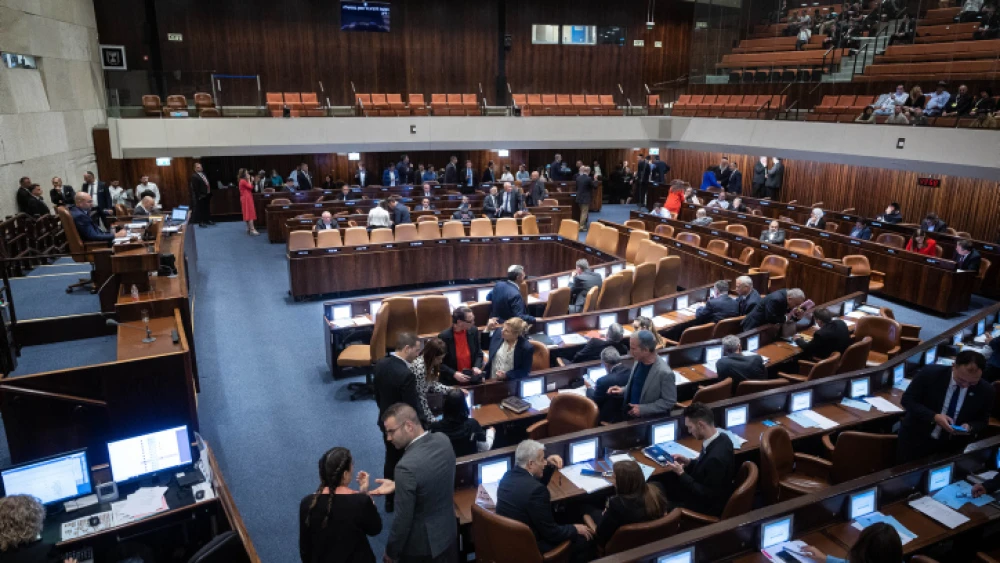
The Netanyahu government submitted a key piece of its judicial reform legislation, a bill that deals with the selection of judges, to the Knesset on Tuesday.
The move angered the opposition as it comes after the prime minister’s promise on Monday to freeze legislation on reform to allow time for dialogue.
“The public doesn’t even have a day to digest the stalling of the legislation, and the coalition is already putting the text to a vote. What’s urgent? It’s negotiating with a gun to our head,” said Labor Party MK Naama Lazimi.
Knesset Secretary General Dan Marzouk defended the move, saying it was only a “technical matter. The legal bureau does it automatically, we have no control over it.”
Other opposition lawmakers, including Yesh Atid’s Orna Barbivai and Ron Katz, said the bill shouldn’t have been submitted to the plenum until after negotiations on the reforms are held. “How can they change the wording now? A flag should be raised,” Barbivai said.
The bill in question would alter the composition of the Judicial Selection Committee, taking control away from judges, who currently have veto power in the panel, and making it more like the American model by putting more power in the hands of elected officials. The bill would also ensure that the coalition picks the next two Supreme Court justices.
A bill must pass three readings, or votes, in the full Knesset to become law. The legislation passed its first reading last month, after which it was sent back to the Constitution, Law and Justice Committee for revision. That process was completed and voted on in the committee on Sunday.
Second and third readings of bills typically come in quick succession.