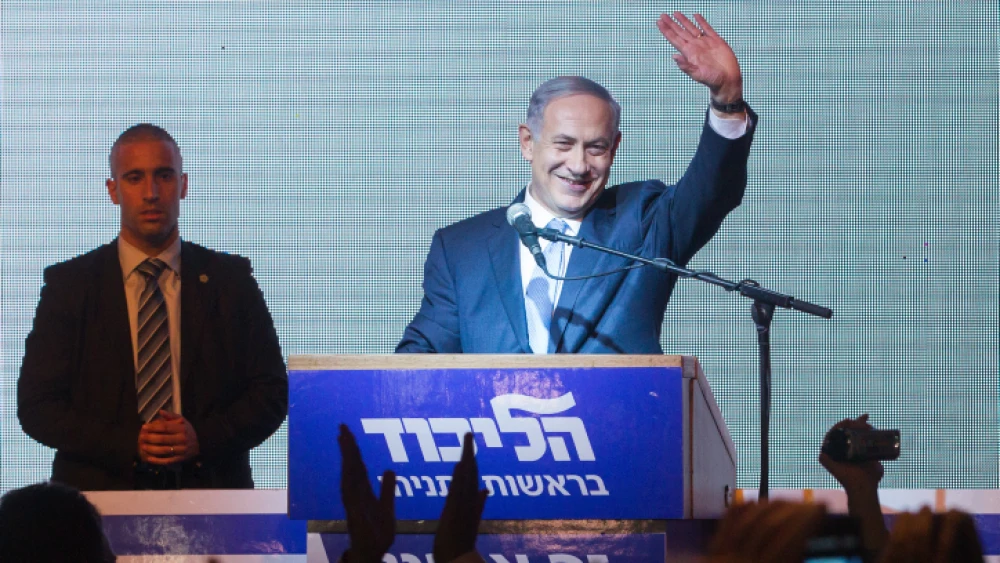
A new poll conducted by Channel 2 on Wednesday projected 35 seats in the Knesset for the Likud Party if elections were held now, an increase of seven seats from a similar survey conducted several weeks ago.
The dramatic increase suggests a boost in the public’s confidence in Israeli Prime Minister Benjamin Netanyahu, the head of Likud, in light of recent events.
A day before the poll was conducted, U.S. President Donald Trump announced that the United States was withdrawing from the 2015 nuclear deal with Iran and an airstrike attributed to Israel against Iranian targets in Syria that killed eight Iranians.
According to the poll, the centrist Yesh Atid Party dropped to only 18 seats, a significant drop after a survey several weeks ago projected 24 seats for the party. The Zionist Union would win 14 seats, similar to previous surveys. Habayit Hayehudi dropped from 10 seats in the survey from several weeks ago to eight seats.
Kulanu and Yisrael Beytenu would be left with six seats each, the poll found. Orly Levy-Abekasis, a former Yisrael Beytenu Knesset member who quit the party over ideological differences to establish her own faction, was initially projected to win big with a surprise seven seats, but the latest poll predicted only five seats for her yet unnamed party.
Additional results showed United Torah Judaism winning seven seats, Shas winning an abysmal four seats and the Joint Arab List with 12.
According to the poll, if Netanyahu established a coalition along the lines of his current coalition, it would be 66 seats strong. This is without Levy-Abekasis’ party, which could also potentially join a Likud-led coalition.
The poll also examined public opinion on America’s withdrawal from the nuclear deal with Iran. It found that 62 percent of Israelis believe that scrapping the agreement would be good for Israel.
When asked whether they feared a war because of the recent escalation with Iran on the Syrian border, 62 percent said they did.