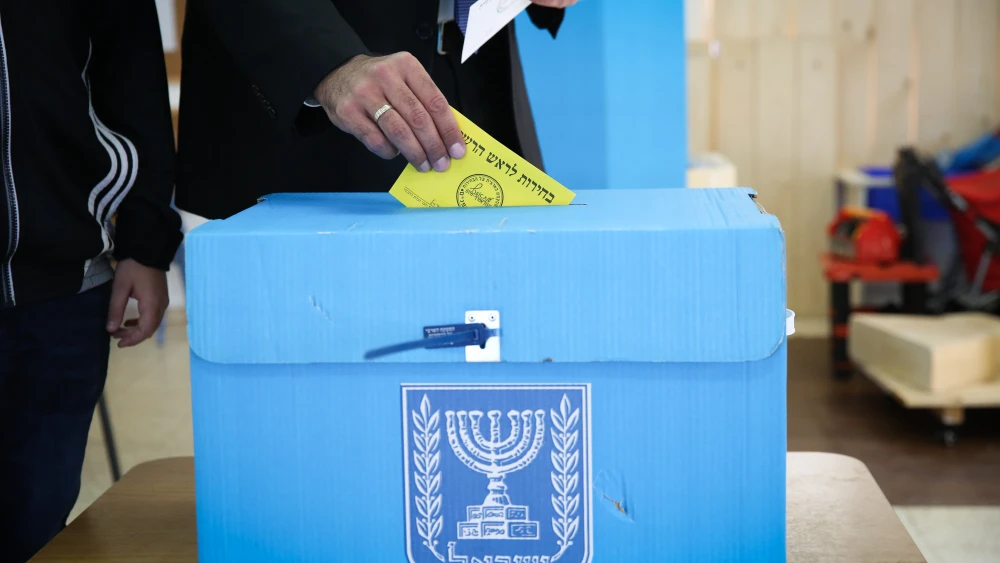
There is an inherent gap between the results of Israeli political polls and the upcoming elections. While polls use phone calls or the Internet to ask respondents how they plan to vote, on April 9 the public needs to show up at the polling places and physically put a ballot into an envelope.
An Israel Hayom-i24NEWS poll, conducted by the Maagar Mochot research institute under Professor Yitzhak Katz, indicates that the party with largest percentage of supporters who say they will definitely be voting on April 9 is Yisrael Beytenu under former Defense Minister Avigdor Lieberman with 79 percent of supporters committed to casting ballots in the election.
Slightly more than three-quarters (77 percent) of Kulanu supporters said they would definitely be voting. About 69 percent of both Likud and Blue and White supporters said they definitely planned to vote, as did 68 percent of Labor supporters.
While some parties have a fairly die-hard core of voters, only 57 percent of all respondents said they were certain they would be voting. Another 26 percent said they were “highly likely“ to vote; 3 percent said the chance they would vote was “middling”; and 14 percent said there was little chance they would be voting.
When asked how certain they were that they would actually vote for their preferred parties, 37 percent said they were completely sure. Another 34 percent said there was a 76 percent to 99 percent chance they would vote for their preferred parties; 11 percent said they were not completely sure they would vote for their preferred parties, and 18 percent said they were not sure at all they would vote for their preferred parties.
The poll also looked at potential voters who were deliberating between two parties: 8 percent of potential voters said they were vacillating between Labor and Blue and White; 3.4 percent were deliberating between the Likud and Blue and White; 2.8 percent said they were undecided between the Likud and the New Right; another 2.8 percent were trying to decide between Kulanu and Blue and White; and surprisingly, 2.8 percent said they were vacillating between Blue and White and the Zehut party of far-right activist Moshe Feiglin.
The poll was conducted March 20-21 among a statistical sample of 613 respondents out of a total 2,943 contacted by pollsters that is representative of the adult population in Israel. The poll has a margin of error of 4 percent.