Israeli Foreign Policy
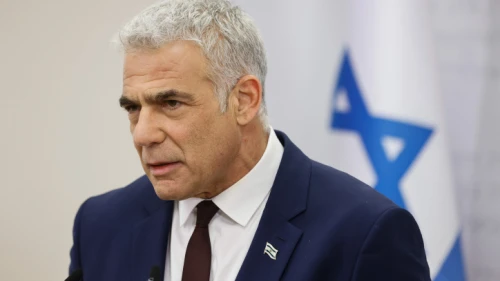
Israeli Foreign Minister Yair Lapid said that Israeli aid workers are positioned at key Ukrainian border crossings to help transfer citizens out of the country.

Addressing the situation in Ukraine, Herzog expressed his “great sorrow and concern” and reiterated Israel’s support for the country’s territorial integrity,
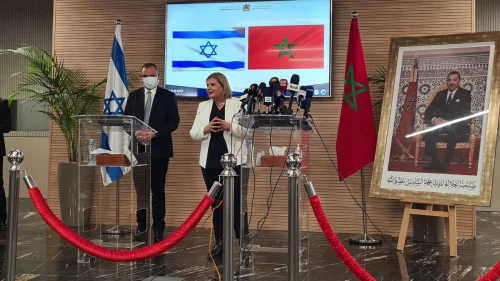
Israel’s Minister of Economy Orna Barbivai arrived in Rabat for a four-day visit to build ties after relations between the two countries were normalized in 2020 as part of the Abraham Accords.

“We are very happy to have the opportunity to live in Israel,” said new immigrant Yana Koblenko.
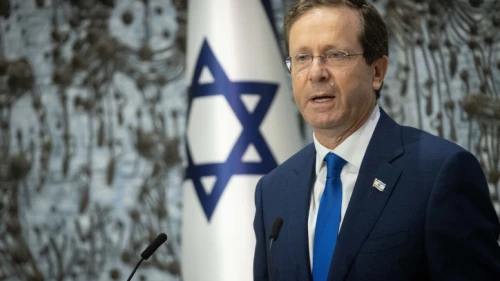
The focus of the visits will be expanding cooperation in the Mediterranean Basin, with an emphasis on climate change, according to the Israeli president.
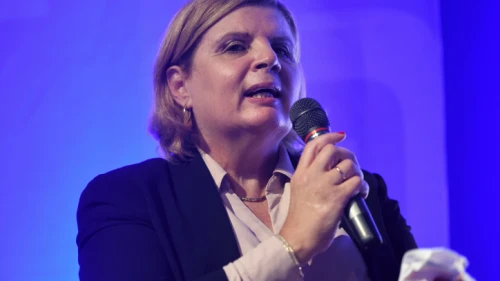
The two countries are to sign an economic agreement that will “lay the foundation” for improved bilateral trade.
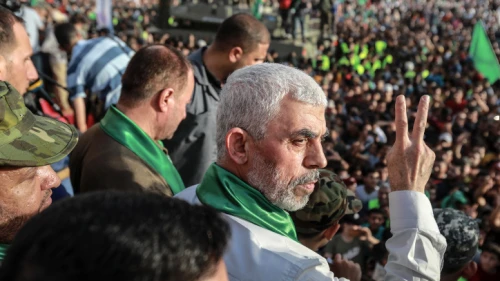
“The views of Hamas and the violent extremist groups listed today are deeply disturbing, and there is no place in Australia for their hateful ideologies,” said Australian Home Affairs Minister Karen Andrews.

While 3,000 Israeli citizens have evacuated since Sunday, the Israeli government believes around 10,000 remain in Ukraine.

Maj. Gen. Tal Kelman, head of the Strategic Planning and Cooperation Directorate, took part in a series of strategic briefings in Athens.
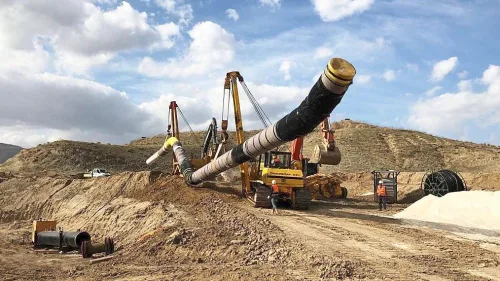
Currently, it exports 3 billion cubic meters of gas annually to Jordan and separately 5 billion to Egypt through a pipeline from Ashkelon to Sinai.

Nirit Ofir from the Department of Middle Eastern Studies at Bar-Ilan University, noted that this particular Gulf state is “much more acceptable than the United Arab Emirates in the eyes of countries with which Israel still does not have diplomatic relations.”
Israeli Prime Minister Naftali Bennett said he is looking forward to fostering relationships in high-tech, trade, agriculture and technology.