


Israeli researcher and Jerusalem College of Technology professor Dr. David Sinefeld and a group of interdisciplinary scientists at Cornell University have made a new breakthrough in brain imaging thanks to its mapping of a zebrafish’s brain.
The team, working in the university’s labs, used advanced microscopy methods in order to image the fine structure and activity of an adult zebrafish brain, which resulted in opening a new horizon of neurological research.
“This is a problem that everyone dreams of solving,” said Sinefeld, referring to the difficulty in successfully examining thick brain tissue, especially through adult fish scales.
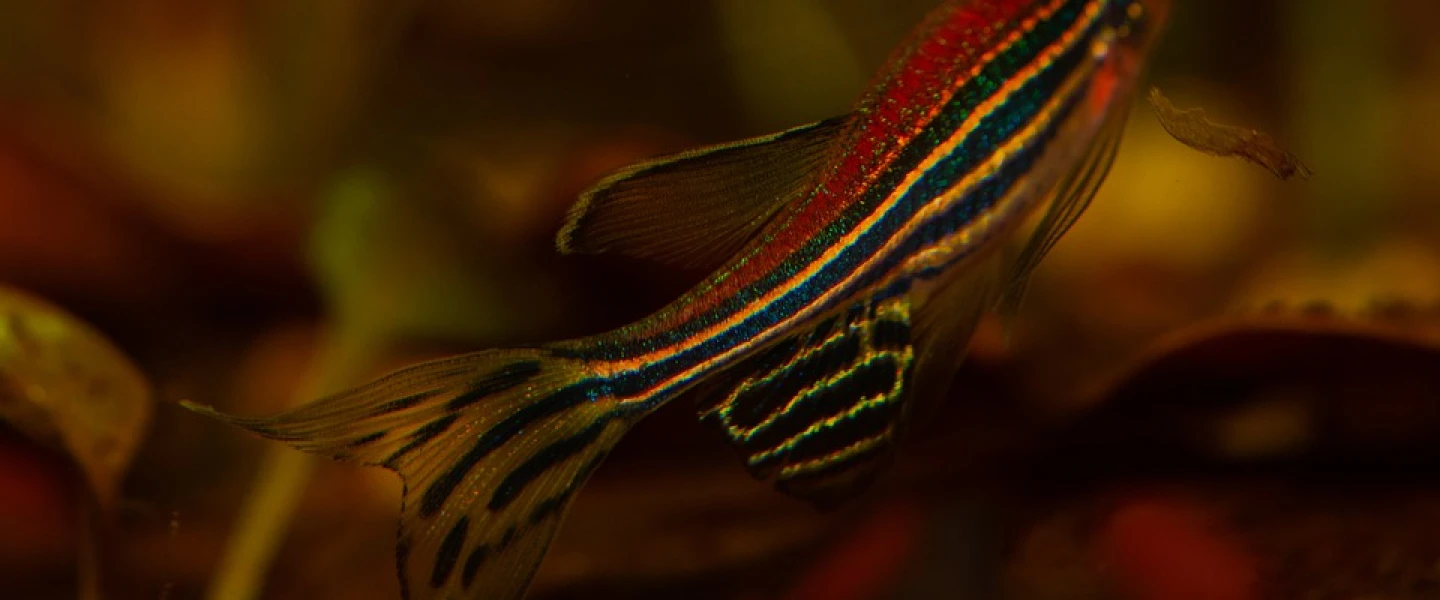
Experimenting on zebrafish is a useful stepping stone to understanding the human brain because all vertebrate brains are similar in nature. Although scientists usually use mice and monkeys as models for the human brain, zebrafish are another viable option.
“All vertebrate brains are, to a first approximation, the same, with nearly all brain regions [present] in nearly every vertebrate,” said Joseph Fetcho, professor of neurobiology and behavior and director of Cornell Neurotech in the College of Arts and Sciences told the Cornell Chronicle. “This is not surprising because they all, even the simplest ones, have to do the same things to survive and reproduce.”

“In order to solve this problem, we used a novel microscopy method which was invented in Professor Chris Xu’s lab [at Cornell]. In this method, we use special lasers with extremely short pulses that interact with the molecules in the brain in a way that allows separation between this interaction and the scattered light from other tissue layers. This means that we can shine a laser beam through fish scales and still see the neurons behind them, allowing us to image specific neurons deep in the brain with very high resolution,” said Sinefeld, who spent five years working as a postdoctoral researcher Mong Fellow at Cornell Neurotech Center.
The innovative, precise method delivers 1,300 nm wavelength photons to a certain point in the brain, activating a specific fluorescent protein. The laser then repeatedly scans a certain section of the brain, garnering a 3-D image of its structure. To date, all other methods of looking inside the brain, like an MRI, don’t yield the resolution needed to see the neurons and structure inside.
“This method opens a new horizon for animal brain research. We can now see better how the brain works,” said Sinefeld. “This research allows us to monitor a full zebrafish brain over time. For instance, after applying this tool to fish engineered to have certain brain disorders the images can then decipher how the brain changes as the fish mature. Likewise, the images can then also see how the fish respond to treatment over time and can lead to dramatic implications in how we understand brain functions and their disorders.”
Sinefeld hopes to continue his efforts in the field of microscopy at the Jerusalem College of Technology (JCT). He is in the process of applying for grants and funding to build a new lab dedicated to this discipline at the school.
“This could be a game-changer in the field of neuroscience,” he said. “I am excited for the opportunity to establish these novel methods In Israel, and specifically, in JCT.”



