


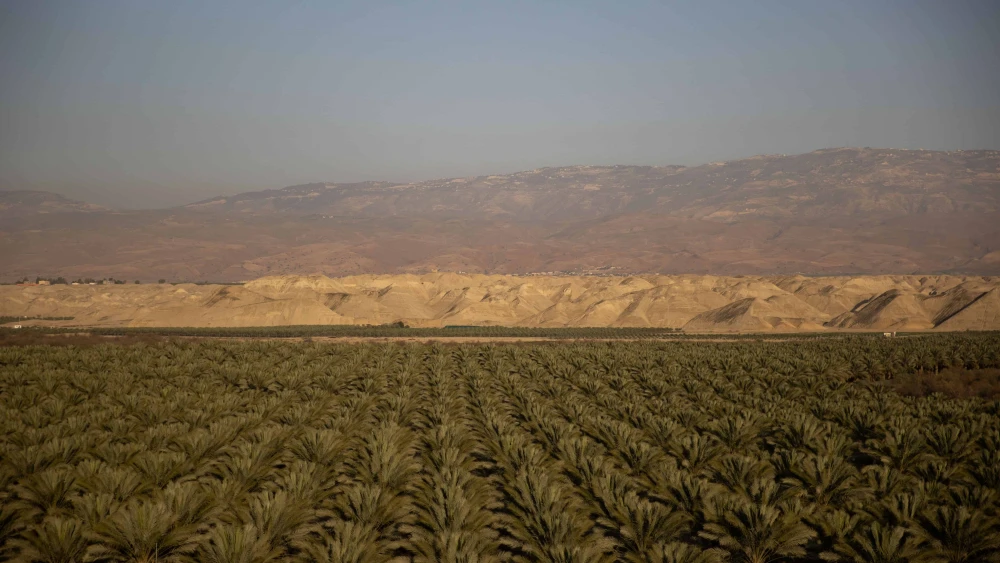
Keren Kayemeth LeIsrael-Jewish National Fund (KKL-JNF) on Monday approved a historic plan to expand its development efforts along the eastern side of Highway 90, from the Arava to the Golan Heights, with a focus on the Jordan Valley.
The initiative builds on the five-year plan previously approved for the Central Arava Regional Council and aims to provide a transformative boost to the region’s communities.
Under the plan, 18 million shekels ($5.3 million) will be invested each year over the next five years in existing Jordan Valley communities. The focus will be on residential development, agricultural training and essential infrastructure. The initiative will implement transformative projects based on models already proven successful in the Central Arava Regional Council area.
The total investment of approximately 100 million shekels ($29.6 million) will support a broad range of development activities, including infrastructure upgrades, transportation improvements, promotion of local agriculture and enhancement of public buildings and community services. This effort aligns with KKL-JNF’s broader strategy to strengthen rural communities in Israel, with particular attention to areas with growth potential and strategic significance.
KKL-JNF Chairwoman Ifat Ovadia-Luski, who leads the initiative, emphasized its importance.
“This decision is of national significance and will provide substantial reinforcement to the Jordan Valley, creating a new reality for its residents,” she said. “KKL-JNF sees the development of this area as a foremost Zionist mission, and we are committed to investing in infrastructure, agriculture, and community to ensure a prosperous future for generations to come. The Plow Line is also the eastern border of the State of Israel.”
David Elhayani, head of the Jordan Valley Regional Council, welcomed the announcement, calling it “an important milestone for strengthening and growing communities in the Jordan Valley.”
He expressed his thanks to KKL-JNS, the Board of Directors and Luski, adding, “A plan of this scale will bring prosperity and establish the Jordan Valley as a true Israeli success story.”
Also on Monday, the KKL-JNF announced a 750 million shekel (~$220 million) budget to restore and develop communities in northern Israel and the western Negev hit hard by the Swords of Iron war.
The plan, approved by KKL-JNF’s Board of Directors, addresses a range of needs identified in the field, from restoring public infrastructure and private homes to boosting economic activity, encouraging population growth and investing in education, innovation and community resilience.
As part of the initiative, Kibbutz Nir Oz has been designated a primary aid focus with a dedicated budget of $22 million.
On Oct. 7, 2023, the community lost about a quarter of its residents to the Hamas massacre and kidnappings, and saw roughly 95% of its public buildings destroyed, the most severe damage sustained by any community in the “Gaza Envelope.”


