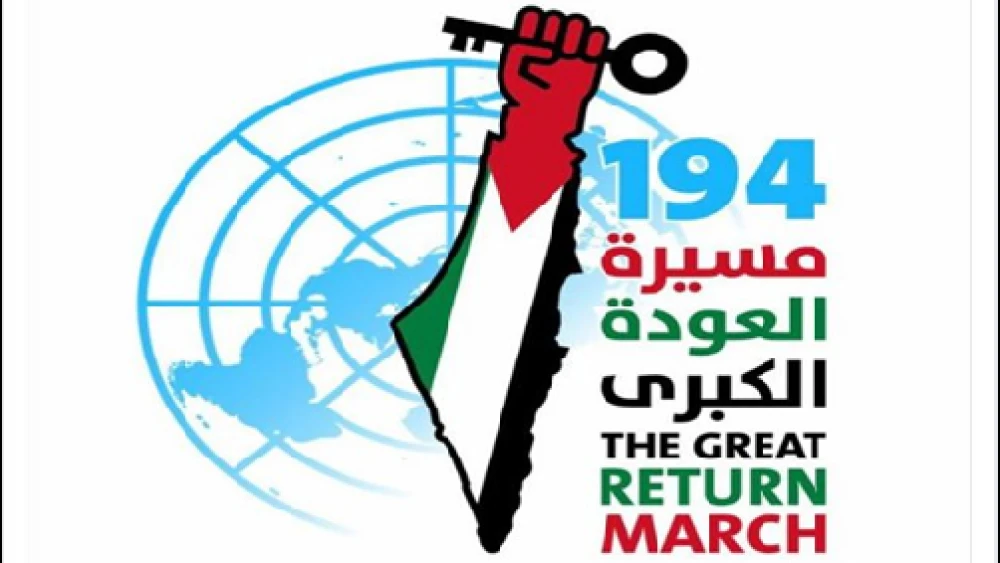
In recent weeks, there have been reports of an initiative launched by social activists in Gaza, in collaboration with Hamas and the Palestinian factions, for Palestinian refugees in all areas bordering on Israel to march en masse towards the border, erect “Return Encampments,” “nonviolently breach” the border into Israeli territory and demand to actualize the Palestinian right of return.
The organizers of the initiative, dubbed “The Great Return March,” have called it a nonviolent move for implementing the Palestinian refugees’ right of return, as part of a general initiative in countries bordering Israel.
However, some have raised questions about the usefulness of these mass marches because other similar campaigns in the past have failed to achieve results.
The leading factions involved in the initiative are Hamas, Palestinian Islamic Jihad, the Popular Front for the Liberation of Palestine and supporters of former senior Fatah official Muhammad Dahlan, who in 2011 was expelled from Fatah because he was a rival of Palestinian Authority and Fatah leader Mahmoud Abbas. To date, there have been no official P.A. or Fatah announcements about this initiative.
Hamas and the Palestinian factions have clarified that this initiative is part of the “popular intifada” in the struggle against Israel.
This is the first time that Hamas and the factions, which traditionally have based their activity on the principle of armed struggle—and have been harshly critical of Fatah and the P.A. for engaging in political activity—have been willing to diversify their methods and include such forms of allegedly nonviolent political struggle.
The full report can be read here.