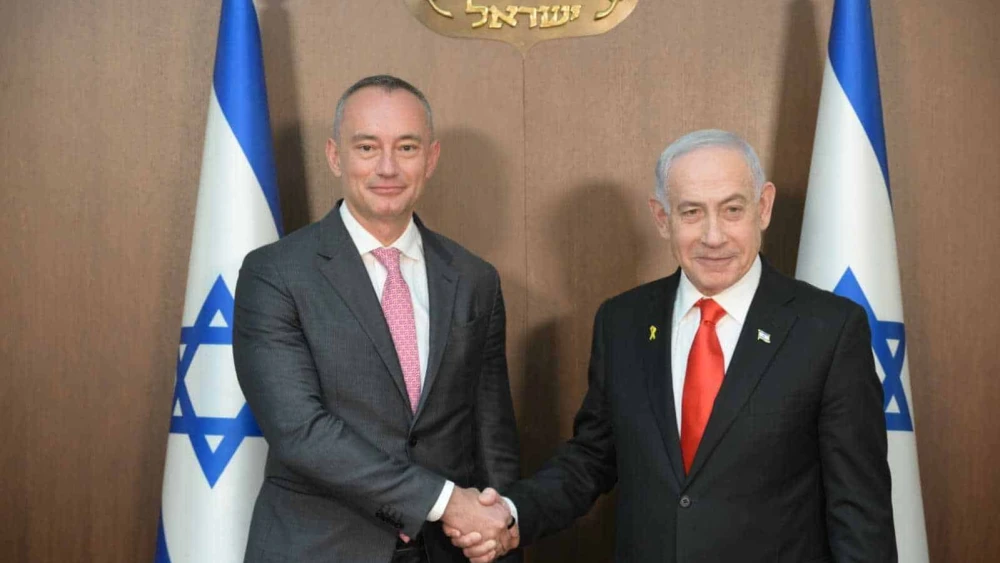
High Representative for Gaza Nickolay Mladenov said he held a “positive and substantive discussion” with Israeli Prime Minister Benjamin Netanyahu in Jerusalem on Tuesday.
Participants in the meeting “reaffirmed our commitment to the full implementation” of U.S. President Donald Trump’s 20-point peace plan for the Strip, the Board of Peace official wrote in a post on X.
“Working with all sides to turn commitment into concrete actions. This will require decisions for progress,” Mladenov added. “We keep moving forward in the interest of a better future for Israelis and Palestinians.”
The Israeli Prime Minister’s Office did not immediately provide a readout of Tuesday’s meeting, which was also attended by U.S. Ambassador to Israel Mike Huckabee, senior Trump administration official Aryeh Lightstone and Liran Tancman, an Israeli tech entrepreneur who is advising the Board of Peace on a volunteer basis, according to a picture distributed by the PMO.
Tony Blair, a founding member of the Board of Peace, told the U.N Security Council last week that the organization had made “substantial progress” in implementing Trump’s peace plan.
Blair pointed at the formation of the National Committee for the Administration of Gaza (NCAG) and the International Stabilization Force (ISF), which he said recently completed its “pre-deployment assessment mission,” as key milestones in implementing the plan that ended two years of war.
“The critical demilitarization talks with Hamas are continuing, led with immense effort by the mediators Egypt, Qatar and Turkey together with Mladenov and representatives of the Board of Peace,” according to the former British prime minister.
Senior Hamas leaders like Mashaal and Musa Abu Marzouk have rejected key parts of Washington’s peace plan in recent months, including disarmament, despite having agreed to the proposal in October.
The Izz ad-Din al-Qassam Brigades, Hamas’s “military wing,” last month denounced calls for its disarmament under the ceasefire plan as “extremely dangerous.”
Blair told the Security Council that Hamas, “as presently constituted,” can have no role in administering Gaza. “Not directly running the government of Gaza. Not indirectly by retaining their weapons and therefore their power,” he said.
“Were Hamas to change, to agree that the goal of a Palestinian state should be pursued through political negotiation and that such a state should live in peace with the State of Israel, it would be free to engage with the politics of Gaza as with any other party which accepts these internationally agreed principles,” he said. “But until it does so, it cannot.”
Blair added, “Hamas—and every other armed group in Gaza—should disarm, decommission weapons as part of a Palestinian-led process with monitored and verified implementation.”
Once Hamas, Palestinian Islamic Jihad and other terror organizations agree to disarm, Israeli restrictions on people and goods entering the Strip “should and will be lifted,” vowed the official, calling it “a huge prize for the people of Gaza.”