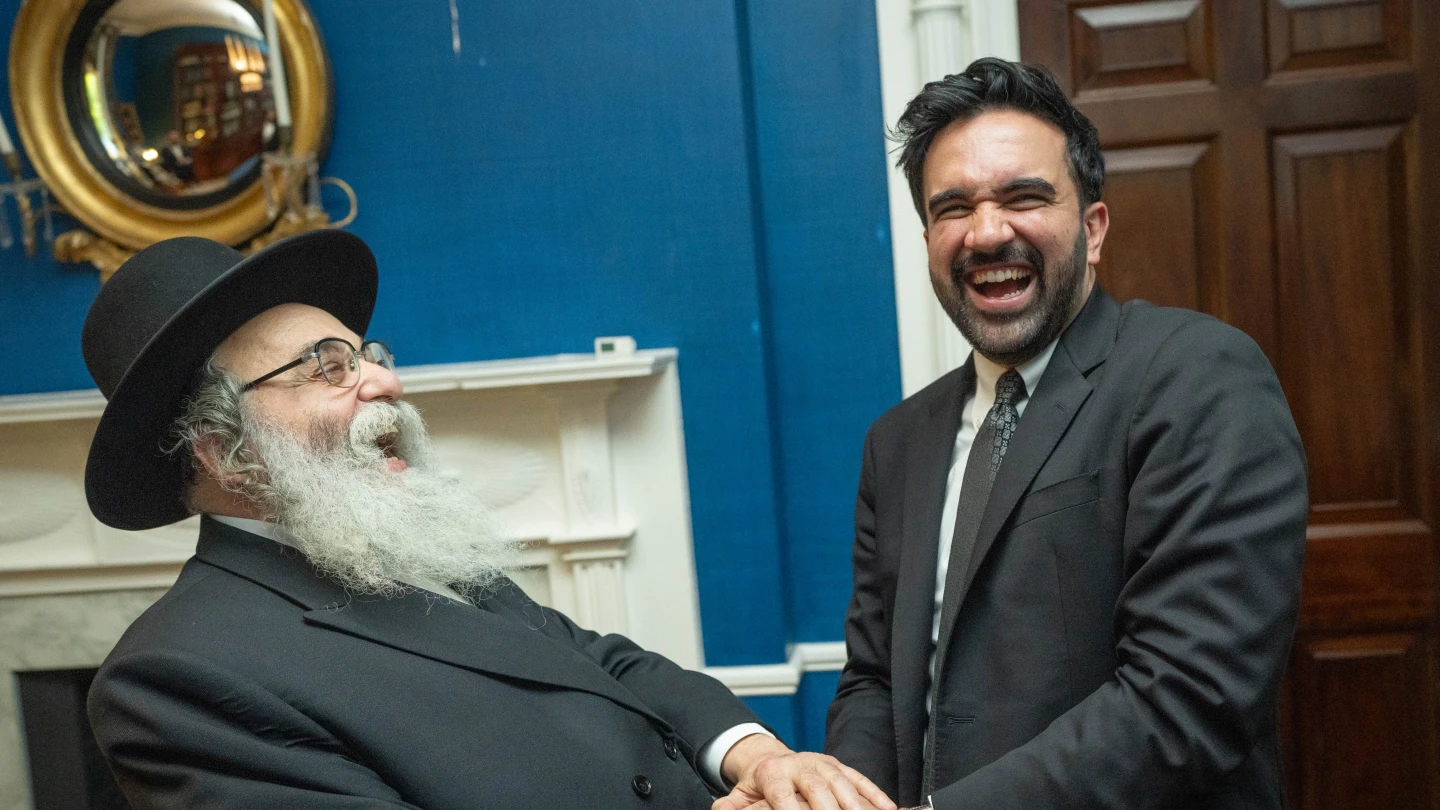
Belgian prosecutors reportedly decided on Wednesday to indict three Jewish circumcisers for unlawfully conducting the procedure, prompting condemnations by Israeli Foreign Minister Gideon Sa’ar and the U.S. Ambassador to Belgium.
“The prosecution of these religious figures (mohels), one of whom is American, is WRONG and won’t be tolerated,” Bill White, the U.S. Ambassador in Brussels, wrote on X. “Belgium will be thought of now as antisemitic by the world. Until this is resolved—there is no way around it,” he added.
White was responding to a post on X by Sa’ar, who wrote that with the decision to prosecute the mohels, “Belgium joins a short and shameful list, together with Ireland, of countries that use criminal law to prosecute Jews for practicing Judaism. This is a scarlet letter on Belgian society.”
The controversy over circumcision is unfolding amid other tensions in the diplomatic relations between the United States and Israel and Belgium, where the government includes left-wing parties with hostile attitudes to U.S. President Donald Trump’s administration and the Jewish state.
Last year, Belgium joined South Africa’s disputed genocide lawsuit against Israel at the International Court of Justice. In February, Conner Rousseau, chairman of the Flemish Vooruit Party, which is part of the federal ruling coalition, posted a video that juxtaposed Trump and Adolf Hitler.
Neither the federal prosecutor’s office nor that of the Flemish Region, the Belgian state where Antwerp is situated, announced the indictments. They did not reply in time for publication to a JNS query requesting more information on the subject. However, a government source confirmed to JNS on Wednesday that the political echelon had been informed of a decision to indict.
Belgian Foreign Minister Maxime Prévot wrote back to Sa’ar on X: “Enough with these caricatures.” In Belgium, he added, “the judiciary is independent and makes its decisions—whether one agrees with them or not—free from any political influence” and noted that the case against the mohels had been initiated “by representatives of the Jewish community themselves.”
Prévot repeated the same message to White, adding, “I urge you to exercise greater restraint and to view your role in its proper context. It is inappropriate to publicly criticize a country and tarnish its image simply because you disagree with judicial proceedings. I have already told you this. Would you consider it acceptable for our ambassador in Washington to do the same?”
There should ‘never have been such an investigation’
The three circumcisers, or mohels, from Antwerp were first investigated last year based on complaints lodged against them by Moshe Aryeh Friedman, an anti-Zionist activist who has lobbied authorities to limit several Jewish customs, including the one that enables Haredi schools to separate girls and boys at state-recognized Jewish schools. The mainstream Jewish community of Antwerp, which is largely Haredi, shuns Friedman.
The Jewish Information and Documentation Center (JID), a Belgian-Jewish advocacy group, disputed Prévot’s characterization of what initiated the legal process against the mohels.
“This is simply not true: This was not initiated by ‘the Jewish representatives themselves,’ but by someone who denies the Holocaust, was invited to a Holocaust denial conference by former Iranian president [Mahmoud] Ahmadinejad, and calls himself Jewish but is not supported by any Jew in the world,” JID wrote on X. Friedman has rejected allegations that he has denied the Holocaust. He attended an Iranian foreign ministry two-day conference in 2006 titled “Review of the Holocaust: Global Vision.” It featured Holocaust denial and distortion.
Sa’ar replied to Prévot, telling him his remarks “miss the point.” There should “never have been such an investigation had the issue of brit milah been regulated like in other European countries that respect Jewish religious freedom,” he wrote. “Especially so in a country with one of the oldest Jewish communities in Europe. Had Belgium had a strategic plan to fight antisemitism and foster Jewish life, you might have known this. Alas, it doesn’t.”
According to Belgian law, all surgical procedures must be performed by a certified surgeon, which most mohels are not. However, authorities had not previously banned the Jewish circumcision, brit milah, which is performed on eight-day-old boys, and is the first initiation of a Jewish male into the faith. Brit milah is widely seen as a fundamental rite, and many consider the ability to perform it a prerequisite to the existence of a viable Jewish community.
Belgium is among several European countries that have recently outlawed shechita (the ritual slaughter of animals to make the meat kosher) and its Islamic counterpart, dabhiha or zabiha. These religious slaughter methods, which require animals to be conscious at the time of killing, are criticized by animal-rights advocates as inhumane.
A similar controversy is playing out over the nonmedical circumcision of boys. However, unlike slaughter without stunning, this practice has not been banned in any European country.
In 2012, a court in Cologne, Germany, briefly banned the practice, but the ban was overturned through legislation amid an outcry over the verdict.