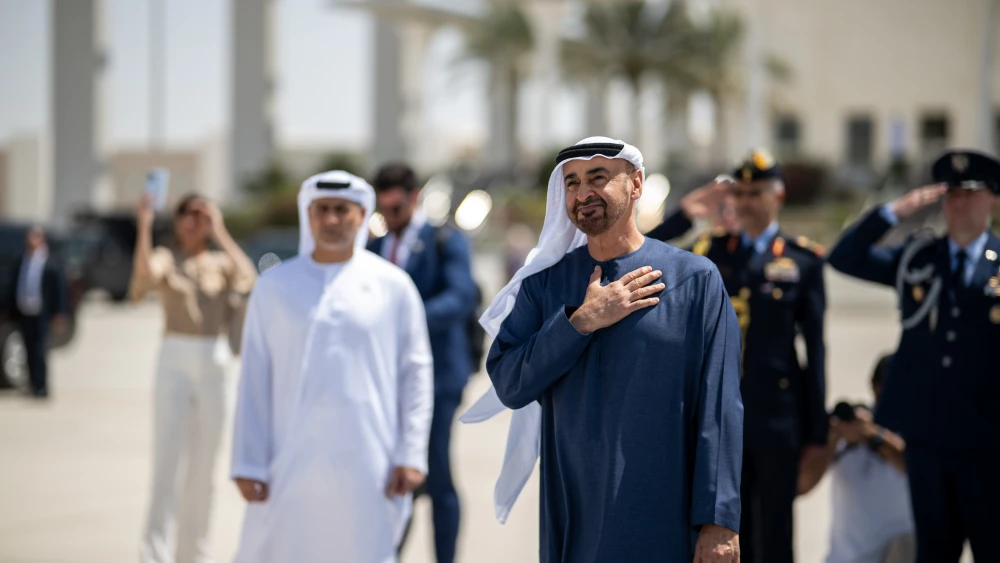
Israeli Prime Minister Benjamin Netanyahu in a phone call with UAE President Sheikh Mohammed bin Zayed Al Nahyan condemned the “Iranian terrorist attacks targeting civilians” in the Emirates, Abu Dhabi said on Monday.
Tehran launched missile and drone attacks on the United Arab Emirates on Monday for the first time since the U.S.-brokered ceasefire took effect last month, moderately injuring three Indian nationals.
Sheikh bin Zayed in the wake of the attacks also spoke with several other leaders, including Jordanian King Abdullah II and Masrour Barzani, prime minister of Iraq’s Kurdistan Region, according to an official Emirates News Agency report on Wednesday.
Netanyahu, King Abdullah and Barzani “affirmed their countries’ solidarity with the UAE and their support for all measures it takes to safeguard its security and stability and ensure the safety of its citizens,” per Abu Dhabi’s readout of the calls.
The Islamic Republic has launched more than 550 ballistic and cruise missiles and more than 2,200 drones at the UAE, more than at any other country, according to the UAE Defense Ministry.
Israel recently sent the UAE an Iron Dome system with attendant troops to help protect the country, marking the first time Jerusalem had sent an air defense battery to another country.
Netanyahu decided to send the Iron Dome battery after speaking by phone with Sheikh bin Zayed, Israeli officials told Axios last week.
Israeli Ambassador to the UAE Yossi Shelley told the Kan Reshet Bet radio station on Wednesday that Abu Dhabi hopes the Americans and Israelis “will do the job regarding the [Iranian] nuclear issue and the missiles.” He added: “Our relationship is currently growing because of economic, technological and medical interests.”
“As far as I understand, they want what we want: to see an end to this threat and to continue doing what they know how to do best: economy, business,” continued Shelly.
Asked whether the cooperation with Abu Dhabi includes assistance in intercepting missiles, the envoy replied: “That you should read about in the foreign press; I cannot comment on it.”