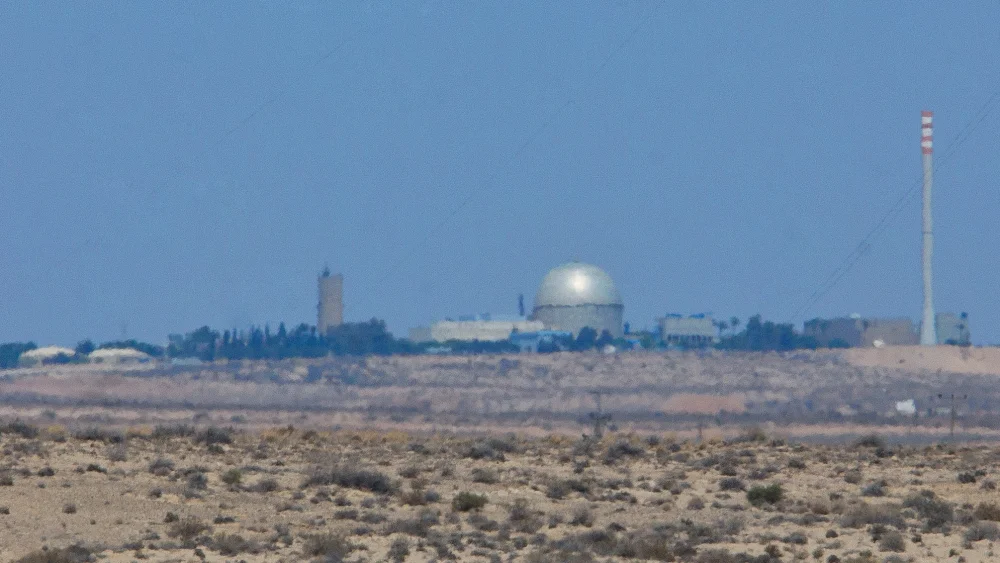
No damage was caused to Israel’s Shimon Peres Negev Nuclear Research Center when an Iranian ballistic missile hit the nearby city of Dimona on Saturday night, the International Atomic Energy Agency said.
“Information from regional states indicates that no abnormal radiation levels have been detected,” the U.N. nuclear watchdog tweeted.
The Jewish state’s nuclear research facility is located about eight miles southeast of Dimona, a city of roughly 40,000 in the Negev Desert
On Saturday night, an Iranian missile scored a direct hit in Dimona, wounding 31 people. One person sustained serious wounds, one was moderately injured and 29 others were listed as being in good condition.
IAEA Director-General Rafael Grossi emphasized in his statement that “maximum military restraint should be observed, in particular in the vicinity of nuclear facilities.”
Israel is one of nine countries believed to possess nuclear weapons, and one of four never to have signed the Nuclear Non-Proliferation Treaty. As a result, the International Atomic Energy Agency, the U.N.'s nuclear watchdog, has no authority to inspect Dimona.
Jerusalem is believed to have begun building the Dimona site in the late 1950s after surviving wars with neighboring Arab states following its reestablishment in 1948. Its policy of nuclear ambiguity is widely credited with deterring its enemies.