Researchers at Tel Aviv University revealed in the Aug. 5 issue of Nature Nanotechnology a novel nano-vaccine for melanoma, the most aggressive type of skin cancer.
Their innovative approach has so far proven effective in preventing the development of melanoma in mouse models and in treating primary tumors and metastases that result from melanoma.
Melanoma develops in the skin cells that produce melanin, or skin pigment.
“The war against cancer in general, and melanoma in particular, has advanced over the years through a variety of treatment modalities, such as surgery, chemotherapy, radiation therapy and immunotherapy, but the vaccine approach, which has proven so effective against various viral diseases, has not materialized yet against cancer,” said study leader professor Ronit Satchi-Fainaro, chair of the Department of Physiology and Pharmacology and head of the Laboratory for Cancer Research and Nanomedicine at TAU’s Sackler Faculty of Medicine.
“In our study, we have shown that it is possible to produce an effective nano-vaccine against melanoma and to sensitize the immune system to immunotherapies,” said Satchi-Fainaro.
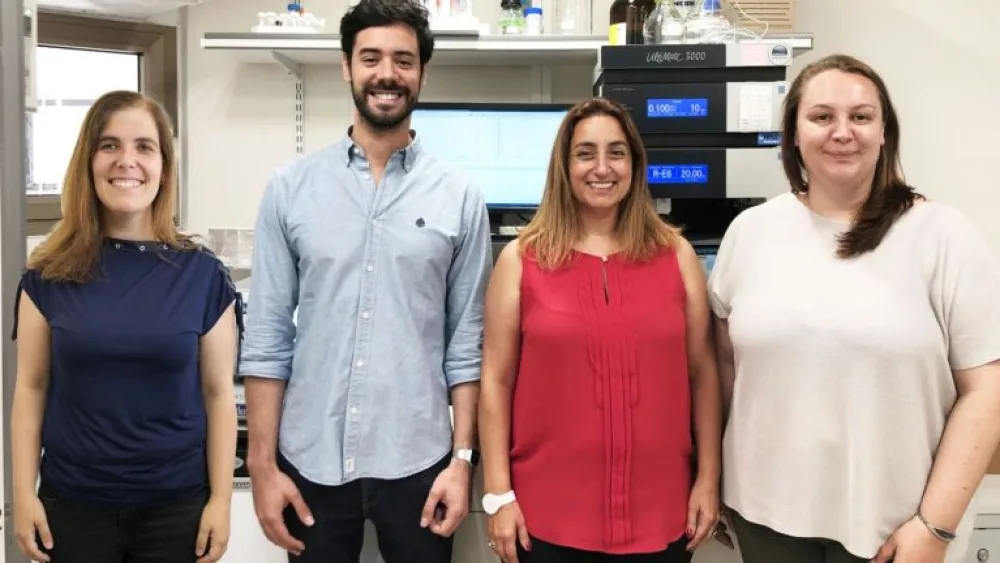
Satchi-Fainaro and University of Lisbon professor Helena Florindo, who was on sabbatical at the Satchi-Fainaro lab, led the research, which was conducted by Anna Scomparin of Satchi-Fainaro’s lab and postdoctoral fellow João Conniot.
The researchers harnessed tiny particles, about 170 nanometers in size, made of a biodegradable polymer. Within each particle, they “packed” two peptides—short chains of amino acids, which are expressed in melanoma cells. They then injected the nanoparticles (or “nano-vaccines”) into a mouse model bearing melanoma.
“The nanoparticles acted just like known vaccines for viral-borne diseases,” said Satchi-Fainaro. “They stimulated the immune system of the mice, and the immune cells learned to identify and attack cells containing the two peptides—that is, the melanoma cells. This meant that, from now on, the immune system of the immunized mice will attack melanoma cells if and when they appear in the body.”
The researchers demonstrated the effectiveness of the vaccine under three different conditions: as a preventive measure in healthy mice; to treat a primary tumor in mice in conjunction with immunotherapy; and to treat tissues taken from patients with melanoma brain metastases.
“Our research opens the door to a completely new approach—the vaccine approach—for effective treatment of melanoma, even in the most advanced stages of the disease,” said Satchi-Fainaro. “We believe that our platform may also be suitable for other types of cancer and that our work is a solid foundation for the development of other cancer nano-vaccines.”
This article first appeared on the Israel21c website.