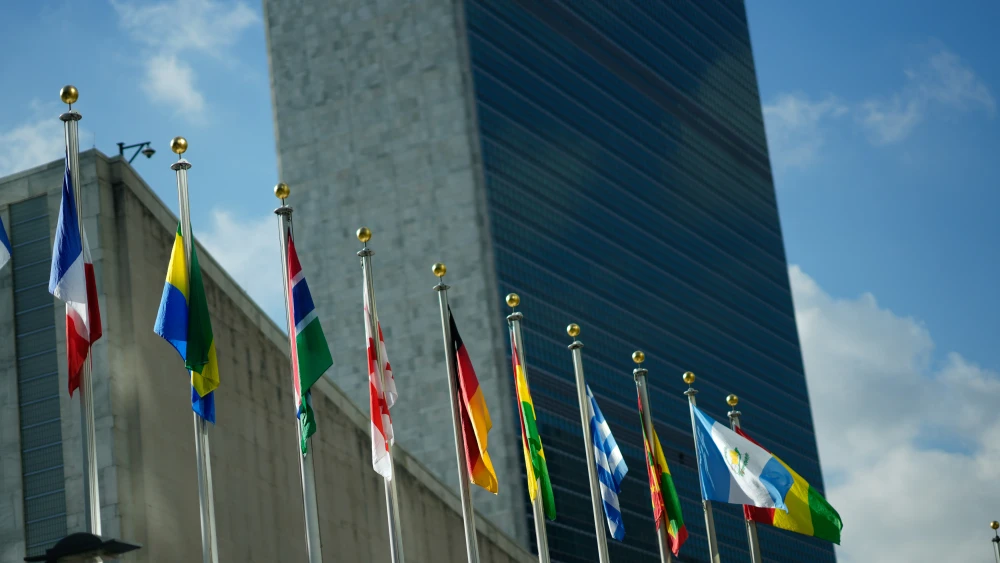
A United Nations Security Council draft resolution, which Washington and Gulf allies drafted, invokes U.N. authorization for use of force in defending freedom of navigation in the Strait of Hormuz.
The resolution has undergone a revision, according to a reliable diplomatic source. Council members are trying to agree on a version that Russia and China, Iranian allies who vetoed a resolution on the same topic weeks ago, would support.
The draft resolution requires Iran to cease attacking, mining and tolling in the Strait of Hormuz, a pivotal Gulf waterway, through which some 20% of the world’s oil travels to global markets.
Iran implemented a blockade of the strait on Feb. 28 at the outset of its war with the United States and Israel. Although the strait has technically been open for business, shippers have been loath to use it for fear of being struck and because insurers are reluctant to cover routes through the strait.
The United States and Bahrain wrote the resolution, with backing from Saudi Arabia, United Arab Emirates, Kuwait and Qatar. It demands that the Iranian regime disclose how many mines it laid in the strait and where they are located, and it insists that the Islamic Republic help remove the mines and support a humanitarian corridor.
“Regardless of a conflict, or regardless of the parties of the conflict, or regardless of how they feel about it, a country cannot lay mines in international waterways and cannot use international waterways as a revenue source or attempt to charge international shipping tolling,” Mike Waltz, U.S. ambassador to the United Nations, told reporters on Monday.
There is no timeline for a vote on the resolution, although the U.S. State Department said on Tuesday that Washington “looks forward to this resolution being voted on in the coming days and to receiving support from Security Council members and a broad base of co-sponsors.”
The invocation of Chapter VII of the U.N. Charter is likely to be a significant sticking point. The provision authorizes the council to take decisive action to maintain or restore international peace and security.
That includes “action by air, sea or land forces as may be necessary to maintain or restore international peace and security” and which “may include demonstrations, blockade and other operations by air, sea or land forces of members of the United Nations.”
It also allows for more preliminary measures, such as sanctions.
The latest draft version, which JNS saw, includes a reference in an introductory, or “preambular,” paragraph that the council is “acting under Chapter VII.”
In such U.N. documents, text in the preamble typically contains justification for a resolution and context, while “operative” text tends to outline the council’s specific actions, decisions, policies or demands.
The draft, which JNS saw, does not specify use of force or any specific Chapter VII action.
Waltz said on Monday that the proposal is intentionally narrower than a previous resolution, which failed last month when China and Russia vetoed it. The two argued that the earlier measure, which 11 council members backed, targeted Iran unfairly.
The latest draft focuses on Iranian actions and blames Tehran entirely for the current predicament.