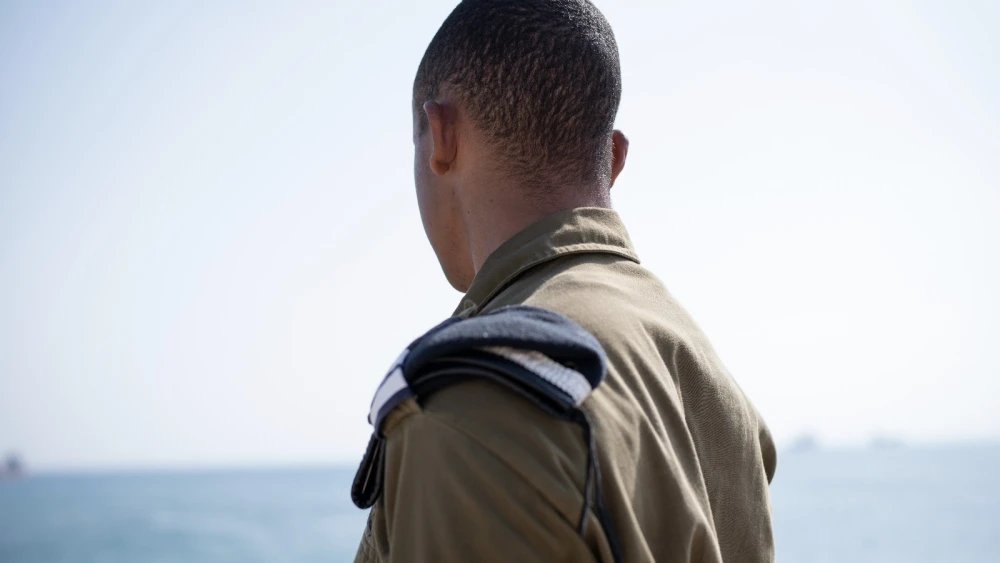

Israel understands that a strong army relies on more than weapons and training: It relies on the strength of its people. And for lone soldiers, those who serve without family support in Israel, wartime exposes a quiet truth we can no longer afford to ignore: when home isn’t available or accessible, the soul is more vulnerable.
Lone soldiers who left their homes behind, both from abroad and within Israel, serve without the most basic safety net Israelis take for granted. They carry the weight of distance from their home country, challenges of language and culture, and a daily reality in which “going home” may not mean mom’s food, the comfort of a childhood bedroom or someone to notice a change in their eyes.
And these gaps only widen during wartime.
Some lone soldiers, just like others who serve, carry a preexisting emotional load: childhood trauma, abandonment, loss or years of instability. Once they experience combat, they may also experience complex post-traumatic stress. When a soldier is already alone, repeated shocks only deepen loneliness, insecurity and hardest of all: the feeling that asking for help is not an option.
Israel began to place mental health higher on the national agenda in 2025—and rightly so. An August 2025 report published by the IDF Manpower Directorate found that 16 soldiers died by suicide in the first nine months of the year. This included both regular-service soldiers and reservists. We know there were additional cases after the report came out. While we do not have an authoritative, verified breakdown of how many were lone soldiers, we know of two IDF lone soldiers who took their own lives in November 2024, and another did so while still in basic training.
The numbers we do have should stop every one of us in our tracks.
The absence of a precise breakdown does not reduce the urgency because lone soldiers carry a unique set of risk factors that should alarm us precisely in a period like this: isolation; fewer people noticing deterioration in real time; reduced support during crises; and a frightening gap between outward functioning and inner collapse.
When war stretches on, when repeated deployments pile up and when a soldier does not have family support, the danger is no longer theoretical. It is quite real.
The country was shaken in the past few days by the deaths of two American lone soldiers: Joshua Boone from Idaho and Ari Goldberg from Virginia. Sadly, much of the public conversation initially defaulted to a terrifying assumption: They were suicides. This did not come out of nowhere. Rather, it reflected an awareness that lone soldiers face heightened risk, especially after combat and hundreds of days of reserve duty.
With both incidents, family and friends publicly pushed back on the suicide narrative. Ari was found dead in his Dimona apartment just days before his scheduled discharge, the result of a tragic accident. Joshua’s death was ultimately found to have resulted from a drug overdose.
Perhaps most alarming is the speed with which the country assumed that these recent deaths were suicides. This should not only give us pause but force us to again confront the mental, emotional and social vulnerabilities of lone soldiers during wartime.
Every case is tragic and human, regardless of whether they are or were lone soldiers. Lone soldiers do not commit suicide because they are lone soldiers, yet the increase in risk is why there needs to be an increase in awareness and services.
Treating mental health is not a luxury. It is a necessity for functioning, for survival, and for rebuilding. In the past year, The Lone Soldier Center dramatically expanded services for mental-health support, adding thousands of hours of professional emotional therapy. In addition, we established dedicated resilience centers for lone reservists who lack family support, in partnership with Hozrim LaChaim, the national trauma treatment network of Sheba Medical Center, Tel Hashomer.
These centers provide free emotional and professional support to reservists who have served since Oct. 7, 2023, and are coping with post-traumatic symptoms. Since opening in August, more than a dozen people have been assessed, and many have begun the therapeutic process. More reservists are expected to sign up for services in 2026, as they are still in survival mode and not yet emotionally ready to begin treatment.
But systems and therapy hours, as essential as they are, are not the whole story. When it comes to suicidality, our approach begins earlier and deeper. The first thing is to see them.
We cannot afford to wait until they ask for help. Nor can we assume they’re fine just because they appear to be functioning. We need to be there to notice the small shifts: the silence, the numbness, the withdrawal, the eyes that return from Gaza not only tired but different.
For many immigrant soldiers, therapy has a stigma that is perceived as shameful or threatening. That is why what saves lives is often consistent, courageous human holding—a presence that insists, “You don’t have to carry this alone.”
Our coordinators do this work every day. Real connection makes it possible to catch a crack before it becomes a break. They can identify distress while it can still be processed and before it becomes nearly impossible to fight alone.
The mental health of lone soldiers is not a private matter. It is a shared responsibility. We can choose to see, listen and act in time through early identification, accessible treatment and communal courage to remove the shame of seeking help.
I am writing about this not because there are many lone soldiers committing suicide, but because the distress we have seen in recent years is relevant to all of us. For lone soldiers, the intensity of loneliness and the complexity of life can add additional challenges that we all need to be aware of.
This is where public support comes in. Whether donating money, volunteering time, hosting meals or strengthening the community around these soldiers, these are key ingredients of a practical and emotional safety net—one that converts loneliness into connection, hesitation into action and invisible distress into something others see early enough to treat.
In other words, it saves lives.