



There are many unknowns in the aftermath of Israel’s 12-day war with Iran, but one thing is certain: It will spark renewed calls for that long-cherished diplomatic mirage of a two-state solution. It already has.
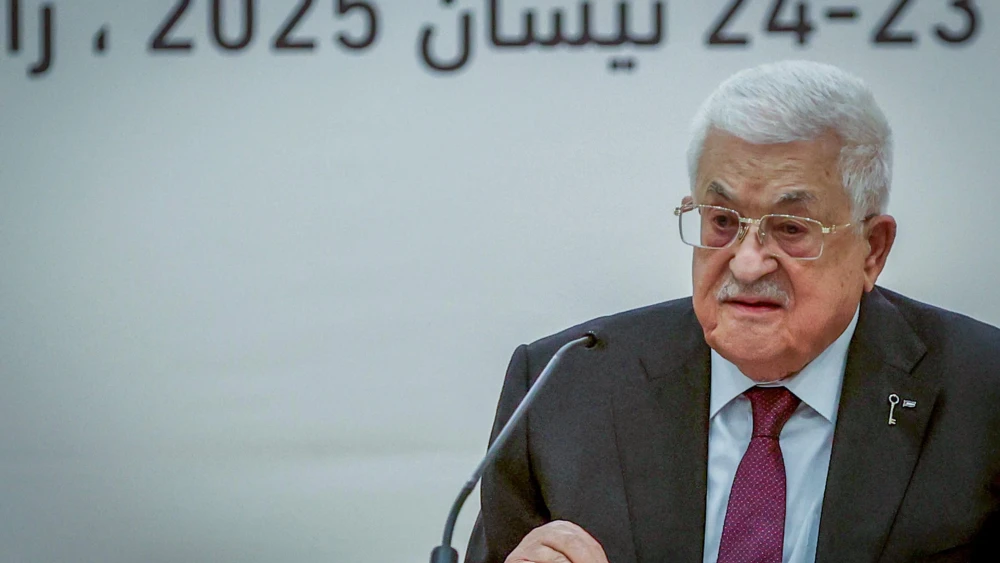
Forgive me if I respond to calls for Palestinian statehood with profound skepticism, if not outright disbelief. It’s not just that the Hamas-led terror attacks on southern Israel on Oct. 7, 2023, and the broad support it received among Palestinians, has deepened Israelis distrust of Palestinians (assuming that was even possible), it is that there is nothing to suggest their leadership is ready to abandon decades of rejectionism, incitement and violence—flowery statements about the need for a “lasting peace” by Palestinian leader Mahmoud Abbas notwithstanding.
The Palestinian leadership didn’t merely walk away from prior peace offers, including in 2000, 2008 and 2014, it has rejected the very notion of a Jewish state on any borders. That’s the clear message behind its glorifying of terrorist murderers, paying stipends to the families of terrorists (known as “pay for slay”), denying the Jewish people’s historic connection to Jerusalem, turning post-2005 Gaza into a terror base, indoctrinating Palestinian children in U.N.-funded schools with genocidal Jew-hatred and more.
There are countless ways of saying no to peace, and the Palestinians have employed all of them.
The single greatest obstacle to any genuine peace is the Palestinian insistence, led by Abbas, that more than 5 million Palestinians each have a personal “right of return” to pre-1967 Israel. These are the descendants of the original 700,000 Palestinian Arabs displaced by the 1948 war, whom the Arab and Palestinian leaderships have kept as stateless pawns for generations, wielding them as a demographic weapon against Israel. While tens of millions of post-World War II displaced persons were resettled in new homes—Palestinians, and only Palestinians—remain in limbo.
While the mythic quest for return, which is implicitly included in the much heralded “Arab peace plan,” is brushed aside by the international community as a mere negotiating chit to be bargained away in final-status discussions, as Adi Schwartz and Einat Wilf document in their book, The War of Return, that so-called right is foundational to the Palestinian national ethos. For decades, it has obstructed any prospect for peace. It’s not an “itch” in the peace process; it’s Ebola. As Schwartz and Wilf write, “Our research revealed that the Palestinian refugee is not just one more issue in the conflict; it is probably the issue.”
It’s a good source for Trump’s team to turn to.
Dispensing with the right of return is not a final-status issue. Contrary to decades of ill-conceived and destructive diplomacy, it is a threshold issue. If the Palestinian leadership refuses to abandon it before peace negotiations begin, Trump should bar them at the door.
Physical peace requires a peace mentality. That is impossible when the Palestinian leadership keeps promising its people that it can turn the clock back to 1948 and that Jewish sovereignty can yet be undone.
It’s long past the time to stop living in fear of Palestinian threats and temper tantrums. Contrary to conventional wisdom, it is the Palestinian leadership that has exercised the power to torpedo Mideast peace efforts. It has done so only because Western leaders have allowed it. Whatever other reforms Trump may require of Abbas and the Palestinian Authority (and there are many), eliminating the right of return should be No. 1 on the list.
In the past, peace negotiators failed to tell the Palestinians the truth: The right of return is not a legitimate negotiating issue; it is a death knell of negotiations. Instead, diplomats have both indulged and enabled the Palestinians’ mythic thinking, dooming every serious effort at peace.
Convincing Israelis that Palestinians are ready to live in peace with the Jewish state is a herculean enough task. But it’s flatly impossible unless the Palestinians acknowledge a simple reality: 1948 is over, it’s history.
And yet, the question remains: Is history about to repeat itself?


