
Hope abounds in Israel that in the next 24 hours, the hostages will be released and a greater peace will finally come to the region. Political pundits agree that it was Arab countries that made the difference, pressuring Hamas to sign on.
This analysis brought to mind a comment made to me by my cab driver, Effie, as we rode from Tel Aviv to Jerusalem. Responding to a confession that even as a staunch supporter of Israel, I was exhausted hearing how the world increasingly paints Israel as a pariah state. He said that even while that often seems to be, it’s not the reality.
Half-jokingly, but with absolute candor, he went on: “Israel today is the pilegesh (the ‘biblical mistress’) of Arab states. That’s how the Arab governments see us. They rely on us, even admire us, but don’t want anyone to know about the relationship. You’ll see—in sync with Israel, many Arab countries will turn on Hamas, preferring it be utterly degraded.”
Cabbies in Israel are famous as political sages, and Effie’s analogy is hard to shake. As a rabbi for more than 50 years, I’ve done my share of pastoral counseling. One guiding principle I tend to carry into those conversations is the word: WAIT (Why Am I Talking)? The key is to listen because the deeper, unspoken message is often the opposite of what’s being said aloud.
By that measure, the Arab world’s rhetoric is easy to decode. On the surface, Arab capitals rail against Israel. Scratch that surface, and the truth emerges.
Saudi Arabia offers the clearest example of this phenomenon. As a key adversary of Iran and its proxies, including Hamas, the kingdom welcomes any blow to Tehran’s power. Its official condemnations of Israel’s airstrikes on Iranian assets are ritual performances; privately, Riyadh breathes a sigh of relief. The Saudis dread the Shi’ite extremism of the Islamic Republic but lack the capacity (or courage) to confront it directly. Israel, their discreet “mistress,” carries out the work they dare not do.
The same is true in Cairo. President Abdel Fattah el-Sisi came to power by overthrowing the Muslim Brotherhood; Hamas is its Palestinian branch. Publicly, Egypt denounces Israel’s war. Privately, it is grateful.
Jordan’s king follows the same script. He knows that Hamas threatens his Hashemite throne—just as Palestinian militants of the Black September era nearly toppled his father in the 1970s—until Israel intervened to save him.
Lebanon, too, for all its criticism, understands that no country can survive with two competing armies. Israel’s blows against Hezbollah have, for the first time, raised the possibility that Lebanon’s own military might finally stand as the nation’s sole armed force.
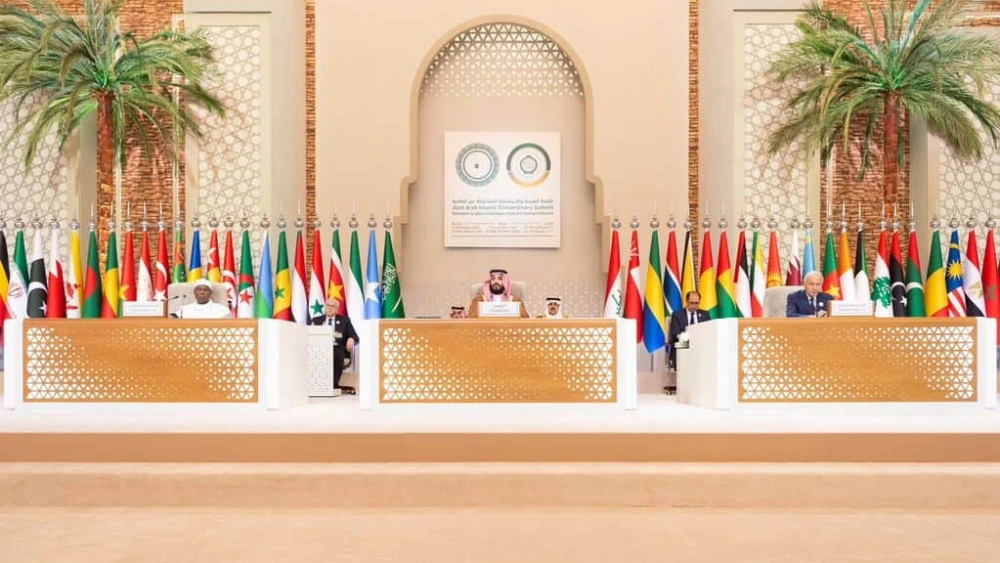
The Trump peace plan for the Gaza Strip made the subtext explicit: Many Arab states endorsed a framework that would defeat Hamas, demilitarize Gaza, humiliate its cowardly leaders and free the hostages. Their normative outrage against Israel is theater. Their true interest is stability.
Effie’s metaphor rings true. Hidden affairs rarely stay hidden. A significant portion of the Arab world knows its well-being depends on the downfall of Iran and its proxies, Hamas and Hezbollah foremost among them.
And that victory is possible only through alliance with Israel—the pilegesh they once tried to keep secret, but can no longer deny.