Newsletter
Newsletter Support JNS

PA announces partial ban on Israeli agricultural imports

It banned the import of vegetables, fruits, soft drinks and water from Israel into the Palestinian territories.

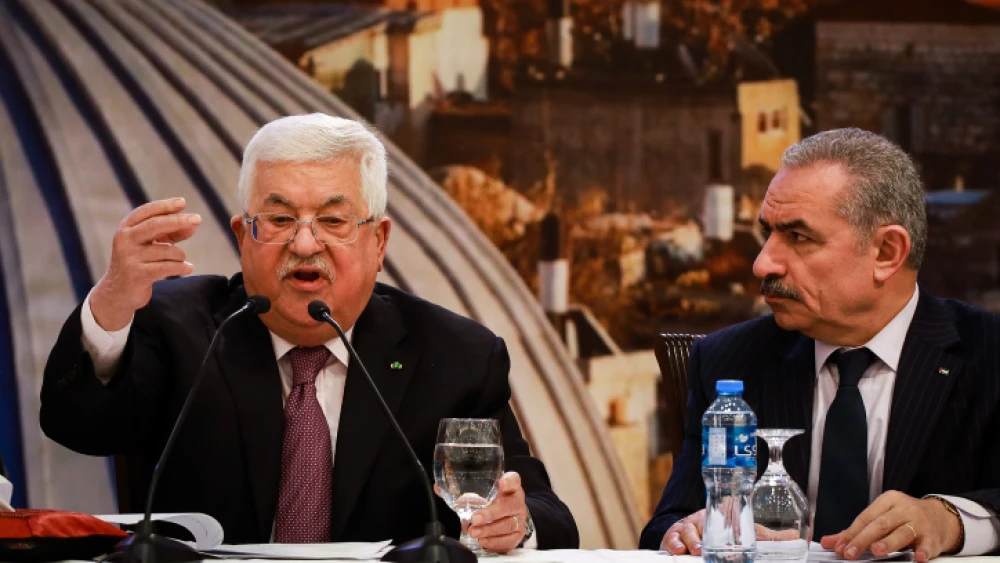
Palestinian Authority leader Mahmoud Abbas delivers a speech on the new Middle East peace plan at P.A. headquarters in Ramallah, Jan. 28, 2020. Photo by Flash90.

In a sign of growing tensions with Israel over the newly revealed U.S. Mideast peace plan, the Palestinian Authority on Monday banned the import of vegetables, fruits, soft drinks and water from Israel into the Palestinian territories.

The move was seemingly a response to an order issued by Israel’s Defense Ministry on Friday halting agricultural imports from the West Bank, which in turn came in response to a Palestinian boycott against Israeli cattle breeders.

Israeli Defense Minister Naftali Bennett instructed Coordinator of Government Activities in the Territories IDF Maj. Gen. Kamil Abu Rokon to halt agricultural imports after months during which the defense establishment tried to resolve the issue through negotiations.

The Palestinian boycott of Israeli cattle breeders has inflicted significant damage on the industry.

This article first appeared in Israel Hayom.

“These attacks come amid a broader rise in violent extremism across Canada and other Western democracies—a toxic brew of anti-Zionist rhetoric, local criminal elements, Iranian-backed proxies and ISIS-inspired terrorism,” CIJA stated.
“Iran and Israel are the only two countries on this planet that have a biblical relationship,” the exiled Iranian Crown Prince Reza Pahlavi said.
“We discussed the friendship and relations between Israel and Bahrain, as well as the importance of the U.S.-led Abraham Accords,” Isaac Herzog said.
The cause of the blaze near the grave of Rabbi Shneur Zalman of Liadi was not immediately clear.
The Japanese Red Army member, who helped kill 26 people, lived in Lebanon since his release in a 1985 prisoner exchange.
The suspect’s writing about the deadly Samaria shooting prompted an investigation and the seizure of ammunition, cash and fireworks.