Newsletter
Newsletter Support JNS

Russian hacker Alexei Burkov extradited to US from Israel

The Russians submitted a petition asking Israel to extradite the hacker to Moscow, but Israel’s Supreme Court rejected the request.

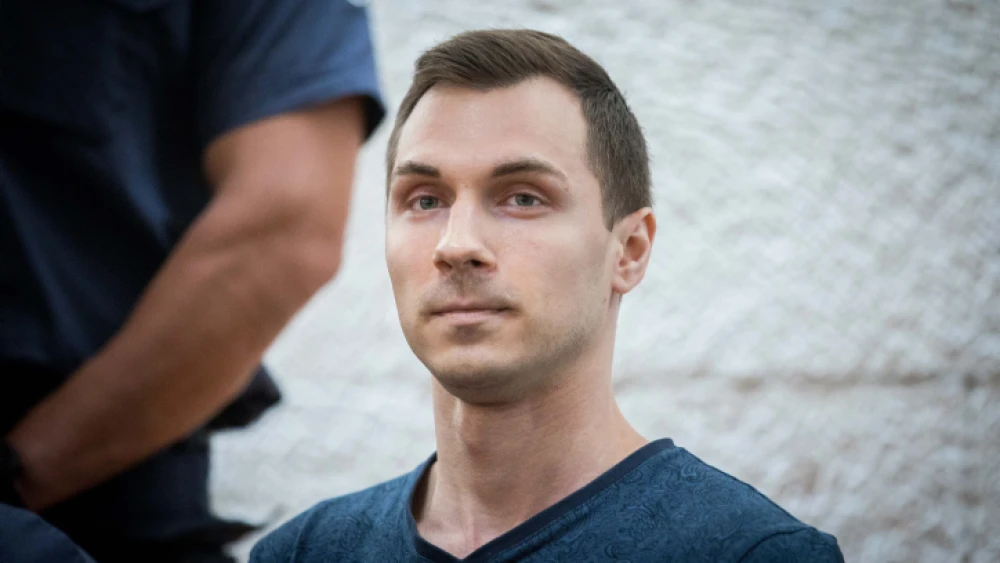
Aleksey Burkov, a Russian IT specialist and alleged hacker wanted by the United States, arrives for a court hearing at the Supreme Court in Jerusalem on Nov. 3, 2019. Photo by Yonatan Sindel/Flash90.

Israel extradited Russian hacker Alexei Burkov to the United States on Monday night, reported Israel’s Channel 12.

The Russians submitted a petition asking Israel to extradite the hacker to Moscow, but on Sunday, Israel’s Supreme Court rejected the request.

Burkov’s case may be connected to the imprisonment of 26-year-old Israeli tourist Naama Issachar in Russia, who was convicted by a Russian court earlier this year on charges of drug possession and smuggling after 9.5 grams of hashish were found in her luggage during her layover at an airport in Moscow. Issachar “may have been imprisoned as a bargaining chip in a diplomatic prisoner row between Washington and Moscow involving Burkov,” reported i24News.

The Russian Embassy in Israel criticized Israel’s decision to reject the petition filed against the Justice Minister’s order to extradite Burkov to the United States.

Chief Justice Esther Hayut wrote in her verdict that “it was not found that there are exceptional circumstances that justify the Supreme Court’s intervention in the minister’s decision,” referring to Israeli Justice Minister Amir Ohana.

The Russian Embassy in Tel Aviv wrote on Twitter that the court’s ruling “constitutes a breach of [Burkov’s] rights, as well as Israel’s international obligations.”

The embassy added “this step does not contribute to the relations between Russia and Israel.”

“My sense is that John wanted to retire with the confidence that, in the absence of the first generation of Catholic and Jewish leaders who lay the foundation of friendship, these relations would grow and thrive,” the scholar Malka Simkovich told JNS.
“Before the war, the public was divided,” the premier said. “I think that has changed.”
Prosecutors say defendants linked to the IRGC planned assassinations and arson against the Federal Republic’s top Jewish leader, a pro-Israel activist and Jewish businesses.
A change in Austrian law could allow survivors who remained in the country after World War II while searching for relatives or awaiting visas to receive long-denied benefits.
The facility, mainly used by budget airlines, had been shut for four months due to reduced traffic during the war with Iran.
“Peace is tied to freeing Lebanon from the de facto Iranian occupation,” said Gideon Sa’ar.
Benny Gantz, JNS editor-in-chief Jonathan S. Tobin, Gilad Erdan, Mosab Hassan Yousef, Nissim Black and leading voices in security, diplomacy, media, law and Jewish communal affairs headline the summit’s third day in Jerusalem.