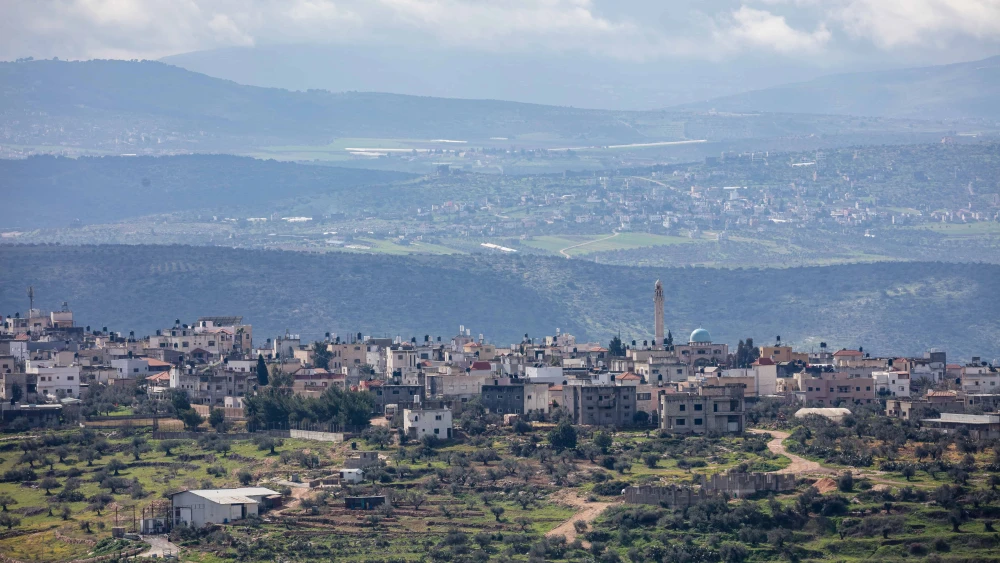
Palestinian terrorists in Samaria opened fire on Tuesday on the northern Israeli farming community of Meirav, located inside the country’s pre-1967 lines, a spokesperson for the kibbutz said.
There were no injuries in the attack, which took place as school buses were returning children to the community, but one home sustained damage, according to the spokesman.
The shots were reportedly fired from the Palestinian Arab village of Jalbun, about 220 to 330 yards from the kibbutz.
On Feb. 6, terrorists from Jalbun also targeted Kibbutz Meirav, with one bullet shattering a window and entering a house with children inside. The shootings have been commonplace in recent months, even before the start of the war with Hamas on Oct. 7, one resident told JNS last week.
Meirav is located on the slopes of Mount Gilboa, adjacent to the Green Line with northern Samaria.
Between Oct. 7 and Jan. 15, the Rescuers Without Borders group recorded more than 2,600 terrorist attacks against Israelis in Judea and Samaria, including 760 cases of rock-throwing, 551 fire bombings, 172 shootings, 12 stabbings and nine vehicular assaults.