
In 1711, a woman named Mariana Pequena stood before the Portuguese Inquisition in Lisbon, accused of secretly practicing Judaism. Born in Angola and later enslaved and taken to Brazil, she had managed to secure her freedom. But she could not escape her past or her faith. Testimony suggested that she observed Jewish customs and was accused of clinging to beliefs and rituals associated with Judaism. For this, she was condemned.
Her story, at once tragic and extraordinary, opens a window onto one of the least-known chapters of Jewish history: the surprising and largely forgotten connection between the Jewish people and the southern African nation of Angola.
The origins of that connection lie in the expulsions from Spain in 1492 and Portugal soon thereafter. Countless numbers of Jews had been forced to convert or flee. Some of these “New Christians,” or Conversos, went to distant territories in Portugal’s expanding colonial empire.
By the 16th century, these crypto-Jews had established a presence in Angola, particularly in Luanda. Much of this activity traces back to Paulo Dias de Novais, the Portuguese conquistador and grandson of explorer Bartolomeu Dias, who was granted lordship over Angola in 1571.
Some historians have suggested that Novais may have had Converso connections and that New Christian artisans and settlers accompanied his enterprise to Luanda. In later accounts and Inquisition records, there are hints of a clandestine rabbi and secret prayer gatherings—possibly even a makeshift synagogue—one of the most remarkable (and least documented) outposts of hidden Jewish life in sub-Saharan Africa.
Angola was not merely a refuge; for some, it also served as a conduit. Testimonies gathered by the Inquisition in the Americas suggest that certain individuals accused of Judaizing first encountered Jewish customs in Angola, making it a bridge linking Europe, Africa and the New World.
Yet, like Mariana Pequena, those who clung to Judaism did so at enormous risk. The transatlantic slave trade and ongoing persecution gradually eroded these fragile communities. Along parts of the Angolan coast, early modern European sources refer to Luso-African groups sometimes described as “Black Portuguese,” whose identities emerged through intermarriage and cultural adaptation.
Some modern writers and scholars have speculated that vestiges of Sephardic customs may have persisted among segments of these communities, even as the slave trade scattered their descendants. But the evidence is fragmentary, and many of these people were ultimately swept into slavery, their traditions largely lost.
Thus, Angola’s Jewish story is marked not only by resilience but also by disappearance.
And yet, remarkably, Angola would re-emerge in Jewish history at a moment of profound global crisis.

An expansion of ties
In the early 20th century—and with renewed urgency in the 1930s as Nazi persecution intensified—some Jewish leaders raised the idea of settling Jews in Angola. The so-called “Angola Plan,” associated with the Jewish Territorialist movement led by Israel Zangwill, envisioned the Portuguese colony as a potential refuge for Jews fleeing antisemitism.
Portuguese authorities, including members of parliament, entertained and advanced proposals that could have opened the way to organized Jewish settlement in Angola. At one point, in 1912, the Chamber of Deputies approved a bill to authorize land concessions to Jewish settlers, but nothing came of the initiative due to a lack of funds. The plan briefly gained renewed attention in 1934 as European Jewry faced mounting danger under Adolf Hitler, but it went nowhere. Had it been implemented on a significant scale, Angola might have become a haven for thousands of Jews seeking escape.
History would render that failure all the more tragic.
As the Holocaust unfolded, 6 million Jews were murdered while much of the world remained closed to Jewish refugees. The idea that Angola—remote, underdeveloped and far from the centers of Jewish life—might have offered even a partial refuge underscores the devastating consequences of missed opportunities and international indifference. One cannot help but wonder how many lives might have been saved.
And yet, in the decades that followed, Angola would again intersect with the Jewish story, this time through the modern State of Israel.
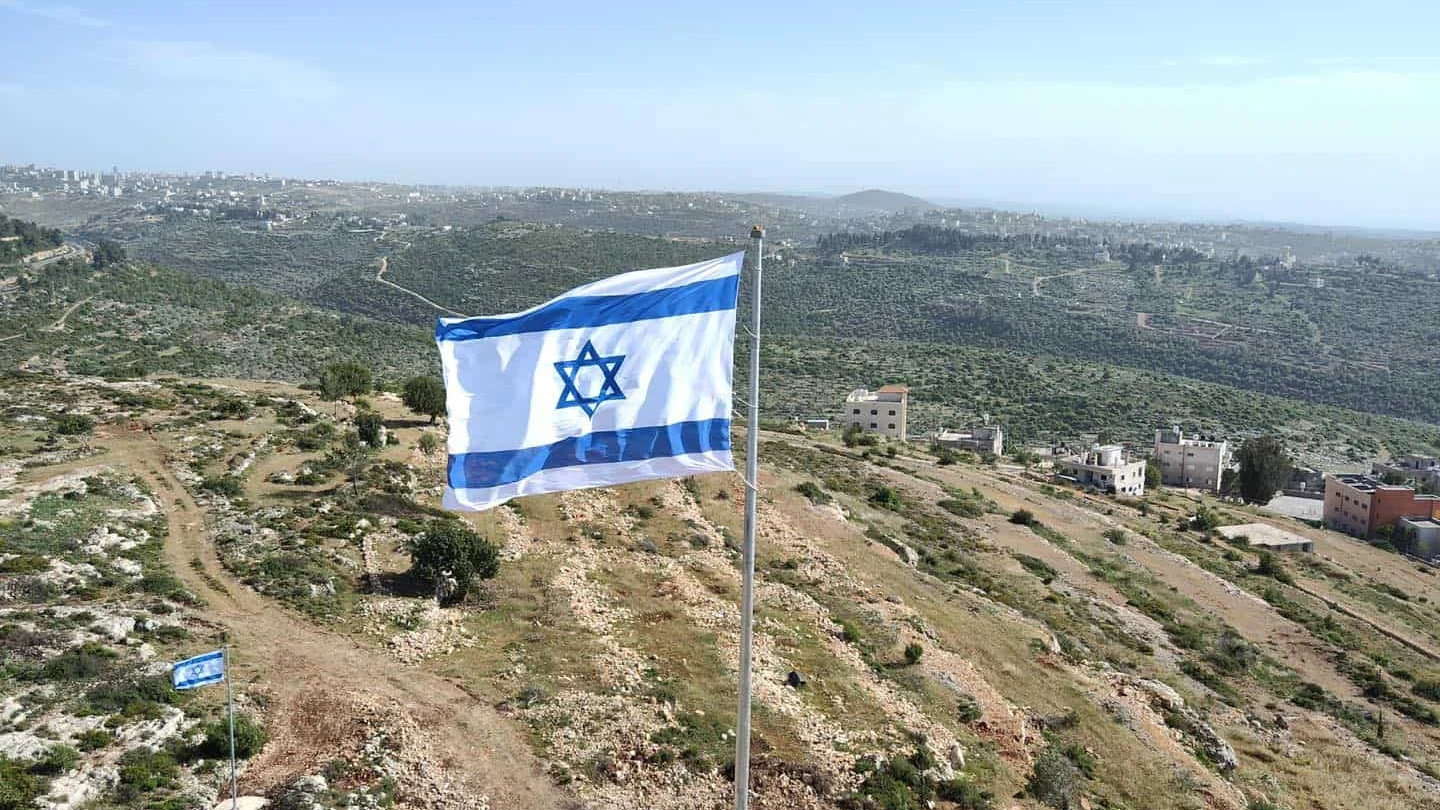
Diplomatic relations between Israel and Angola were formally established in 1993, with Israel opening an embassy in Luanda in 1995 and Angola later establishing its embassy in Tel Aviv in 2000. Since then, cooperation has expanded across numerous fields. Israeli expertise has contributed to Angola’s development in areas such as agriculture, health care and infrastructure, with training programs helping to build local capacity. Israeli companies have been active in sectors ranging from construction to telecommunications and water management.
These ties continue to develop. In 2025, Israel’s newly accredited ambassador to Angola, Leo Vinovezky, highlighted what he called “unique opportunities” to expand cooperation in agriculture, health, space technology and vocational training.
At the same time, Angola has often aligned itself with critical positions toward Israel in international forums, reflecting broader African and developing-world perspectives. Yet it has also maintained bilateral ties and affirmed Israel’s right to security, illustrating the complex and often dual-track nature of modern diplomacy.
In recent years, Jewish life in Luanda has grown stronger after the grand opening in 2016 of Chabad Lubavitch of Angola’s center in Luanda. Hundreds gathered for the dedication of a Torah scroll specially commissioned for the community, complete with a sofer (“scribe”) from Canada and festive celebrations, in what the community describes as the first public hachnasat sefer Torah, or Torah dedication ceremony, in Angolan history.
Though small in number, the community represents a striking continuity—a visible Jewish presence in a land where Jewish identity once survived only in whispers.
And so, Angola today embodies two parallel Jewish narratives.
The first is early and largely forgotten: the story of Sephardic exiles who carried their faith across oceans, struggled to preserve it under persecution and ultimately saw many of their communities fade into obscurity.
The second is modern and evolving: the story of a sovereign Jewish nation building ties with an African nation, alongside a small but resilient Jewish community living openly where others once could not.
Together, they offer a powerful reminder.
Jewish history does not unfold only in the places we expect. It stretches into distant corners of the world, shaped by exile, resilience and the constant search for refuge.
And sometimes, as in the case of Mariana Pequena, it is preserved in the life of a single individual whose quiet determination to remain connected to her people echoes across the centuries.