KRAKOW, Poland—For eight decades, Holocaust survivor Hannah Yakin, 93, wondered what happened to the baby boy who turned up outside a neighbor’s home in suburban Amsterdam during World War II with some clothes, blankets, a hot water bottle and buttermilk powder.
“I never forgot him because I loved him so much,” Yakin told JNS this week during the annual March of the Living Holocaust commemoration in Poland.
The little girl of nine who had played with the baby for two years in the garden of their home more than eight decades ago was finally reunited with the wartime infant—now 83 years old—last year, when an Amsterdam park was named after her late father, Jan van Hulst, a member of the Dutch resistance who was posthumously recognized in 1997 as a Righteous Among the Nations by the Yad Vashem Holocaust Memorial for saving Jews during the Holocaust.
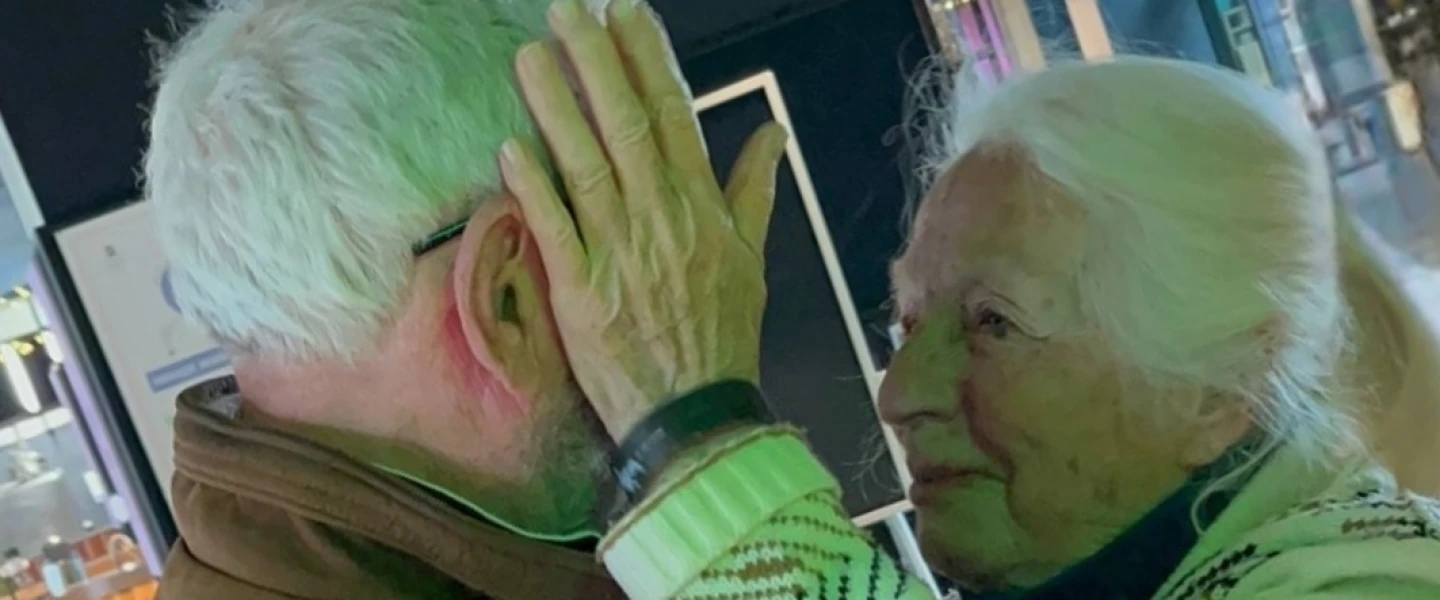
This week, the two elderly survivors—the daughter of the resistance member and the baby whom her father had saved—were together again and jointly lit a memorial torch at a Holocaust Remembrance Day ceremony at Auschwitz-Birkenau in honor of the non-Jews who saved Jews during the Holocaust.
“I lost him once. I will never lose him again,” Yakin said as they embraced in tears ahead of the event.
‘You cannot imagine what it is like’
It was December 1942 when the baby boy was placed in an open suitcase outside a house in the suburban Amsterdam district of Amstelveen, next to the home of the van Hulsts.
“Like Moses was dropped in a basket, I was dropped in a suitcase with some milk,” Ben Gazan, 83, recounted in an interview with JNS.
“On Tuesday evening, the doorbell rang at the address at Rodenburghlaan 27,” a local Dutch newspaper reported at the time. “When the lady opened the door, she discovered a package on the sidewalk that turned out to contain a 6-day-old baby boy. With the package were clothes, blankets and woolen baby items, a metal hot water bottle, and a few packets of Nutricia buttermilk powder.”

The report continued: “The residents of the property have lovingly taken in the child. The police are conducting an investigation.”
The baby was raised by the foster family. The little girl next door—whose father became known for forging papers for Jews, a practice he started with his Jewish wife, as well as hiding them during the wartime years—would play with him in their garden.
“They let me take him in my doll cart and play with him in the garden,” Hannah Yakin recounted. “He was like a live doll for me.”
The van Hulsts moved away after the war ended, while baby Ben was raised by his foster family for another five years and later reunited with his biological mother, who recognized him one day in the neighborhood park.
In the meantime, Yakin immigrated to Israel in 1956 and settled in Jerusalem, where she married and started a large family, but never forgot the baby of her childhood.
“All my life, I never forgot him, and I had asked many times if people knew what had become of him,” Yakin recounted, noting that she had received false reports over the years that he was in Israel.
Last year, she was notified that a park in Amsterdam was being named after her late father for his heroism, and she again inquired after the baby boy. The two reunited for the first time in more than eight decades at the ceremony and again this week in Poland.
“Moving is not the word,” Yakin said. “You cannot imagine what it is like.”
“My father taught us that being good is something normal,” she said, recalling his reluctance ever to be recognized for his wartime heroism. “He didn’t think one should receive a prize for doing something good.”
Standing at the site of the unmarked graveyard of more than 1 one million Jews murdered at Auschwitz, she said: “From my parents I learned that even in the darkest times we are responsible for our choices.”