Newsletter
Newsletter Support JNS

Palestinian terrorist who infiltrated Judea community shot dead

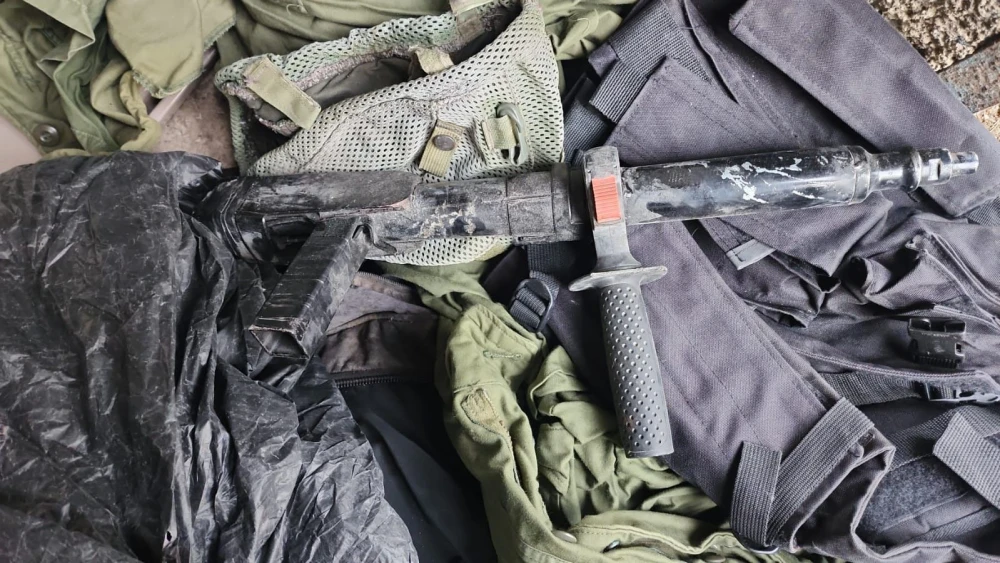
IDF troops later raided his residence near Hebron and found an improvised weapon and military equipment.

A firearm and other military equipment
A firearm and other military equipment found at a Palestinian’s residence in the Khirbet Fuqeiqah area near Hebron on April 18, 2026. Credit: IDF.

Security personnel killed a knife-wielding Palestinian terrorist who infiltrated the Jewish community of Negohot in Judea early on Saturday morning, the Israel Defense Forces said.

No other injuries were reported.

The suspect was shot dead while charging at a member of the local security team.

Following the incident, IDF soldiers, directed by the Israel Security Agency (Shin Bet), operated in the Khirbet Fuqeiqah area, adjacent to the Negohot community in the South Hebron Hills, where the terrorist resided, the army said.

The soldiers conducted a targeted raid of the terrorist’s residence and located an improvised weapon and military equipment.

In light of the findings, the terrorist’s brother was detained and transferred to the Shin Bet for questioning, the IDF added.

The Palestinian Authority’s WAFA news agency identified the terrorist as Muhammad Ahmad Abu Ghaliyeh al-Suwaiti, 25, from Khirbet Salama west of Dura in the Hebron Governorate.

“I have a passport that I was just born with,” Laura Pinho said during a CodePink webinar. “How can I live in this world if I don’t make every effort to equalize the playing field in whatever way that I can?
Secular activist Naor Narkis’s suggestion that Religious Zionist soldiers’ casualty rates might not be so high were they to do “full military service” was “unnecessary,” said Golan.
“Hamas’s actions are time and again ignored by human rights organizations,” the Defense Ministry unit said.
Israeli forces eliminated Talal Jaber Mohammad Abd al-Aal, who infiltrated Israel and helped hold hostages.
“She complained about that kind of retaliation and ostracization, and that persisted throughout the rest of her internship there,” Rebecca Harris, of the Brandeis Center, told JNS.
The underground complex in Rafah was neutralized after a three-month operation using 30,000 cubic meters of concrete.