
When we discuss great colonial powers, we usually think of Europeans—Britain, Spain, France, Netherlands, Portugal. But often overlooked are some of the world’s most brutal—and successful—colonizers: Arab Muslims.
Indeed, what started as the unlikely dream of a single Arab—Islam’s founder, Mohammed— expanded into a mighty empire. While today the power and influence of Mohammed’s conquests have diminished, Arab Muslims still today control some 9% of the world’s land mass and 470 million of the world’s 8.3 billion people.
Not only did the religion of Islam obligate Arabs to conquer non-Muslim lands and impose Islam on subjugated peoples, they pursued their mission ruthlessly. Inspired Islamic warriors marched out of their Arabian Peninsula homeland with a goal of bloody conquest.
Over the centuries, the Arab Muslim march spread throughout the Middle East and North Africa, marked by atrocities—from the destruction of indigenous cultural, and religious and linguistic communities to the slaughter of native people who resisted Muslims’ imperial religious fervor. Conquered peoples were required to convert to Islam or die, often by mass executions and beheading.
For hundreds of years, Arab Muslims were also among the greatest practitioners of slavery.
How ironic that the Palestinian Authority leader Mahmoud Abbas, 86, recently referred to Israel’s presence in its ancient Jewish homeland using the popular, but wildly erroneous epithet popularized by radical academics—a “settler colonial project.”
In fact, the history of the Jews is entirely anti-colonial—a 3,000-year resistance to Assyrian, Babylonian, Persian, Greek, Roman, Crusader, Arab, Turk, and finally, British colonizers. What’s more, when Jews returned in numbers to their indigenous homeland, they never seized land owned or controlled by another people, nor did they conquer another people or impose exploitative colonial rule over them. Finally, Israel’s land mass makes up one of the tiniest nations in the Middle East—about the size of New Jersey, with only 10 million citizens.
Curiously, Westerners rarely apply the terms “colonialism” and “imperialism” to Arabs or Muslims, though the land they control is far larger than Europe or the United States. Likewise, Arab-Muslim colonial expansion had the same devastating effects on native populations as Western colonization, though Arab Muslim colonialism was sometimes even more brutal.
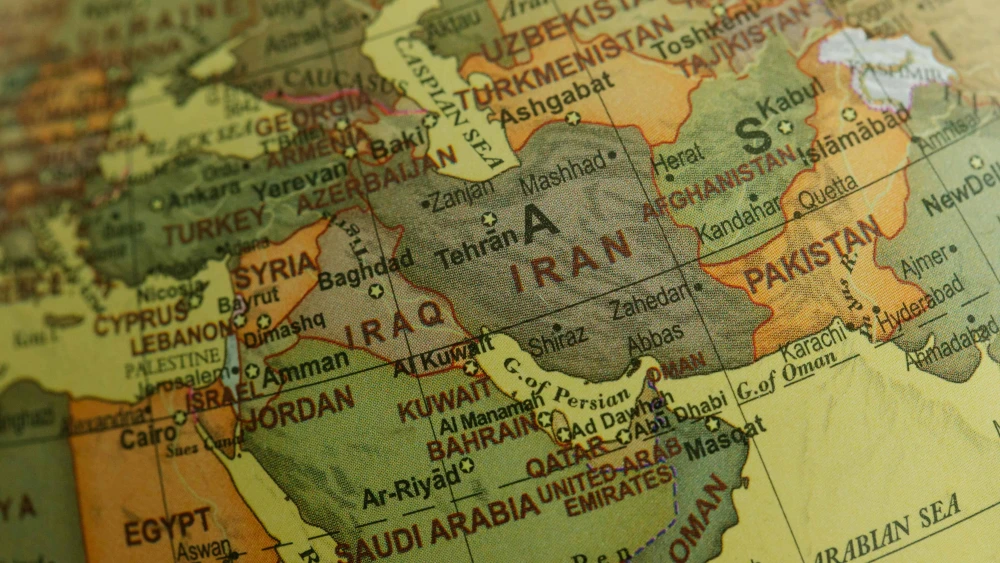
Islam inspired Arab colonialism. The Quran commanded the Arabs to “Fight those who do not believe in Allah” and “kill the polytheists wherever you find them,” unless they repent, pray, and pay zakat (alms). Inspired by Islam, the Arabs conquered vast swathes of territory on three continents. In just over a century, the Arabs took control of all of North Africa, the entire Middle East, the Iberian Peninsula, and large parts of Central and South Asia.
Arab colonialism was cruel and destructive. Like Western colonialism, Arab colonialism involved heinous atrocities, including mass murder. One of the worst massacres occurred in 633 C.E. in what is now present-day Iraq. Arab forces brutally slaughtered thousands of prisoners by beheading them next to a riverbank, earning the battle the name “River of Blood” massacre.
Another infamous massacre occurred in Istakhr, a major Zoroastrian center in present-day Iran. Arab forces sacked the city and murdered approximately 40,000 people.
Indeed, the Arabs also laid waste to many cultural, religious and linguistic communities. Adherents of Zoroastrianism, for example, who once dominated Iran, became a tiny minority, as did Coptic Christians in Egypt. Ancient languages like Aramaic, the language that Jesus spoke, were replaced by Arabic and rendered all but extinct.
The robust Arab slave trade. Like Western colonizers, the Arabs enslaved many of their victims, but whereas the Western slave trade lasted just three centuries, the Arab slave trade lasted for over a millennium. Slavery remained legal in Qatar until 1952 and in Saudi Arabia, Yemen and the United Arab Emirates until the 1960s.
Per Islamic doctrine, only non-Muslims captured in jihad (holy war) or born to enslaved parents could be legally enslaved. Male slaves were routinely castrated, often leading to death, while female slaves were subject to sexual exploitation as concubines. While not unique—since slavery existed globally—the Arab slave trade’s longevity, scale and specific cruelties make it one of history’s most appalling.
Labeling Israel “colonialist” inverts and mocks historical truth. Few populations have battled colonialists longer or more successfully than the Jews. For instance, in the first century C.E., Jews launched their Great Revolt against the Roman Empire, which occupied present-day Israel. The revolt was crushed, the Jewish Temple in Jerusalem destroyed, and Jews were exiled from their homeland for nearly two millennia. Nevertheless, they remained determined to return to their ancestral homeland and reclaim their independence. No wonder the prayer most Jews say every Passover: “Next year in Jerusalem.”
Finally, in 1948, the Jews re-established their independence in the Land of Israel. Doing so, however, required decades of struggle against colonial powers, including the Ottoman Empire, the British Empire, and the Arabs, who were adamant that Israel remain part of their “Arab world.” Israel’s history since independence has been defined by its struggle against Arab and Muslim states determined to destroy it and restore Muslim colonial rule.
Unlike the Arab conquerors of old, Israel has never sought to subjugate other peoples or rule over the lands of others. In fact, whenever Israelis seized territory in wars initiated by the Arabs, they offered to exchange it for peace. Thus, Israel returned Sinai to Egypt and also offered the Palestinians land for their own state, though the Palestinians never had sovereignty in the region. Seeking to emulate their Arab forebears, the Palestinians have rejected all offers by Israel to share “Palestine,” seeking rather to expel the Jews.
The Middle East’s real occupiers are the Arabs. Whereas the Arabs once ruled only the Arabian Peninsula, they now rule over all of North Africa and almost the entire Middle East. No activists, however, chant “End the Arab Occupation,” nor do today’s “scholars” call Arabs colonizers. Instead, such slanders are reserved for Israel, a Jewish state whose presence is confined to the original Jewish homeland. You can’t “occupy” or “colonize” your own indigenous homeland.
The real “settler-colonial project” in the Middle East and North Africa is the vast empire the Arabs created after their centuries of conquest, mass murder and exploitation. In contrast, Israel is a country liberated by its indigenous people from Arabs and other earlier colonial powers.
Originally published by Facts and Logic About the Middle East (FLAME).