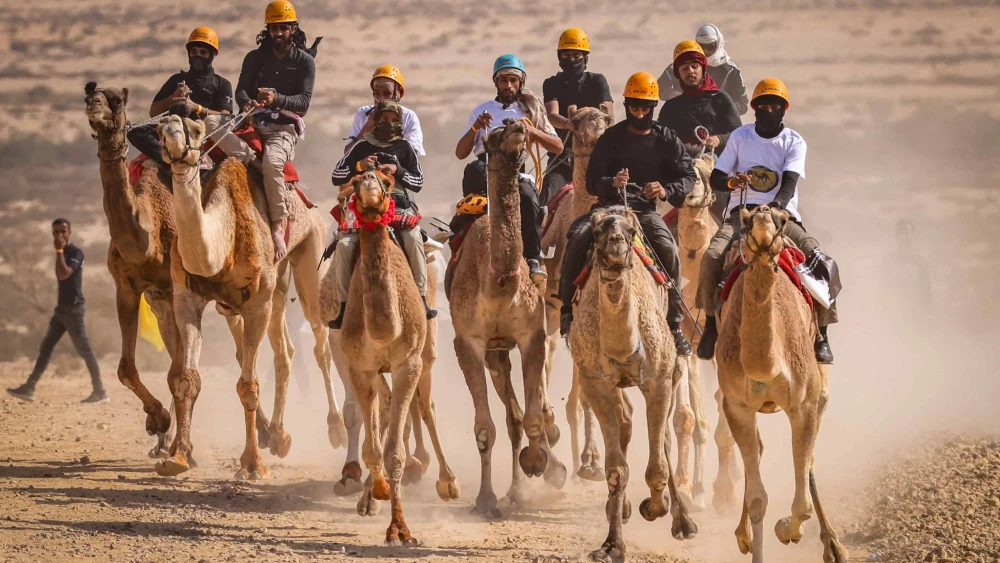
Israel held its first-ever state-sanctioned camel race on Friday in the country’s south with thousands of spectators in attendance to support the competitors.
The event, held near Ashalim and about 22 miles south of Beersheva, was organized by the local Bedouin community, in conjunction with the Ramat HaNegev Regional Council, the Diaspora Affairs Ministry, the Agriculture Ministry and the Ministry for the Development of the Negev and the Galilee.
“Every year, several illegal [camel] races are held, some of them in military zones, which endangers both the riders and the supporters—to say nothing of the bad reputation it gives to the [Bedouin community],” Dr. Mazen Abu Siam, the veterinarian from Rahat overseeing the event, told reporters.
“For the first time, the race is being held [legally], added Abu Siam, “with almost all Bedouin tribes participating, from the south to the north.”
More than 40 camels participated in the race, with the younger ones running a 6-kilometer route (a bit over 3.7 miles) and the older ones running 12 kilometers (almost 7.5 miles).
State sponsorship of the event allowed for first aid stations, police presence and designated bathroom areas, according to Diaspora Affairs Minister Amichai Chikli, who posted about the event on Instagram over the weekend. There were also large tents for supporters to watch the race on large screens with professional bilingual commentary on the sport.
“The race today is an important step toward the integration of Bedouin society and strengthening [local] government in the Negev,” Chikli added, noting the cultural significance of state and municipal involvement in the race.
“This is a vital thing, which strengthens the Bedouin heritage,” agreed Talal al-Karinawi, mayor of Rahat, Israel’s only Bedouin city, in a statement.
Taysir al-Qadi, a resident of a small village near Rahat who breeds horses and camels, shared his approval of the government’s involvement in the race with Ynet. “We all travel to this race,” he explained. “All the Bedouins have camels. … I think it’s very good for the country to have something like this … a legal, real race. I see many support [it] and hope it will expand.”
Al-Karinawi echoed these sentiments, telling news outlets: “We are spearheading the establishment of a horse and camel racing track to develop [the future of] the industry. … The race will strengthen the bond between the Bedouin and Jewish communities. Perhaps in the future, it will become an international race.”