
What is going on in Iran? To understand it, we should not analyze every detail in isolation. We need to look at the general picture—where the pieces fit together. When we do, the conclusion becomes increasingly clear: The Islamic Republic is under severe pressure, its leadership is fractured, and the conditions for regime change are developing.
An important analysis was published this week by Vaughn Cordle in an article titled, “The End of Iran’s Regime Is Coming.” Cordle is not known as an expert on Iran, but his analysis is excellent. He argues that “the fracture is internal, the pressure is financial,” and that Iran’s regime is approaching collapse. He cites interference by the Islamic Revolutionary Guard Corps in negotiations, payroll failures, absenteeism in security units, Dubai’s crackdown on Iranian financial networks and the inability of the regime to “print purchasing power.”
He also argues that the ceasefire extension and blockade put into place by U.S. President Donald Trump are not signs of weakness, but a way to let Iran’s internal financial clock run out: “The clock is financial. The mechanism is payroll. The exit is a coup.”
Cordle’s central point is that the regime is not acting as one unified body. The foreign ministry and civilian leadership have shown signs of wanting negotiations. The IRGC, under hardline figures such as Ahmad Vahidi, appears determined to prevent concessions. Cordle notes reports that the IRGC has blocked appointments, interfered with negotiations and effectively assumed control of key state functions.
This distinction matters. The regime contains true believers and pragmatists. The true believers inside the IRGC see themselves through the lenses of the Shi’ite story of Karbala that took place in 680 C.E.: Imam Hussein, grandson of the Muslim Prophet Muhammad, standing with 72 followers against the massive forces of the Sunni Caliph Yazid, the Shi’ite mortal enemy. These true believers believe that suffering proves righteousness and that if they hold firm, Divine redemption will come. For such people, compromise with America, the Sunni Arabs or Israel is betrayal.
This is the key to revolutions. People can demonstrate in the streets, but regimes fall when they can no longer pay the people who protect them. Security forces need money to eat. The Basij need money. Police units need money. IRGC-linked personnel need money. Once payroll stops, loyalty becomes negotiable. What Trump appears to want to do is block the Straits of Hormuz, to suffocate Iran financially by not allowing it to export oil, Iran’s only real source of earning money.
The policy seems to be working. Cordle cites reports that police special units have been paid late, Armed Forces personnel have gone unpaid, and absence rates in some units are approaching 90%. He also notes reports of defections and even the use of 12-year-old children by the Basij, the thug enforcers of the IRGC. These figures need continued verification, but they fit the broader picture: The regime’s coercive machinery is losing its material foundation.
Dubai is another major factor. For decades, Dubai has been a clearinghouse for Iranian sanctions evasion and money laundering. Cordle argues that after absorbing Iranian attacks, the United Arab Emirates began shutting down Iranian financial institutions in Dubai, arresting IRGC-linked money changers and freezing Iranian assets. If Dubai stops being a financial escape valve from Iran, then Tehran’s rulers are squeezed from every direction.
Trump’s negotiating tactics are exposing the fractures. His pressure, especially the blockade affecting the Strait of Hormuz, coupled with the strikes on petrochemical and financial infrastructure, is suffocating the Iranian system. Cordle’s point is that every day the blockade continues, Iran loses oil revenue, toll revenue and hard-currency access. The regime can print rials, but it cannot print purchasing power.
Another important tool against the regime is TousiTV, which burst onto the scene not long ago as an excellent source of information about what’s going on inside Iran. Led by political commentator Mahyar Tousi, an Iranian exile living in London, it now has 1.6 million subscribers on YouTube, and its daily podcasts have hundreds of thousands of hits.
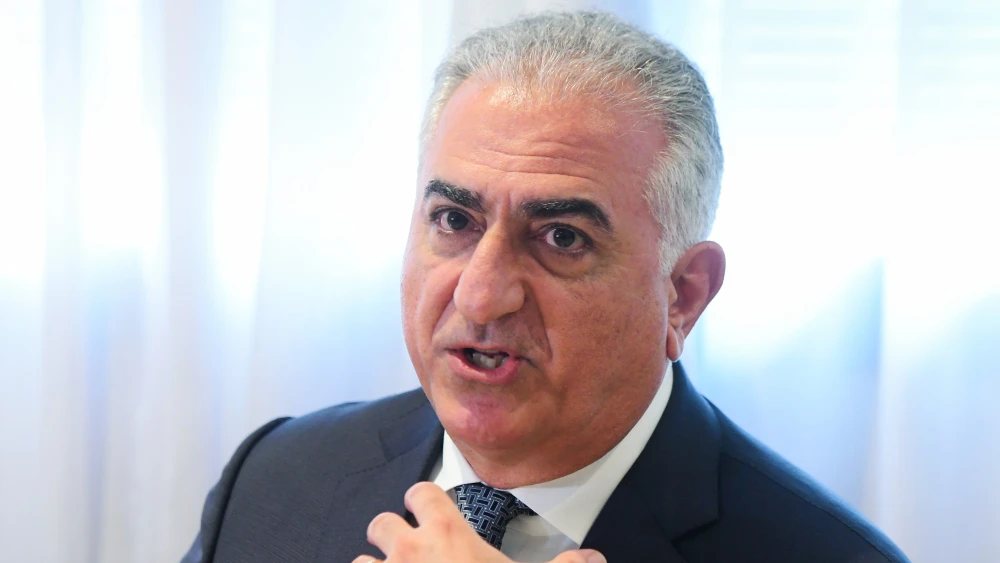
TousiTV is a fervent supporter of the exiled Iranian Crown Prince Reza Pahlavi, the son of the exiled Shah Mohammed Reza Pahlavi, who ruled Iran until being forced into exile during the Islamic Revolution of 1978-79.
In the past six months or so, Pahlavi has given numerous interviews and issued a plan for Iran’s future after the regime of mullahs has ended. During this time, he has become stronger, clearer and more serious. He has risen to the occasion. He is the only national figure known to all Iranians. He may be the one person capable of serving as a national symbol in a transition away from the Islamic Republic.
In many ways, the situation in Iran resembles the Islamic Revolution in 1978-79. The shah’s regime did not fall merely because people protested. It fell because the shah was either unwilling or unable to do what was necessary to stay in power. Having lived in Iran during the early and mid-stages of that revolution, I witnessed that for myself.
In contrast, the IRGC leaders still have the will to remain in power, but they are fast losing the ability to do so. It no longer has the ability to pay its enforcers is seems to be going under. The state has lost cohesion, confidence and the ability to command loyalty. The economy is collapsing. The ruling elite remains divided. The army and IRGC are not the same institution, and if the IRGC weakens internally, others can be expected to take over.
Historically, Iran has fractured and then been put back together. The hope is that a national institution, perhaps the army, can help preserve the country if the IRGC collapses.
This is where Pahlavi matters. In recent years, Iranians have chanted for his return. Many young Iranians have heard from parents and grandparents that Iran under his father—Mohammad Reza Shah—was vastly better than life under the Islamic Republic. They knew that Iran was modernizing. They knew that literacy, development and national pride advanced dramatically. And they know that life was improving by leaps and bounds. They may exaggerate, as Iranians often do, but the memory is real.
Pahlavi may not seem to be Trump’s publicly favored candidate; indeed, Trump sometimes appears critical of him. But that may be deliberate. If Pahlavi is to succeed, then he cannot look like he is being imposed on Iran by America. He must look like Iran’s choice.
Patience is therefore essential. Mossad director David Barnea recently said the mission in Iran “has yet to be completed,” adding that Israel did not expect it to be completed immediately after the fighting ended, but planned for the campaign to continue after the strikes in Tehran. He said the Mossad’s responsibility ends “only when this radical regime is replaced.”
That is exactly right. The strategy requires time. The pressure must continue until the internal fracture produces a faction willing to act.
The Islamic Republic is being squeezed from the sea, from the air, from Dubai, from its own unpaid forces and from its own now deeply divided leadership. If the pressure continues, the regime may fall into the hands of a new leadership that can return Iran from a repressive Islamic Republic intent on developing nuclear weapons and terrorizing the world into a nation with a glorious cultural heritage. Then, maybe it could ultimately normalize relations with its regional neighbors, the United States and Israel.