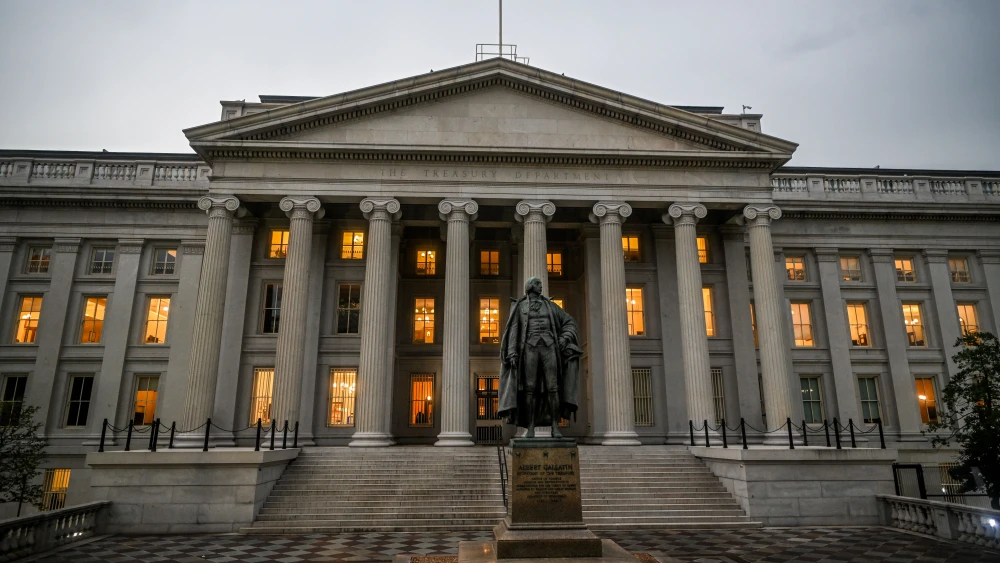
The Trump administration turned up the dial on its “Economic Fury” operation on Tuesday, implementing sanctions on 35 people and entities tied, it said, to Iran’s shadow banking sector.
The U.S. Treasury Department said that the designated people and entities helped move the equivalent of tens of billions of dollars in a coordinated effort to evade sanctions, funding Iran’s military capabilities and terror sponsorship.
“Iran’s shadow banking system serves as a critical financial lifeline for its armed forces, enabling activities that disrupt global trade and fuel violence across the Middle East,” stated Scott Bessent, the U.S. treasury secretary.
“Illicit funds funneled through this network support the regime’s ongoing terrorist operations, posing a direct threat to U.S. personnel, regional allies and the global economy,” he stated. “Financial institutions are on notice. Any institution that facilitates or engages with these networks is at risk of severe consequences.”
Largely cut off from Western financial systems, Iran turns to private companies to manage payments for imports and exports, facilitated through shell companies.
Tuesday’s sanctions hit Farab Soroush Afagh Qeshm Company, which works with Iran’s Shahr Bank to enable Iranian oil sales, the Treasury Department said. Two of the company’s senior executives were also designated.
Other front companies working with Bank Sina and Bank Sepah, affiliated with Iran’s supreme leader and the military respectively, were also sanctioned, as were Nix Energy and Tai Lung Trading, which the department accuses of facilitating the transfer of millions of dollars on behalf of already-sanctioned Iranian individuals.
“By dismantling these financial channels, we advance the administration’s policy in the conflict with Iran and underscore our commitment to imposing maximum pressure on Iran,” stated Tommy Pigott, U.S. State Department spokesman.
“While the Iranian regime enriches corrupt elites, ordinary Iranians suffer under a deteriorating economy,” Pigott said.
The administration’s sanctions-driven “Economic Fury” campaign is being run in tandem with the military’s operation “Epic Fury,” as messaging continues to be passed between Washington and Tehran on a possible resolution to their two-month-old conflict.