U.S. Politics

Pentagon spokesperson Jon Kirby said the airstrikes near the Syrian-Iraqi border were “proportionate” and defensive.

In a letter to the president, members of the House Committee on Homeland Security said America “cannot afford to be perceived as weak or wavering on these important national security threats. Appeasement will not effectuate change.”

Signees of a letter against the move were J Street, the New Israel Fund, Partners for Progressive Israel, Ameinu, Americans for Peace Now and T’ruah: The Rabbinic Call for Human Rights.

“I am excited to work by your side to tackle global challenges such as climate change and racism, widen the circle of peace in the Middle East, as well as deepening the U.S.-Israel relationship at the United Nations,” said Israeli Ambassador to the United Nations Gilad Erdan.
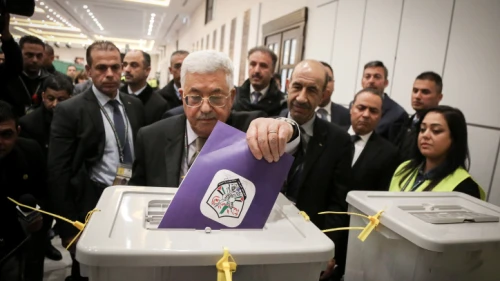
Palestinian Authority head Mahmoud Abbas wants to make the first Palestinian elections in 15 years conditional on the participation of eastern Jerusalem residents. Everyone—from Israel to Hamas to the Biden administration to Saudi Arabia—has an opinion.

“Washington should be using this time to build bridges with allies abroad over Iran—not to signal support for talks that aim to claw-back a fast-expiring bad deal,” Behnam Ben Taleblu, senior fellow at the Foundation for Defense of Democracies, told JNS.

While his focus was on domestic politics and U.S. culture wars, many Jews credit him for being a voice that mainstreamed support for Israel within the conservative movement long before it was a given among the Republican Party.

As a goodwill gesture, the United States will withdraw its demand last fall that the U.N. Security Council enforce “snapback sanctions” against Iran, which the Trump administration had pushed for violating the deal.

“I believe that [Shimon Peres] would have viewed it as the practical realization of his vision for a new Middle East,” said Efrat Duvdevani.

The U.S. decision to remove the Houthis from the terror list plays into Tehran’s hands at the sensitive timing of the possibility of an American return to the nuclear agreement.

The move is a reversal of U.S. relations under the Trump administration, which had maintained steady contact with Mohammed bin Salman, also known as “MBS.”

“StandWithUs is confident that the desire of the state—to refuse to use taxpayer dollars to enter into contracts with companies that discriminate against Israel—will prevail,” said co-founder and CEO Roz Rothstein.