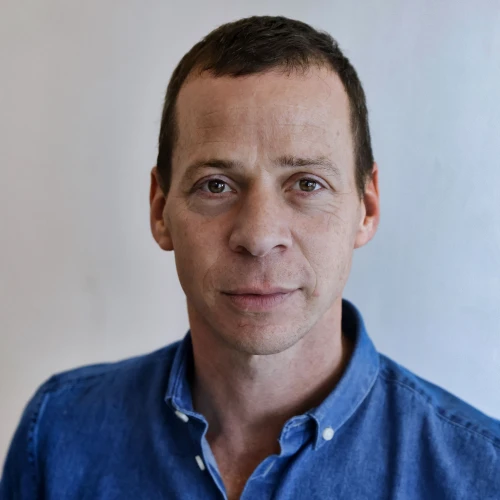
Brandeis University appointed historian Flora Cassen its inaugural Lavine family director of its Center for Jewish Studies and director of its Sarnat Center for the Study of Anti-Jewishness. She is to start on Jan. 1.
In her new role, Cassen, an associate professor of history and of Jewish, Islamic and Middle Eastern studies at Washington University in St. Louis, will coordinate Brandeis’s Jewish studies programs and institutes and amplify their public impact.
She is also a senior faculty member at the Shalom Hartman Institute of North America, where she will remain as a senior fellow.
“In many ways, I see my role as the conductor in an orchestra,” she told JNS. “Each instrumental section has its own score, but what I can do is improve coordination so that when they play together, they are creating a whole that is bigger than the sum of its parts.”
Individual Brandeis centers have long operated independently, but now is the time for greater collaboration and shared vision, according to Cassen.
“My job is to bring them into a richer, more sustained conversation,” she told JNS. “The last thing I want to do is diminish any of the specific work that they do, but Brandeis is one of the central places in America to study religion, politics and history. Anything the Jewish people have taught and written is being studied here.”
At Brandeis, the Jewish Studies Consortium includes five research institutes, two academic programs and a Hebrew-language consortium. Cassen’s goal is to help those units collectively elevate teaching, research and public engagement while strengthening the school’s profile as a leader in Jewish scholarship.
Born and raised in Antwerp, Belgium, Cassen earned degrees from the Université Libre de Bruxelles, Brandeis and New York University. Her scholarship focuses on early modern Jewish life in Europe.
Her 2017 book Marking the Jews in Renaissance Italy examined discriminatory laws and symbols imposed on Jews. She has also written for news publications.
“Having grown up in Europe and then coming to America and witnessing the diversity of Jewish life here, I was blown away,” she said. “We always talk about what has gone badly and our worries and stresses, but I think it’s also a community that’s very alive and grappling with the present in interesting and important ways.”
Her experience as a European-trained scholar shapes how she views the field.
“In my entire college courses in Brussels, there wasn’t a class in Jewish history,” she said. “It’s very different here in the United States. The size and dynamism and the integration of Jewish studies in the academy in America is just incomparable.”
Cassen said that her new position comes at a time of both challenge and opportunity. The aftermath of Oct. 7 has revealed rising antisemitism and institutional confusion about how to respond.
“What was surprising to me was how campuses really struggled to respond,” she said. “We don’t have a shared understanding of what antisemitism is. Different groups have tried to come up with definitions, but that hasn’t worked.”
She believes universities should draw on their strength, civil disagreement, to model better public discourse.
“We are very good at universities in academic disagreements, and that’s how we produce knowledge,” she said. “But political disagreement is different: more emotional and related to identity. We clearly were not prepared for that.”
Her forthcoming book, Stained Glass: A Reflective History of Antisemitism, scheduled for a March release, explores Jew-hatred in Europe through personal and historical lenses.
“There was a kind of comforting myth that emerged in Europe—that antisemitism ended in 1945,” she told JNS. “It seemed such a profound erasure of history and responsibility. That’s what my book tries to explore by telling my own story and my family’s history.”
Cassen hopes to broaden the public conversation beyond the conflicts of recent years.
“The focus recently has been on Israel and Gaza, and for good reason,” she said. “But I hope the scope of Jewish life and history and culture is wider than what we have lived through the past two years.”
Ultimately, she views her new role as a chance to show how scholarly dialogue can model political conversation.
“Universities are primarily communities of learning,” she said. “When political debates are sharp in society, it’s natural we experience it too. But we have to come together to produce new knowledge together.”