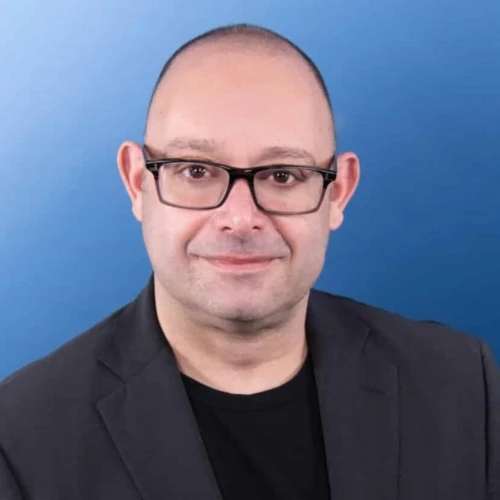
U.S. Secretary of Defense Pete Hegseth created risks that could have harmed American servicemen when he sent chat group messages about pending airstrikes in Yemen, according to a U.S. Department of Defense inspector general report released on Thursday.
Hegseth used his personal cell phone to send messages about the March strikes on Houthi rebels in a Signal group chat that inadvertently included Atlantic editor-in-chief Jeffrey Goldberg.
“The secretary sent information identifying the quantity and strike times of manned U.S. aircraft over hostile territory over an unapproved, unsecure network approximately two to four hours before the execution of those strikes,” the report said. “If this information had fallen into the hands of U.S. adversaries, Houthi forces might have been able to counter U.S. forces or reposition personnel and assets to avoid planned U.S. strikes.”
“Even though these events did not ultimately occur, the secretary’s actions created a risk to operational security that could have resulted in failed U.S. mission objectives and potential harm to U.S. pilots,” it added.
Hegseth maintains that he did not share classified information with the chat group, though the report notes that “some information” that Hegseth sent in the messages matched the content of a classified email that the commander of U.S. Central Command had sent him the prior day.
The secretary of defense is an “original classification authority,” who “has authority to decide whether information should be classified and whether classified materials no longer require protection,” the report notes.
Hegseth, who declined to be interviewed as part of the investigation, told the inspector general’s office in writing that he “took ‘non-specific general details’ that he determined, as an original classification authority, were either not classified or that he could safely declassify and use to create an ‘unclassified summary’ to provide to the Signal chat participants.”
The inspector general’s report found that Hegseth did not comply with regulations requiring him to preserve communications, and as such the investigators relied on the transcript of the messages reported in the Atlantic.
“1215et: F-18s launch (1st strike package),” Hegseth wrote, per the Atlantic. “1345: ‘Trigger based’ F-18 1st strike window starts (target terrorist is @ his known location so should be on time—also, strike drones launch (MQ-9s).”
“1410: More F-18s launch (2nd strike package),” he wrote, per the Atlantic. “1415: Strike drones on target (this is when the first bombs will definitely drop, pending earlier ‘trigger based’ targets).”
“1536 F-18 2nd strike starts—also, first sea-based Tomahawks launched,” he wrote. “We are currently clean on OPSEC.” (The latter term refers to “operational security.”)
In addition to Goldberg, other participants in the chat included Vice President JD Vance and Mike Waltz, then the U.S. national security advisor and now the U.S. envoy to the United Nations.
The sole recommendation of the inspector general’s report was that the chief of CENTCOM’s security office should review its procedures for properly marking classified materials.
A separate report recommended that senior Pentagon leaders receive improved training on the proper use of communicating on electronic devices.