With Jewish students in the Northeastern part of the United States considering colleges other than the traditional Ivy Leagues due to heightened antisemitism on campus, Yaron Ayalon says there is an untraditional alternative in their own backyard.
Ayalon was named last week as the director of Fairfield University’s Bennett Center for Judaic Studies and a professor of religious studies. The private Jesuit university in Connecticut is just an hour-and-a-half train ride from Manhattan, and Ayalon told JNS he has big plans there.
“I’m a builder. I build new programs and new things, and that’s really why I’m here, because there’s a big chance to build and grow within an academic context,” he said. “That’s something that I’ve been doing for quite some time.”
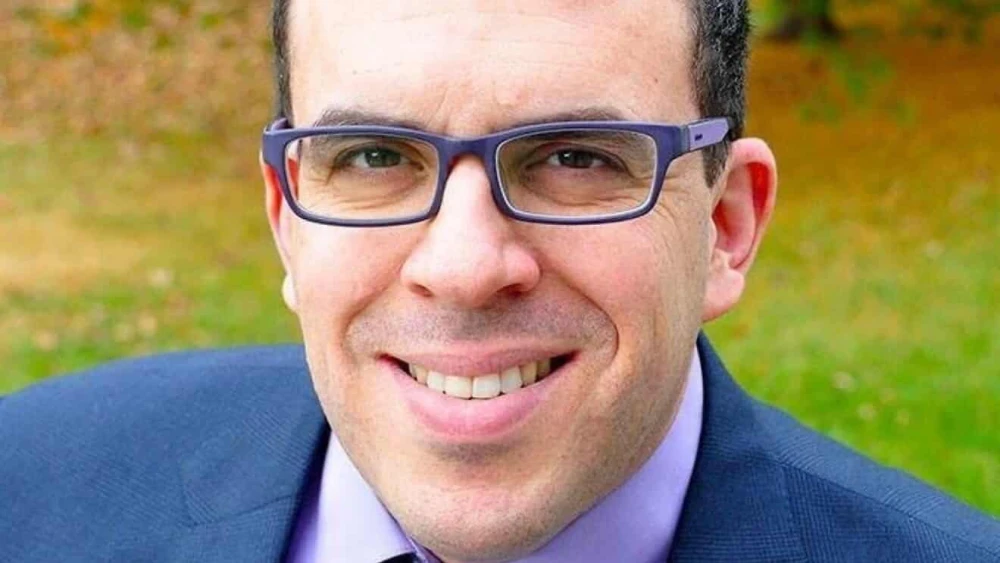
Ayalon spent more than five years as director of the Yaschik/Arnold Jewish Studies program at the College of Charleston, S.C., before arriving at Fairfield. He conceded that it’s not common to have a Judaic studies program at a Catholic university. And he is treating it as a selling point, as opposed to an obstacle.
“We live in times right now that present a great opportunity for this and for growth in general because of what has been happening at other institutions,” he said, referring to the climate of antisemitism common at many elite private universities and even public ones.
“You don’t have to send your kids to the South, because there’s also a cost involved—a mental cost, not a financial one—with being at a southern school.”
He told JNS that he is ultimately looking at building a Jewish community of several hundred students at Fairfield, which in total enrolls about 5,000 undergraduate and 1,200 graduate students.
“Now, of course, a Catholic institution is probably not going to be a good fit for everyone. For some Jewish kids who come from, let’s say, more observant homes, it may not be the best fit,” he said. “But for many others, this is seriously a place they should consider, where they can study and feel safe and build a community, and still stay in the greater metropolitan New York area.”
While the vast majority of non-Jewish students who take Judaic studies courses are doing so to fulfill a core curriculum requirement, Ayalon said that he aims to make an impact on them, too.
“They’ll take a class with us not because they had any particular curiosity, but because it just works in their schedule,” he told JNS. “But this is a problem that exists at many institutions. Good teachers know how to take those students who presumably had no particular interest in the class they’re taking and get them really excited about this material. So, I’m hoping that we’ll get to do that here as well.”
‘It’s still mostly an Ashkenazi field’
Ayalon is a product of the Northeast, born to Israeli parents in Princeton, N.J., where his father was working on his doctorate at Princeton University.
The family moved to Israel when Ayalon was 3. Although they returned to the United States a few times in the course of his upbringing, Ayalon essentially lived mostly in Herzliya, Israel, until he was 26 years old.
Now 48, he has lived more years in America than in Israel, moving with his wife, Keren, a native of Brooklyn, N.Y., and their two children through Ayalon’s professional stops.
Keren was a Hebrew teacher at the College of Charleston and is now at Middlebury College in Vermont, instructing Hebrew in their renowned immersive language program. Ayalon earned his bachelor’s degree in Middle East history and education from Tel Aviv University, and his doctorate in Near Eastern studies from Princeton (his master’s degree work was incorporated into that).
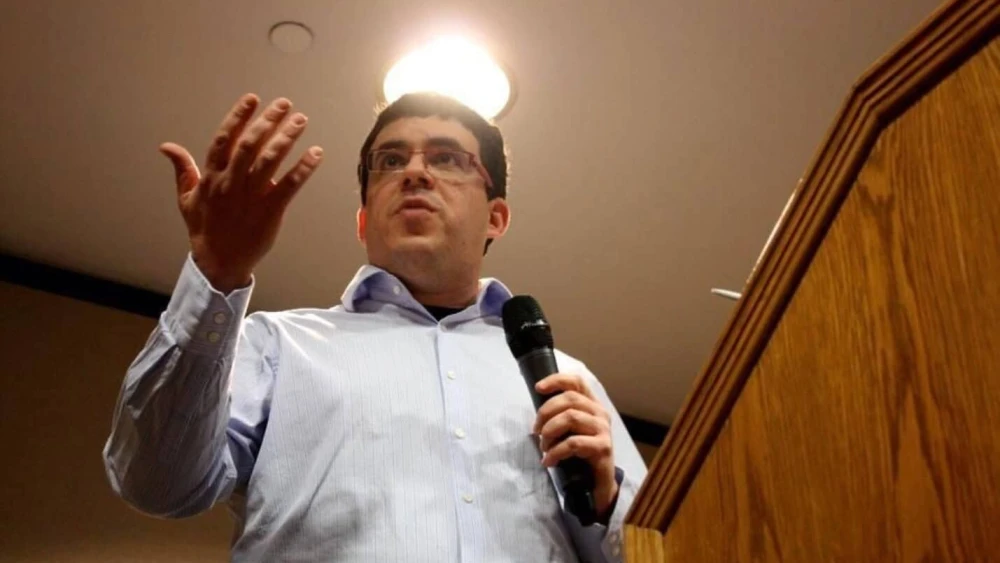
He has written two books, including Ottoman Jewry: Leadership, Charity, and Literacy and Natural Disasters in the Ottoman Empire: Plague, Famine and Other Misfortunes. He also served as an editor for the Encyclopedia of Jews in the Islamic World and co-chaired the Sephardi/Mizrahi division of the Association for Jewish Studies.
That background in Sephardic Judaism isn’t common at Judaic studies programs on the majority of American college campuses.
Ayalon told JNS that even at the Association for Jewish Studies, which is the professional association for scholars in the field, “we meet at a big conference once a year, and if you just count the number of panels, you’d get to about 85% to 90% that deal with anything European or North American, and the rest deals with the rest of the world.”
Ayalon said it’s not so much a problem of academic leadership, but more generally, of how the field of Jewish studies was formed. “It’s still mostly an Ashkenazi field of study to this day. But that doesn’t mean that we can’t do things differently,” he said.
That said, the first lecture the Bennent Center will host in its series this fall will be on “Forging Intellectual Bonds: Jewish, Christian and Islamic Encounters in the Middle Ages.”