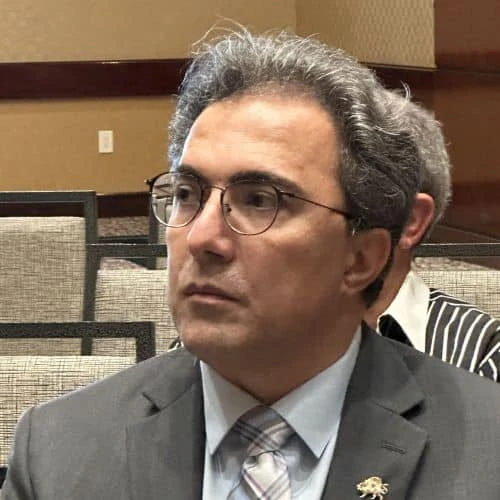
September is Tay-Sachs Awareness Month and jscreen, a national nonprofit public health initiative, is calling on individuals and couples to make reproductive carrier screening part of their family-building plans. The campaign is being championed by two jscreen advocates whose commitment was born from personal loss: Dr. Matt Goldstein, CEO, currently living in San Francisco, Calif. and Shari Ungerleider, senior manager and head of education and outreach, who resides in Wayne, N.J.
Their children, Havi and Evan, were born more than two decades apart. Both were deeply loved and both died from Tay-Sachs disease. Today, their stories carry a message of urgency but also one of hope: genetic risk can remain hidden, but carrier screening and genetic counseling can give families information before a pregnancy is affected.
A rare disease with a detectable risk
Tay-Sachs is a rare inherited neurological disease caused by the absence of the enzyme HexA. This enzyme is needed to break down GM2 ganglioside, a fatty substance that can build up to toxic levels in nerve cells. Babies born with Tay-Sachs may develop normally for several months before progressively losing motor and neurological function. While there is currently no cure, genetic screening can identify whether one is a carrier for the disease.
Carriers generally do not have symptoms, so the risk can pass silently through generations. If both parents carry a disease-causing variant in the HexA gene, each pregnancy has a 25% chance of being affected. Although Tay-Sachs has long been associated with Ashkenazi Jewish ancestry, carriers are found in many populations, making comprehensive screening important for anyone planning or growing a family.
Havi’s legacy: Why the right test matters
Goldstein and his wife, Myra Sack, took what they believed was the responsible step of pursuing carrier screening before pregnancy. But the wrong test was ordered for Matt and the family’s risk was misreported. Their daughter Havi was later diagnosed with Tay-Sachs disease and died in 2021, just months after her second birthday.
Havi’s diagnosis changed the course of Matt’s life. A physician-scientist who had spent his career in biotechnology and genetic medicine, he became CEO of jscreen with a personal mission: to help make genetic screening understandable, accessible and supported by professionals who can help families choose the right test and interpret the results.
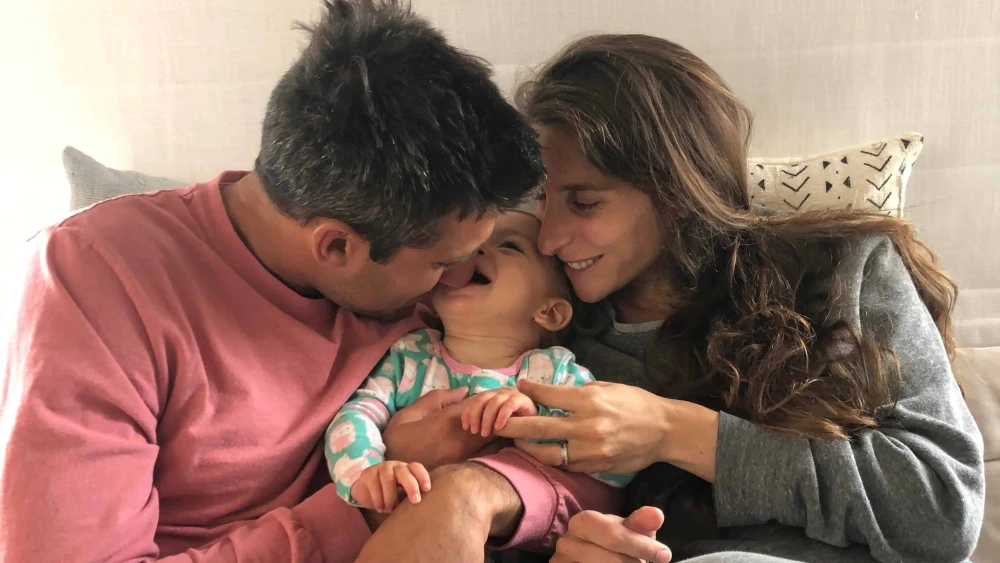
“Carrier screening should never be treated as a box to check,” said Goldstein, CEO of jscreen. “The combination of comprehensive genetic screening and personalized guidance from a licensed counselor has the potential to change lives. Havi’s life is the reason I am committed to making high-quality screening and expert guidance available to every family.”
Evan’s story: Turning tragedy into education
When Ungerleider gave birth to her first child, Evan, in August 1994, he appeared healthy and developed typically for his first six months. Over time, Ungerleider and her husband, Jeff, noticed that he was not reaching milestones and was beginning to lose the abilities he had gained. After months of testing, Evan was diagnosed with Tay-Sachs disease at 13 months old and died when he was almost 4½ years old.
Ungerleider transformed her grief into more than two decades of advocacy. She and her family founded the Evan Lee Ungerleider Foundation and she has worked with the National Tay-Sachs & Allied Diseases Association and other organizations to advance education, research and family support. At jscreen, she now partners with educational institutions, religious and community organizations and advocacy groups to bring genetic education and screening opportunities to more people.
“We cannot change what happened to Evan, but we can change what happens next for other families,” said Ungerleider. “When people learn their carrier status before pregnancy and speak with a genetic counselor, they gain time, clarity and options. That is how Evan’s memory continues to make a difference.”
From awareness to action
Tay-Sachs Awareness Month is an opportunity to move carrier screening earlier in the family-planning conversation. Screening before pregnancy generally provides the most time to understand results, test both partners and consider available family-building options with a genetic counselor and health care team.
jscreen’s reproductive carrier screening program tests for more than 260 genetic diseases, including Tay-Sachs disease, cystic fibrosis and sickle cell anemia. Results are most informative when both partners are screened and each person registers separately. The process includes the following steps:
- Order the appropriate test online.
- Provide a saliva sample at home and return it to a clinical laboratory using the supplied shipping materials.
- Receive results and access to a telehealth appointment with a certified genetic counselor.
- If a couple is found to be at increased risk, discuss reproductive and family-building options with qualified professionals before deciding what comes next.
A negative result cannot eliminate every possible genetic risk and no test can guarantee a healthy pregnancy. But comprehensive screening, paired with genetic counseling, can provide information to help families make decisions that reflect their medical needs, circumstances and values.
For more information about reproductive carrier screening, hereditary cancer screening or to order a test kit, visit: www.jscreen.org.