


Last March, when the COVID crisis struck shutting down cities and communities around the world, schools scrambled to shift to distance learning. Teachers and students adapted to Zoom classes and virtual schedules, utilizing online teaching resources to bring their students meaningful learning experiences.
Teachers quickly realized that they could not expect the same level of attention and focus from their students in Zoom lessons that they did in person. Judaic teachers discovered that while their counterparts on the “secular” side could access a wide range of digital teaching resources, very little ready-made online Jewish material was available for their own instruction.
“It was a struggle,” said Adina Blaustein, a high school Tanach teacher at the Fuchs Mizrachi School in Cleveland, OH. “I couldn’t just email a worksheet and expect the children to manage on their own. And there simply was no available digital teaching material that we could easily assign our students.”
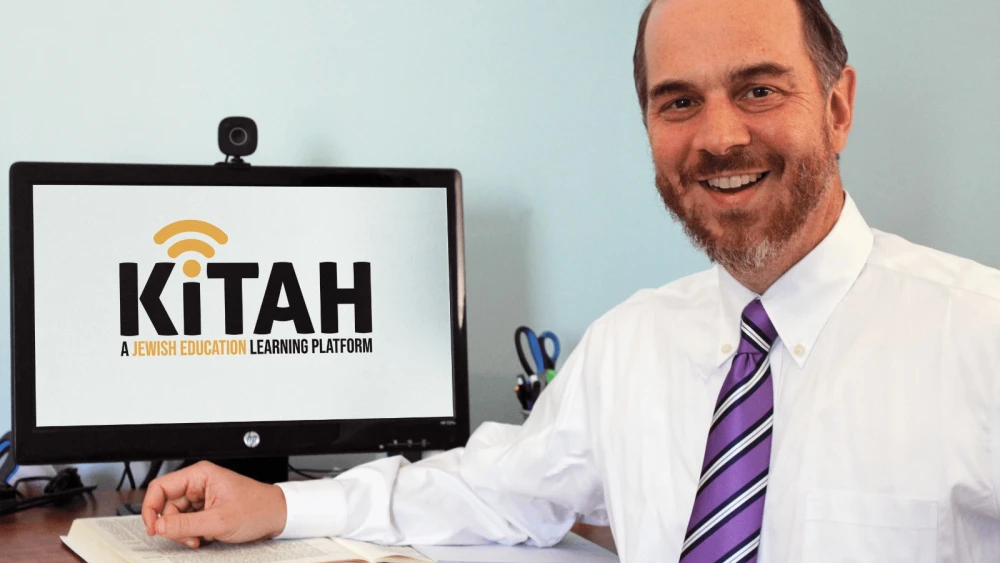
Recognizing this need, a group of English-speaking Jewish educators built an online educational platform aimed at giving Jewish studies teachers powerful digital educational tools.
Titled Kitah (which means “class” in Hebrew”), the platform is modeled after the world-famous Khan Academy “flipped classroom”. In a “flipped” classroom, teachers assign students lessons via YouTube which they watch on their own. When the students meet in class, a teacher can follow-up, enhancing and expanding on what the students have already learned.
Kitah is built on this innovative educational model. However, instead of teaching math or science, Kitah focuses on classic Jewish subjects including Chumash, Navi, Mishnah and Gemara. Courses combine YouTube videos prepared by seasoned Jewish studies teachers with Google Forms, making the lessons easy for teachers to use in classrooms around the world.
“We built Kitah to allow teachers to assign home-based study focusing on skills and text reading,” explains Rabbi Reuven Spolter, founder and director of Kitah. “A student can watch a lesson once, or as many times as needed, in order to answer the included questions.” This allows students the time and focus they need to properly understand the Hebrew text, greatly enhancing and improving the classroom experience later on. “A teacher does not have to start from scratch. Students enter the classroom having been exposed to the basic meaning of the text, allowing teachers to focus on broader themes and deeper lessons they otherwise might not address.”
This coming school year, with the significant possibility of further community closures, Kitah offers schools the peace of mind that, should they need to shift to distance learning, they will have digital Jewish studies lessons ready to deploy.
“While we did not build Kitah because of the COVID crisis,” explained Rabbi Johnny Solomon, Kitah’s educational director, “Our platform is certainly an important option for schools looking for Jewish online learning tools.”
Spolter agrees. “In the end, we know that we’ve built a tool that will help Jewish children learn and connect to classic Jewish texts. If we can help Jewish schools and teachers weather this incredibly challenging time, that will be an added bonus.”


