


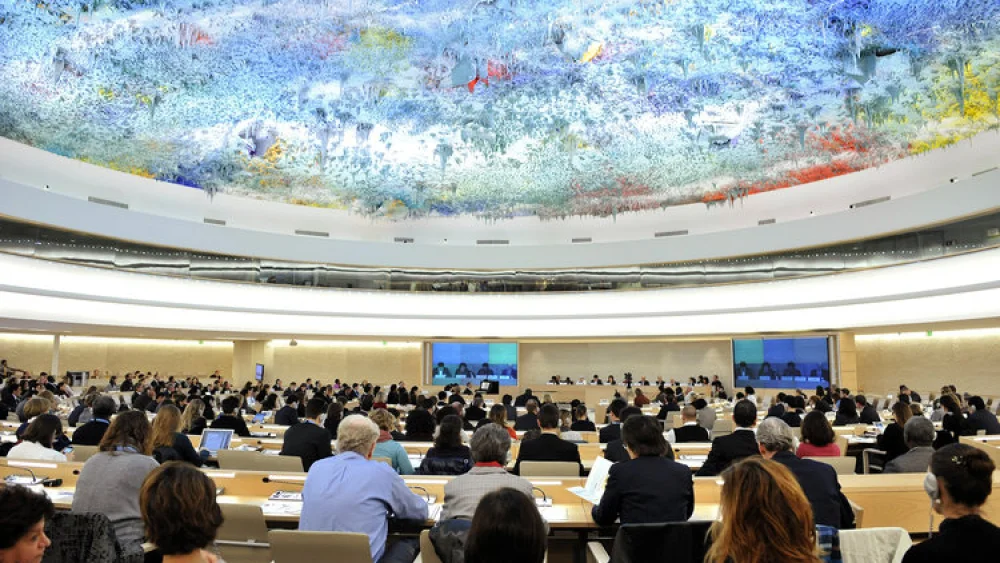
For the first time since signing the Abraham Accords, Israel and three of its new regional partners—the United Arab Emirates, Bahrain and Morocco—issued a joint statement at the United Nations Human Rights Council in Geneva Wednesday.
Based on U.N. Security Council Resolution 1325 on women and security, the statement stressed the value of women’s influence on human-rights matters, peace, sustainable development and security, and called on member states to integrate women in peace processes and conflict-prevention.
Ambassador of Bahrain to the U.N. Yusuf Abdulkarim Bucheeri introduced the statement on behalf of the four nations.
“We call upon all member states to strongly commit to ensure that women have a seat at every table, that they are heard and that they can contribute to find solutions and prevent conflict,” he said. “Only then can we have a peaceful and equal society.”
The statement had been endorsed by the U.N.'s University for Peace, and was supported by 52 member states, including Turkey.
Ankara’s support constituted Turkey’s second political “wink” at Israel this week. On Sunday, the Turkish American National Steering Committee and the Orthodox Jewish Chamber of Commerce signed a cooperation agreement “based on shared values and solidarity in diversity.”
According to the agreement, the two aim to “cooperate for the common good of Turkish Americans and Jewish Americans, and to support relations between our homeland the United States and our respective motherlands, Turkey and Israel.”
This report first appeared in Israel Hayom.


