Newsletter
Newsletter Support JNS
Sean Durns

Sean Durns

Sean Durns is a senior research analyst for CAMERA, the 65,000-member, Boston-based Committee Accuracy in Middle East Reporting in America.

To say that Bowman’s views on Israel did not reflect those of his constituents would be an understatement.
The newspaper quickly changed its headline following a backlash, acknowledging that it “should never have read that way.” But the real problem goes deeper than a headline.
Consistently omitting crucial context, the newspaper casts Israeli concerns as overblown and the Arabs as victims.
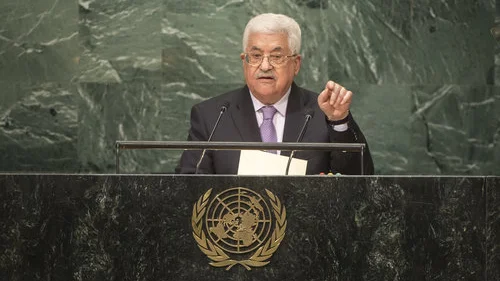
Regrettably for both Israelis and Palestinians, the paper doesn’t consider Palestinian illiberalism—embodied by Mahmoud Abbas, who’s serving the 15th year of a four-year term—to be worth column space.
In 1937, the Grand Mufti of Jerusalem Amin al-Husseini released an “Appeal to All Muslims of the World,” urging them “to cleanse their lands of the Jews” and laying the foundation for the anti-Semitic arguments used by radical Arab nationalists and Islamists to this day.
The media has previously warned about the spread of “fake news” and worried that America might be living in a “post-truth era.” If so, few epitomize this epoch more than the newspaper itself.
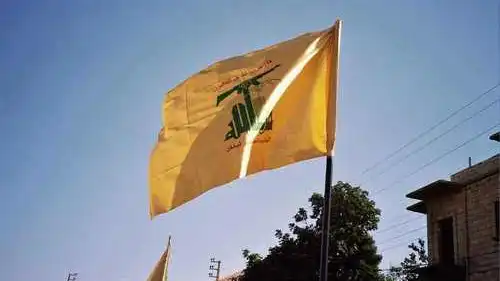
Like Hamas and other Palestinian terrorist groups, Hezbollah calls for the destruction of the Jewish state. And like them, Hezbollah is often described as merely a “militant group” as opposed to the more accurate “terrorist organization.”
In contrast to its numerous reports on the Israeli elections, the newspaper has continued to neglect Palestinian politics.
With the growing concern over anti-Semitism in the United States, the media’s failures are worse than inexplicable—they’re unacceptable.