Newsletter
Newsletter Support JNS

Bennett speaks with Ukraine’s Zelensky, pledges humanitarian assistance

“The two leaders discussed the situation in Ukraine, with an emphasis on the Kyiv region,” a readout from the Prime Minister’s Office said.

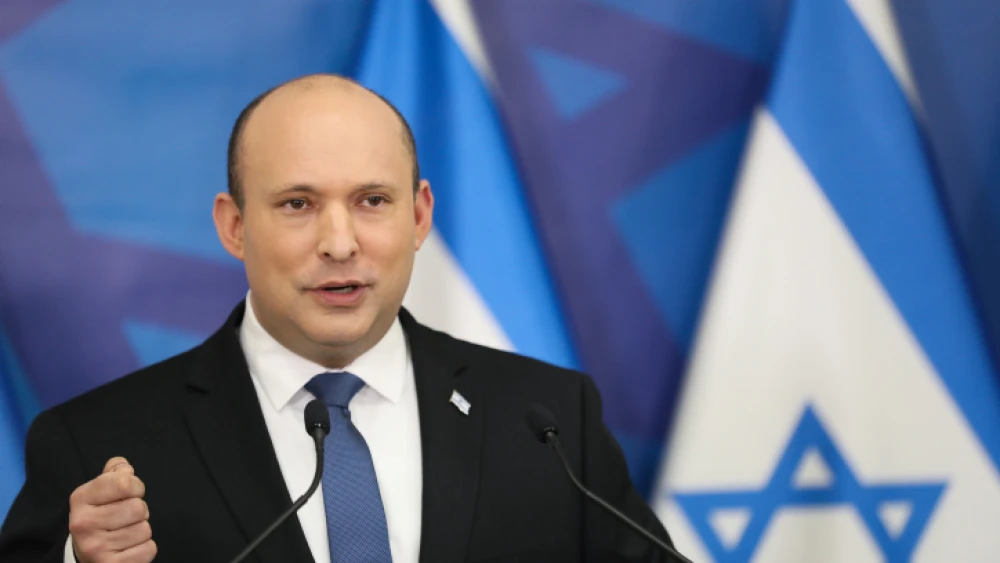
Israeli Prime Minister Naftali Bennett holds a press conference at the Kirya military base in Tel Aviv, Jan. 11, 2022. Photo by Noam Revkin Fenton/Flash90.

Israeli Prime Minister Naftali Bennett spoke with Ukrainian President Volodymyr Zelensky on Friday amid the ongoing Russian invasion.

“The two leaders discussed the situation in Ukraine, with an emphasis on the Kyiv region,” a readout from the Prime Minister’s Office said.

Bennett offered the Ukrainian leader Israel’s assistance with any humanitarian aid needed and updated Zelensky on the steps already taken in this regard.

The Israeli leader also reiterated his hope for a speedy end to the fighting, and said that he stands by the Ukrainian people during these difficult days.

Israel’s leadership has been balancing its position on the conflict. Bennett did not explicitly condemn Russia’s actions in a readout of the call, but on Thursday, Foreign Minister Yair Lapid called Russia’s attack a “grave violation of international order.”

Israel’s Diaspora Affairs Ministry announced on Friday that it will send NIS 10 million ($3.07 million) in aid to Ukraine’s Jewish community.

The president cites rising anti-Israel and antisemitic sentiment amid protests targeting the country’s pavilion and Jewish symbols.
The Defense Ministry inks a $34 million agreement with Elbit subsidiary Cyclone to develop external fuel tanks.
Hamza Sharabasi and another Nukhba gunman died in last week’s strike.
It is and always has been a city of striking contrasts.
“A political party that disavows armed activity can compete in national Palestinian elections,” the high representative said.
The U.S. military has redirected 67 vessels, allowed 15 aid ships through and disabled four during four weeks of interdiction.