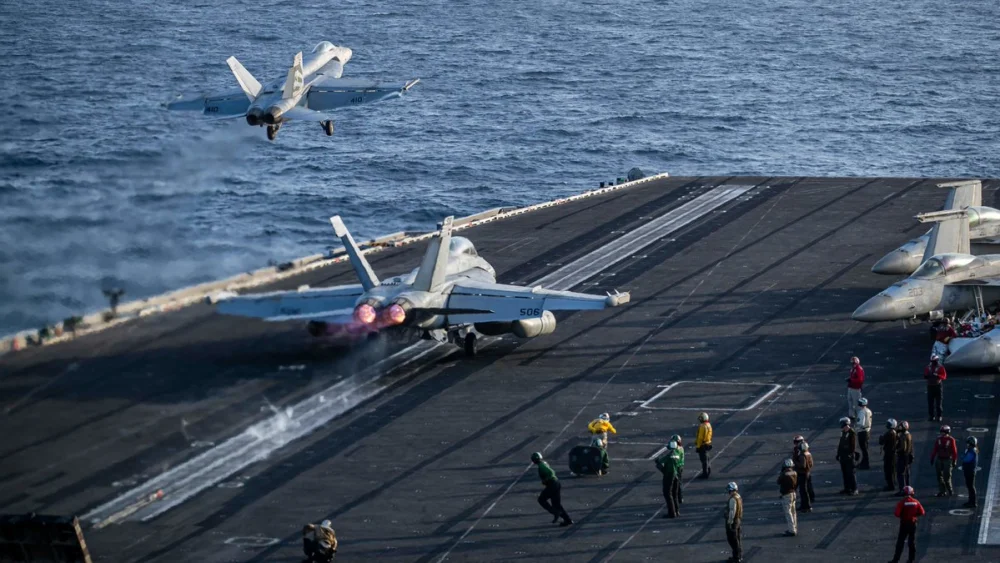
U.S. Central Command said on Wednesday it has redirected 67 commercial vessels and disabled four others since launching a blockade on Iranian ports four weeks ago, according to a post on X accompanied by video footage.
Fifteen ships carrying humanitarian aid were allowed to pass, while two vessels earlier this week turned around after U.S. forces issued radio warnings and fired small-arms warning shots to enforce compliance, “clearly demonstrating that U.S. enforcement remains in full effect,” CENTCOM said.
More than 15,000 troops, over 200 aircraft and more than 20 warships are enforcing the blockade.
Washington launched the maritime operation on April 13, targeting all vessels entering or leaving Iranian ports in the Arabian Gulf and Strait of Hormuz, disrupting the regime’s oil exports.
It is part of the Trump administration’s “Operation Economic Fury”—a sweeping pressure campaign targeting Tehran’s economy through sanctions enforcement and the naval blockade aimed at choking off the regime’s oil exports and commercial shipping.
Four weeks ago, CENTCOM began implementing the blockade against ships entering and exiting Iran’s ports. As of today, American forces have redirected 67 commercial vessels, allowed 15 supporting humanitarian aid to pass, and disabled 4 to ensure compliance.
— U.S. Central Command (@CENTCOM) May 13, 2026
Earlier this week,… pic.twitter.com/Vfkucl0Mci