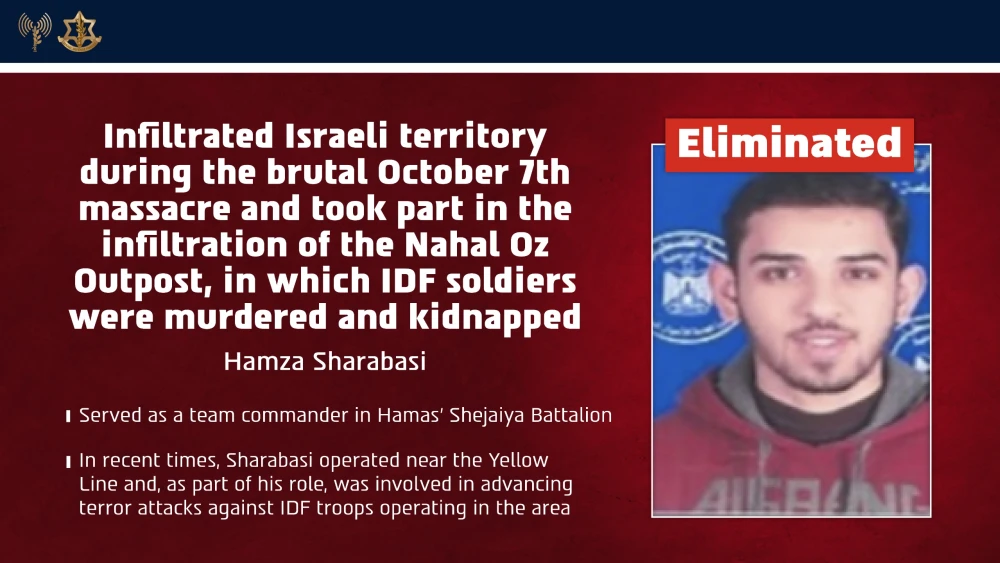
An Israeli Air Force strike on May 6 killed a member of Hama’s Nukhba Force who participated in the Oct. 7, 2023, attack on the IDF’s Nahal Oz outpost, the Israel Defense Forces and Israel Security Agency (Shin Bet) said on Wednesday.
The terrorist, identified as Hamza Sharabasi, was a commander in Hamas’s Shejaiya Battalion in northern Gaza, according to the joint statement. Sharabasi infiltrated Israel during the Oct. 7 assault and took part in the attack on the Nahal Oz base, where Israeli soldiers were killed and abducted, the military said.
🔴ELIMINATED: Hamza Sharabasi, a commander in Hamas’ Shejaiya Battalion in northern Gaza.
— Israel Defense Forces (@IDF) May 13, 2026
Sharabasi infiltrated Israeli territory during the October 7 massacre & took part in the infiltration of the Nahal Oz Outpost, during which IDF soldiers were killed and kidnapped.… pic.twitter.com/ntDuNmRN15
Sharabasi had recently been operating near the ceasefire-designated “Yellow Line” in Gaza and was involved in planning attacks on Israeli troops, the IDF said.
The strike also killed Azzam al-Hayya, described as a Hamas Nukhba terrorist who recently held a key role in the organization.
Troops under Southern Command remain deployed in line with the ceasefire agreement and will continue operations against immediate threats, the military said.
The IDF released an image it said showed Sharabasi inside a bomb shelter at the Nahal Oz outpost during the Oct. 7 attack.