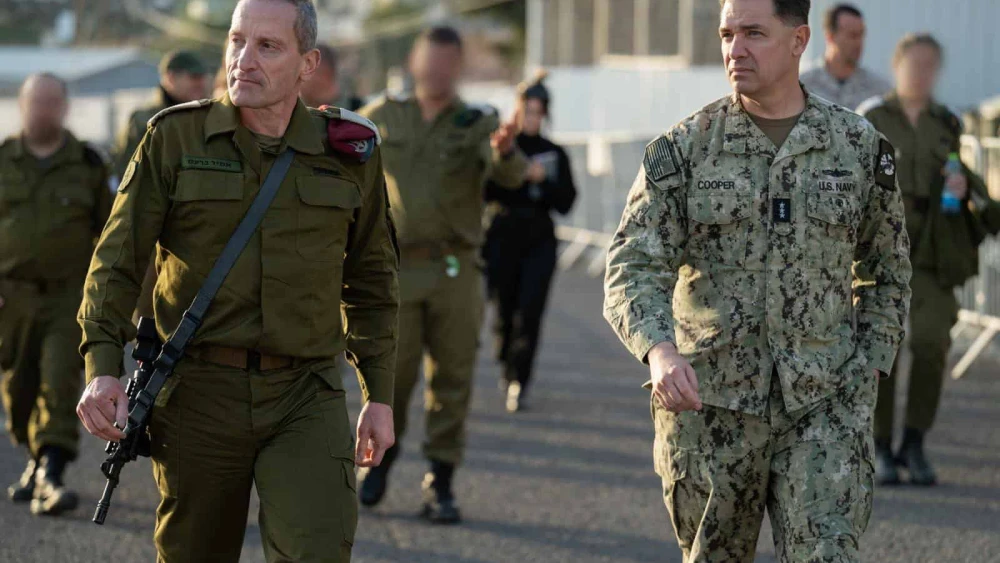
The deputy commander of U.S. Central Command (CENTCOM), Vice Admiral Brad Cooper, visited Israel last week at the invitation of IDF Deputy Chief of Staff Maj. Gen. Amir Baram.
The men toured several Israeli Air Force bases, including Nevatim, where they reviewed capabilities and discussed joint operations, according to an IDF statement.
They also held talks on threats emanating from Houthi terrorists in Yemen, as well as overall U.S.-Israel defense cooperation.
“The IDF will continue to deepen its relationship with the U.S. military out of a commitment to strengthening regional stability and coordination between the two militaries,” the statement noted.
🇺🇸🤝🇮🇱The Deputy Commander of @CENTCOM, Vice Admiral Brad Cooper, arrived in Israel last week as the official guest of the Deputy Chief of the General Staff, MG Amir Baram.
— Israel Defense Forces (@IDF) January 7, 2025
They toured several Israeli Air Force bases, including Nevatim, where they reviewed capabilities and… pic.twitter.com/LWMAbDnEhV
In December, CENTCOM chief Gen. Michael Kurilla met in Israel with Defense Minister Israel Katz to discuss regional security issues, including the developing situation in Syria and “preparedness against other strategic and regional threats.”
Kurilla was a guest of IDF Chief of Staff Lt. Gen. Herzi Halevi. The two commanders led “a joint strategic security assessment focusing on responses to threats in the Middle East, particularly concerning the northern front and Iran,” according to the IDF.
In January 2021, as part of the Trump administration’s adjustments to the Unified Command Plan (UCP), military coordination with Israel was officially transferred from U.S. European Command (USEUCOM) to CENTCOM.
This meant Israel was expected to engage in security cooperation (e.g., exercises, military sales, operational planning) with U.S. regional allies and partners also in CENTCOM—specifically, with moderate Arab states.
The Abraham Accords, signed in 2020, were a vital precursor to this move and future Arab-Israeli collaboration.