Perched above the Sea of Galilee on the hilly road from Tiberias in northeastern Israel to the coastal city of Haifa directly opposite to the west is Ilaniya, one of the first modern Jewish communities in the Lower Galilee. It played a pivotal role in the settlement of the region over a century ago, and is bringing back its storied past at a time of intense national reflection over identity and belonging sparked by the Hamas-led terrorist attacks in southern Israel on Oct. 7, 2023.
This once fully agricultural and history-rich village—replete with unaltered archaeological relics dating back thousands of years that lay sprawled throughout its winding streets and fields—was where one of Israel’s founding fathers and first prime minister, David Ben-Gurion, worked as a farm laborer for months as a young man four decades before the establishment of the State of Israel, as part of a training farm that was set up to help settle the land.

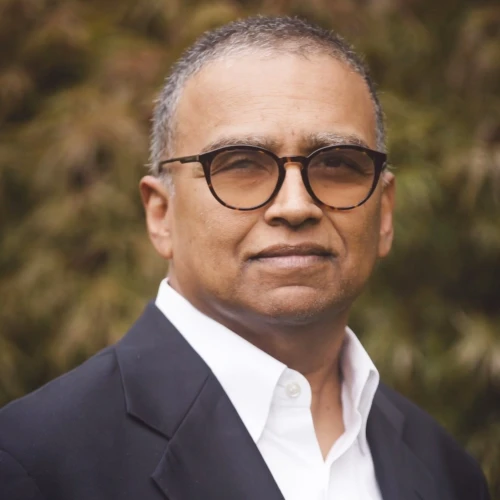
“This is an untouched historical site of the Jewish people,” said resident Arieh Raf, 69, one of the few remaining farmers in the community.
“We need to pass on this history to the next generation—those who don’t understand what it means to be without a country—so they know why we are fighting for the Land of Israel,” he said.
Working the land, teaching the language
The first homes in what was then an agricultural colony were constructed in 1902 on land purchased by Baron Edmond James de Rothschild, a French member of the prominent European banking family and a strong supporter of Jewish settlement in the Land of Israel.
The strategically located land he bought was in the hilly region of the Lower Galilee.
During the time of the Talmud, the hills surrounding the area were home to an ancient Jewish city, the ruins of which were built over by the Arab village of Shajara centuries later. In the early 1900s, the land was considered critical for control of the region.
The newly established community, then known as Sejera, consisted of new immigrants as well as Christian converts, where a pioneering training farm was located on the slopes of the barren landscape.
It was here in this village that the young David Grün (the future Ben-Gurion) would work as a farmhand and a guard, representing the quintessential Zionist pioneer in the Galilee. He taught Hebrew as he laid the foundations for the future community that decades later would be established by the quasi-governmental Jewish Agency for Israel in 1952, just a few years after Israel’s War of Independence.

More than 120 years after the first homes in the agricultural colony were built, a new restoration project in the community is currently underway to restore two of the original houses. The plan also envisions the creation a museum and visitors center at the site, next to the home Ben-Gurion worked at, with a winery and boutique gallery planned in the area of the barns that existed behind the houses.
The 3 million shekel (roughly $900,000) project, which is currently one-sixth funded, is expected to be completed within three years, said project manager Oz Gino.

The restoration plan is a dream come true for some of the early pioneers at the community, like Raf, whose parents struggled with existential issues of electricity, water and livelihood during the 1950s, and were not necessarily focused on the rich past of the site.
“Even many people who have lived here for 50 years don’t know the history,” he conceded, noting some of the same economic struggles of modern-day farmers in Israel at a time when less than 10% of the population of such communities still works in agriculture.
“Without our history, there is no future,” he said.
‘Now you understand why you are here’
A stroll through the village will lead you to an ancient burial cave from the Roman-Byzantine period that displays a red-painted menorah on one wall, a natural spring that served as the ancient village water source, as well as columns and pillars from a Second Temple-era synagogue.

These landmarks are strewn throughout the community and are envisioned to be part of an archaeology garden in the future, said Haifa University historian and local resident Estie Yankelevitch.
The 72-year-old Yankelevitch, who came to Israel with her parents from Manchester as a 1-year-old baby, had relocated to the community about half a century ago after her mother-in-law encountered a retired Ben-Gurion in Jerusalem.
He told her of “a nice place in the Galilee,” to go to: the place was Ilaniya.
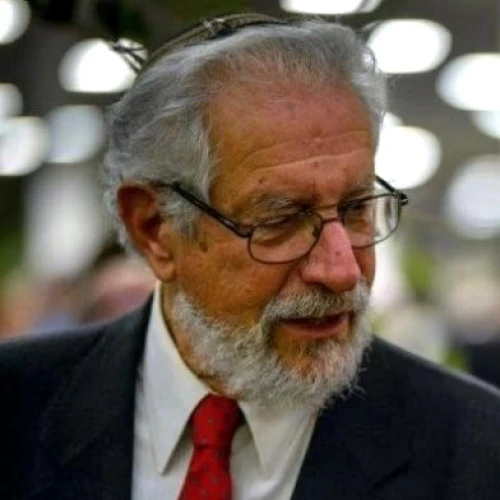
“When you come to this community, you see 2,500 years of Jewish settlement, and then you understand the essence of the existence of the Jewish nation,” she said.