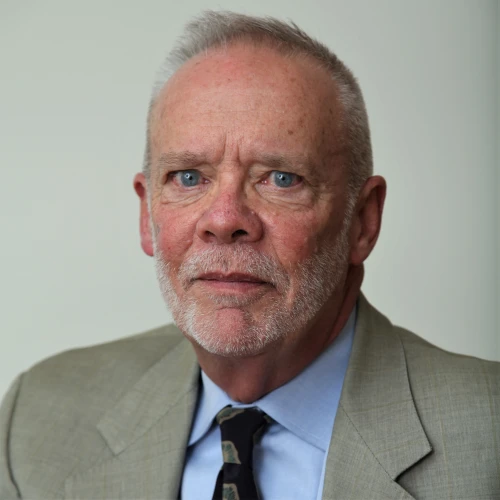
Keren Kayemeth LeIsrael–Jewish National Fund (KKL–JNF) chairman Eyal Ostrinsky is pushing back against an April 28 report in the Haaretz newspaper that his organization is halting funding to agricultural farms in Judea and Samaria based on their geographic location.
Though last month, KKL–JNF’s executive committee passed a motion to halt funding to certain farms, Ostrinsky says the decision was based on each farm’s mission, not its position relative to Israel’s “Green Line” (the 1949 armistice line).
Ostrinsky told JNS that his organization has no problem providing funds to farms in Judea and Samaria whose primary purpose is to provide an educational framework for youth. However, he said, farms that are purely agricultural and not educational in nature would no longer receive support.
“The entire purpose of the resolution—the decision we took—was to make a distinction between educational endeavors and other activities. Educational work on both sides of the Green Line is accepted,” he said.
Based on traditional distinctions, educational farms in Israel—also known as “social” or “therapy” farms—focus on vocational training, often with at-risk youth, using agriculture as the medium in a therapeutic or rehabilitative framework. By contrast, agricultural farms are production-focused, centered on crops, livestock, herding or dairy production.
Ostrinksy added that the new policy applies broadly, including within central Israel, where agricultural farms without an educational component would also not qualify for support.
He said he considers farms across Israel whose aim is to educate youth and equip them with the tools needed to return to their home communities and formal educational frameworks a “blessed endeavor.”
Ostrinksy’s clarification was met with mixed reactions.
Ari Abramowitz, one of the proprietors of Arugot Farms in southeast Gush Etzion, told JNS he was appreciative of the clarification in policy and said he might consider approaching KKL–JNF for a grant for their educational programming.
He said his farm’s primary focus is educational tourism—using its land and facilities to spread Torah and foster a deep love of the land of Israel.
He said that in Judea and Samaria, farming is not just about economic output; rather, it is about education, identity, security and connection to the land.
“It’s continuity of the Jewish story in the places where that story began,” he said.
Abramowitz said the love and mentorship provided to teen volunteers over the years—young people who could not find their place in traditional educational frameworks—has “literally saved the lives of struggling adolescents.”
He added that their work reaches beyond the Jewish world.
“We are doing critical educational work among the nations,” he said, “because the only truly effective Israel advocacy is making the real case—which is the Jewish connection to Judea.”
For Abramowitz, that case is made most powerfully not in lecture halls or policy papers, but on the ground.

He said that when his young son runs through the vineyard and asks why it was planted there, “That is education. That is Jewish continuity. That’s more Zionism happening in five minutes than 100 classroom hours could produce.”
The scene carries weight beyond the personal, according to Abramowitz.
He referenced the biblical figure, Amos, a shepherd-prophet from Tekoa, a community on a nearby mountain—who declared, “And they shall plant vineyards and drink their wine” (Amos 9:14), words that Abramowitz said were being fulfilled in the region today.
Abramowitz concluded, “Labels are for bureaucrats. Connection is what we’re after.”
Rabbi Tuly Weisz, founder of Israel365 Action, a new party in the World Zionist Organization supporting sovereignty, told JNS that KKL-JNF’s explanation raises more questions than it answers.
According to Weisz, any distinction between “educational farms” and “agricultural farms” is extremely puzzling, and any decision to fund educational farms but not agricultural ones is baffling.
Farms are about cultivation of the land, he said. “That is their purpose, especially on the largely barren hills of Judea and Samaria,” he added.
Even more upsetting is what the policy reveals about JNF KKL’s priorities, said Weisz.
The historic organization was established to develop and strengthen the land of Israel, of which Judea and Samaria are the very heart and soul—critical to Israel’s history and essential to its security, he continued.
“To play word games in order to discriminate against Judea and Samaria is a far-left political move that goes against the will of a majority of Israelis and Jews worldwide,” he said.
Weisz called on the organization’s leadership to reverse what he called its discriminatory and harmful policy and “recommit to its core mission of building up the land of Israel that has defined KKL–JNF for over a century.”
Yigal Dilmoni, co-founder and CEO of American Friends of Judea and Samaria (AFJS), also said that KKL–JNF’s decision to stop supporting agricultural farms in Judea and Samaria was both puzzling and contrary to the organization’s mission.
“The decision defies the very purpose for which KKL-JNF was founded: practical Zionism, safeguarding the lands of the Jewish people, connection to the soil and national responsibility,” he said.
Dilmoni said the agricultural farms in Judea and Samaria are not a “problem,” but rather the solution, stepping in where students struggle by providing personal mentoring, assisting with matriculation exams and offering vocational and life skills.
“If KKL–JNF wants to remain relevant, it must stay true to its roots, which are deeply planted in working the land in the land of the Bible—Judea and Samaria. In the end, if KKL–JNF detaches from its roots, its ‘tree’ will not survive,” he said.