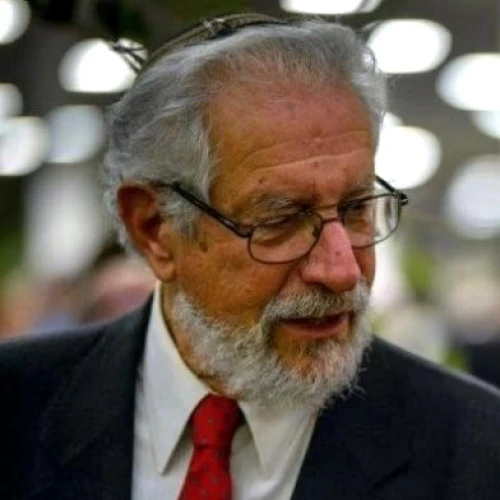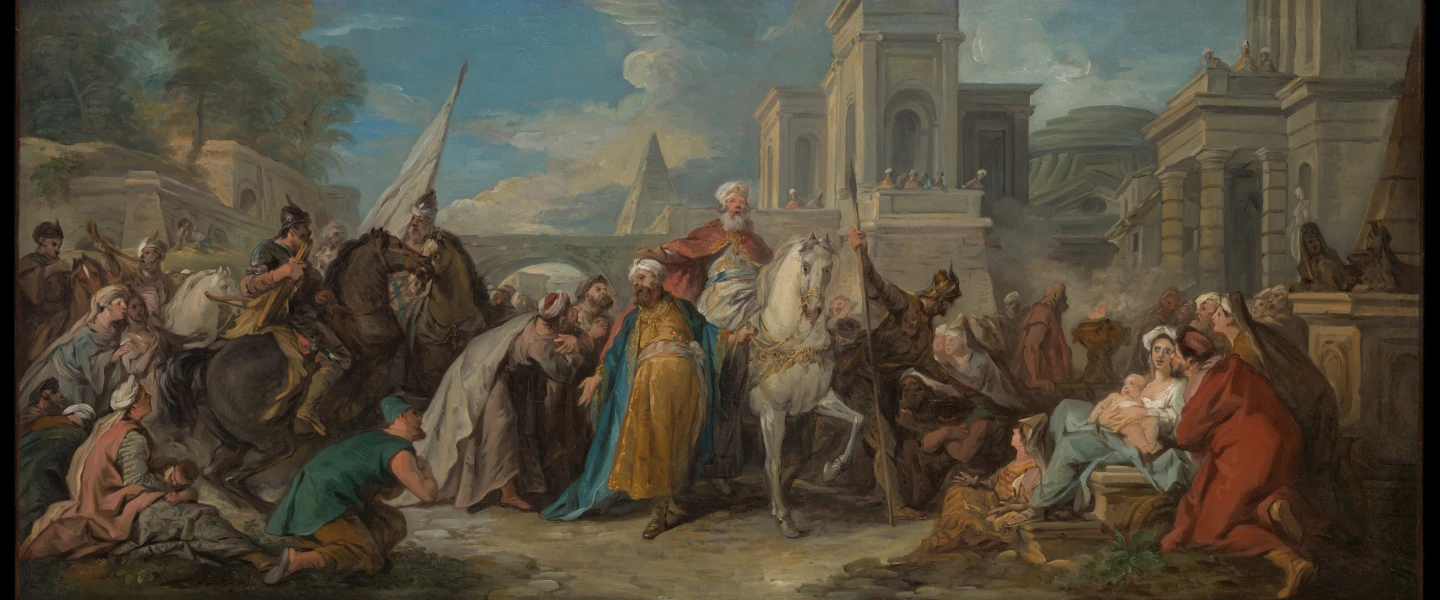
When a white, coriander seed-like material, which turned out to have a honey taste, fell from the heavens, the Israelites called it manna, because they didn’t know what it was (man hu), as the Bible tells the story in Exodus 16 and Numbers 11. That’s not a biblical Hebrew phrase upon which Adam Silverstein draws in his new book, Haman: A Biography, to explain the villain’s name. But the uncertainty that surrounds manna could also apply to Haman.
Silverstein, the Max Schloessinger chair of Islamic studies at Hebrew University of Jerusalem, notes in the book that rabbinic tradition connects Haman’s name to God’s question to Adam in Genesis 3:1, “Have you eaten from (ha-min) tree from which I forbade you eat?”
That rabbinic “kind of typology” is “very characteristic of Christian exegesis,” he writes in the book. “The point here is that both sides of the discussion assumed that the characters in ‘Esther’ were prefigured in the earliest books of the Bible.”
Silverstein refers early on in the book to it being a “biography” of Haman, using quotes.
“Outside of the Bible and the Quran, and the commentaries on these texts that their interpreters authored, there is very slim evidence for Haman’s existence as a historical figure,” he writes. “What we possess, instead, is an abundance of material concerning what those who read the Bible and the Quran have thought about Haman.”
“Although we will explore such evidence as there is for the historical Haman, it will become clear throughout this book that his biography has been repeatedly overlaid by exegetical expansions that make it nigh impossible to recover a historical Haman with any degree of confidence,” he writes.
That means, he adds, that the book is “primarily about Haman as a literary character, whose depictions reflect the perspectives of the religious traditions and scholars that produced our sources.”
Silverstein told JNS that the “Esther story is widely known and very accessible.”
“Even Jews who are otherwise not very biblically literate know its basic plot and characters. But the deeper one digs, the more apparent it becomes how complex the text is, and over two millennia various communities interpreted the story differently,” he said. “Sometimes the interpretations were so different that the story’s basic details changed.”
Haman’s depiction diverges the most in different portrayals of the story.
“Various communities of Jews and Christians imagined their Haman differently from one another, usually unaware that there were other options to consider,” he told JNS.
The biggest discrepancy, he said, is between Jews and Christians who know Haman from the book of “Esther” and Muslims who know him from the Quran, where there is no story of Esther, according to Silverstein.
“In my experience, anecdotal though it is, even the most educated readers of a particular scripture are entirely unaware that ‘their’ Haman is but one option amongst many,” he told JNS.

Archetypal ‘villain’
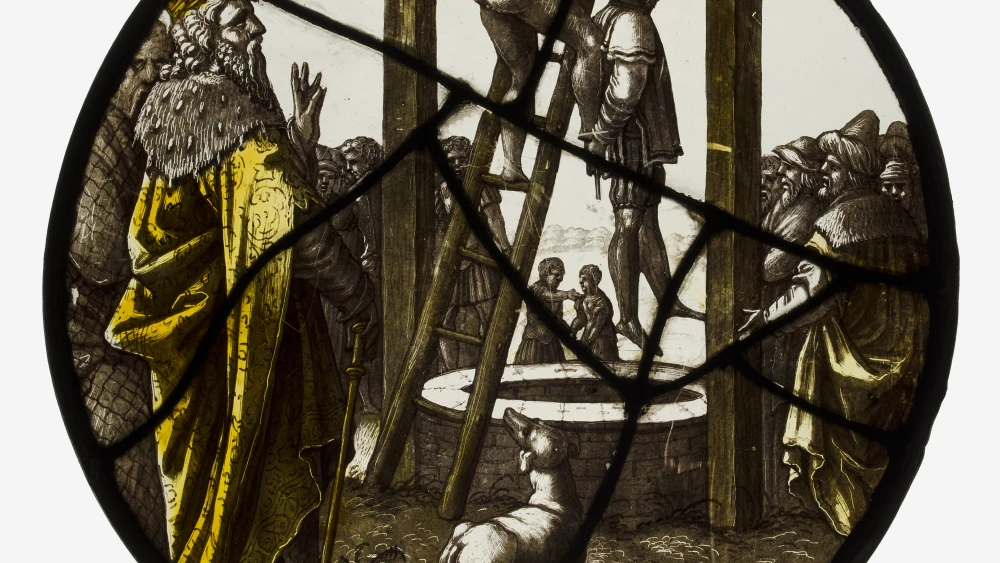
In his frescoes for the Sistine Chapel, Michelangelo depicts Haman crucified, a position in which the villain was often depicted in medieval illuminated manuscripts. That doesn’t mean that this is a heroic depiction in Christian art, according to Silverstein.
“Quite the contrary. He is the epitome of evil,” he told JNS. “But in some ancient Christian interpretations of the story, Haman and Jesus were obliquely equated.”
That happened for two reasons, according to Silverstein. The Greek version of the book of “Esther,” which many Christians used, refers to Haman being crucified rather than hung on a tree, as the biblical Hebrew states. And “in Christian theology, Jesus was crucified in order to absorb mankind’s sins, and in his crucified state he was intentionally ‘loaded up’ with sin, evoking the sinful Haman, who is also described as having been crucified,” he said.
“Despite the cleverness of the theology behind this idea, most Christians throughout history equated Haman not with Jesus but with Judas, for obvious reasons,” he added.
Despite introducing readers to a host of ways that Haman has been understood and described in different traditions, Silverstein doesn’t think that those who are used to stomping their feet or shaking a gragger to blot out his name during megillah readings on Purim ought to rethink that practice.
“It is not the aim of my book to change what people think or how they behave on Purim but rather to enrich their understanding of his character and how millions of readers before them responded to it,” he told JNS. “For religious Jews, stomping their feet at Haman’s name can be a fulfilment of a biblical commandment to efface the memory of Amalek, so that’s a good enough reason in my view to continue such customs.”
But understanding variations in the way the villain has been depicted and understood in different places and eras “tells us a lot about those who described him as they did,” he said. “Of course, they all considered him a villain, with some rare exceptions, but what they imagined an archetypal ‘villain’ to be varied greatly.”
Some of the variations surprised Silverstein over the course of the 20 years he spent researching the book.
Those, he told JNS, include learning that for “over a millennium, some Christians used Haman’s occurrence in the Quran to prove to Muslims that the Quran was not from God,” and, perhaps ironically, that “some Muslims in recent decades have used the very same facts to prove that the Quran must be from God.”
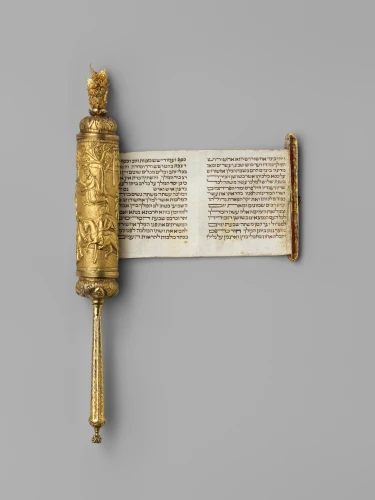
Though there are dozens of biblical bad guys, the professor found that “Haman came to be the prototypical villain for Jews throughout history. Not Nimrod, Pharaoh, Esau, Goliath, Nephilim giants, Nebuchadnezzar, but Haman.”
“I offer some explanations for this in the book, but the question continues to fascinate me,” he said.
Low-hanging fruit
An obvious comparison can be made between today’s Iranian regime and Haman, according to Silverstein.
“The Persian context and the perceived genocidal threat make this a low-hanging fruit to pick. However, it is interesting to note that about a decade ago, representatives of the Iranian regime rebutted such Israeli comparisons by arguing that the Esther story relates how the Jewish people flourished under Persian rule,” he told JNS.
Silverstein notes that the book of “Esther” presents Haman not as a Persian but as an “Agagite,” which typically refers to the Amalekite king Agag.
“Esther” refers to King Ahaseurus ruling from “Hodu to Kush” and having an empire that included “Paras and Madai.” Paras is seen generally as Persia, and in a speech before the Knesset on Feb. 25, a first for an Indian prime minister, Narendra Modi said that India is mentioned as “Hodu” in the Bible.
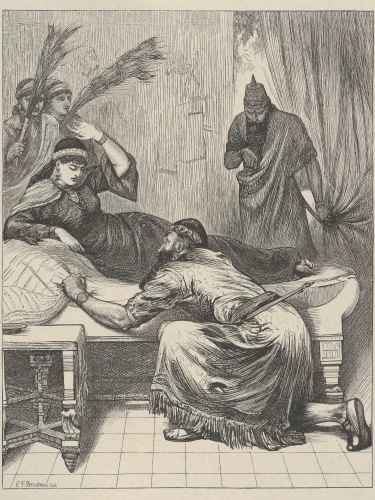
Haman is seen as a “Macedonian” rather than “of Persian descent” in the “very historically influential Greek versions of the story,” Silverstein said. “This is a good example of how differently people can interpret the same story.”
Conspiracy theories have often attributed monstrous behavior to Jews on holidays, including baking Passover matzahs with Christian infant blood. There are actually examples throughout Jewish history, starting around the year 400 of the Common Era and going “long into” the early-modern period, of anti-Christian behavior on Purim, according to Silverstein.
Those actions occurred both “subtly and not-so-subtly,” he told JNS.
Without criticizing or condoning the recorded behaviors, he said that Jews were often persecuted under Christian rule, “and in pre-modern times speaking out against such persecution was not tolerated.”
“Thus, for many Jews, a cathartic way of venting their anger was through thinly-veiled anti-Christian messages in Purim ceremonies, such as burning a crucified effigy of Haman or paying a Christian boy to represent Haman in a Purim spiel,” a dramatization of the holiday story, he told JNS.
Jews wrote many midrashim and piyyutim (liturgical poems) under Christian rule. “Thus, in some very popular and authoritative sources, we hear that Haman wore a cross around his neck or was a native of a town in the Galilee region,” Silverstein said. “In the Arabic megillah used by the Jewish community of Aleppo, Haman is simply referred to as ‘al-Nasrani,’ the ‘Christian,’ which reflects such traditions without having to encode them, as the local rulers were not Christians themselves.”
Silverstein also writes in the book that Haman has been described widely as “Armenian,” and was thus assumed to be an Armenian Christian.

Haman lives on
Three of the things that are most widely associated with Haman in Jewish tradition are the “ears of Haman,” the “pockets of Haman” (hamantaschen, a type of cookie) and a tri-cornered hat.
There are hundreds, if not thousands, of ideas about the villain that emerged in the past two millennia, including his headgear and facial hair, according to Silverstein.
“What these popular conceptions and practices demonstrate is how Haman lives on in Jewish and other cultures,” he told JNS. “What people have said about Haman tells us at least as much about what they fear and how they respond to such fears as it tells us about Haman himself. And that, for me, is the real story here.”