Newsletter
Newsletter Support JNS

Hezbollah nominates prime minister as Lebanon wallows in fiscal, political crisis

“I don’t have a magic wand, and I can’t work miracles,” said Lebanese businessman Najib Mikati, who has served in the role twice before.

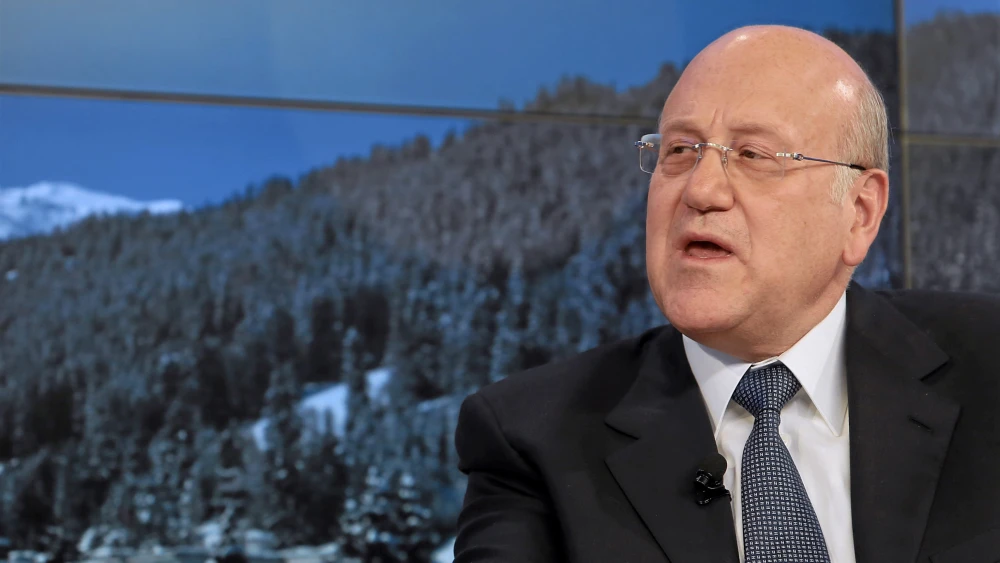
Lebanese Prime Minister Najib Mikati at the World Economic Forum in Davos, Switzerland, Jan. 25, 2013. Photo by Monika Flueckiger/Swiss-Image.ch via Wikimedia Commons.

Hezbollah appointed Lebanese businessman Najib Mikati as prime minister-designate after gaining the approval of parliament on Monday.

“I don’t have a magic wand, and I can’t work miracles,” said Mikati after his nomination, reported Reuters. He said he at least had “the necessary international guarantees” to move forward.

Mikati now must try to form a government amid the country’s rapidly descending economic and political crisis.

The 65-year-old has been prime minister twice: from April 2005 to July 2005, he served in a caretaker government, and he was again prime minister from 2011 to 2014. He is the third person to be nominated since the government resigned following the massive Beirut explosions last August that killed more than 200 people and left the city in ruins.

Prices in the country have been skyrocketing and salaries dropping, forcing more than half the population into poverty. Hezbollah is trying to appear to be solving the crisis even though it is part of the problem.

The Islamic Republic forced Washington to “retreat both on the battlefield and at the negotiating table,” said Mohammad Bagher Ghalibaf.
The Iran-U.S. Memorandum of Understanding underscored Tehran’s ongoing support for the terror group, Abbas Araghchi told Basem Naim.
The launch pads were established under the cover of the ceasefire with Hamas, according to the Israeli military.
An all-women panel at the JNS International Policy Summit highlighted the voices of ordinary Iranians.
Ilana Gritzewsky, a former Hamas captive, told the U.N. Human Rights Council she is “living proof” of sexual violence, challenging rapporteur Reem Alsalem.
“There is an understanding here that Israel has a problem with Hezbollah and that something needs to be done about it,” said the Dutch defense chief.
Benny Gantz, JNS editor-in-chief Jonathan S. Tobin, Gilad Erdan, Mosab Hassan Yousef, Nissim Black and leading voices in security, diplomacy, media, law and Jewish communal affairs headline the summit’s third day in Jerusalem.