
When most people think about a strong Israeli shekel, they think of good news. They think that this means that the Israeli economy is resilient. On some level, they are right. The shekel’s remarkable rise against the dollar tells a story of foreign investment flooding into Israel, of a high-tech sector that keeps delivering even through war and of hope in lasting calm following the recent ceasefire agreements. All of those are genuinely worth celebrating.
But there is another story—one that gets far less attention and is causing serious, quiet damage to some of the most important institutions in Jewish life.
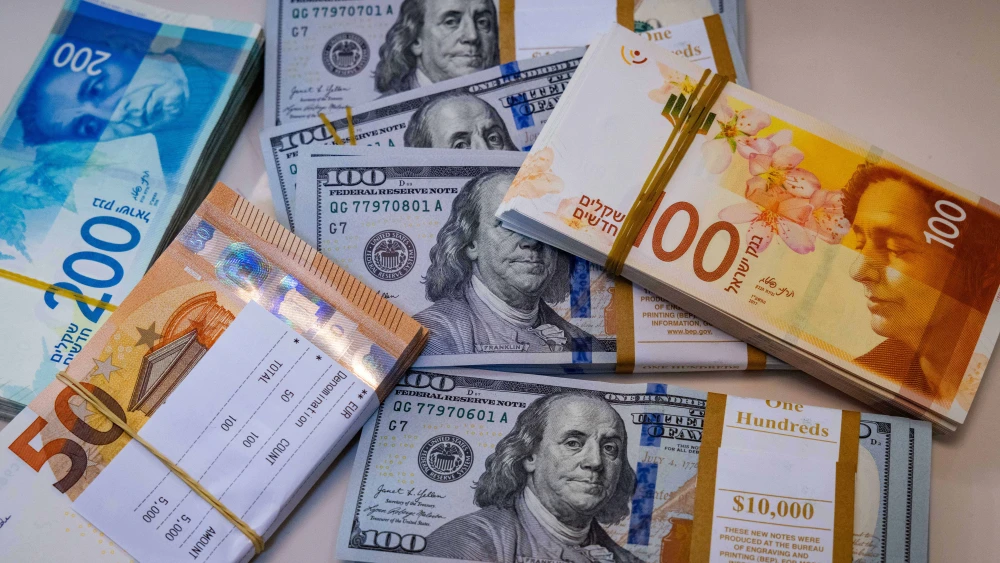
A year ago, the dollar was worth roughly 3.6 shekels. Today, it sits at 2.9. That may sound like a footnote for currency traders, but for the hundreds of Israeli nonprofits that depend on American Jewish donors, it is something closer to a financial emergency. Every dollar raised in the United States, by a federation, a synagogue, a foundation, or an individual family writing a check, now delivers nearly 20% less purchasing power in Israel than it did just 12 months ago.
I’m not an economist; I’m a CEO, and here is what this means in practice. An organization that budgeted for a full year of programming based on last spring’s exchange rate is now, midway through the year, looking at a gap. Staff salaries still get paid in shekels. Rent gets paid in shekels. Social services, food distribution, mental-health support for trauma survivors and displaced families—all of it runs on shekels. While the generosity of donors has not diminished, the dollar has. That is causing a large issue for Israeli-based nonprofit organizations.
David Metzler, director of international relations at the Israel Defense Forces’ Widows and Orphans Organization, put it plainly: As the shekel strengthens, every dollar raised in the United States translates into less impact on the ground in Israel. His organization, which cares for some of the families who have lost the most in this war, now leads fundraising conversations with the actual shekel cost of programs rather than dollar equivalents because the dollar equivalent keeps moving.
This comes just after the Israeli government approved its largest defense budget in history—more than 140 billion shekels, which inevitably means less for social services and the Israeli safety net. The millions of Israelis, as well as Jews around the globe, who receive benefits from Israel’s nonprofit sector are not being served less because people care less. They are being served less because the math no longer works.
Joseph Gitler, founder of Leket Israel, Israel’s national food bank, has said openly that everyone in the sector is feeling the pain, regardless of whether they fundraise in dollars, euros or Canadian dollars. Leket feeds hundreds of thousands of Israelis every year. When currency values shift this sharply, the consequences are not abstract. Fewer meals get distributed. Fewer families get reached.
This issue has affected my own organization, Aish, rather severely. The dramatic strengthening of the shekel against the dollar resulted in a multimillion-dollar gap between the donations we brought in and our operating costs.
Like many others, this resulted in a large part because most of our expenses are shekel-based, and most of our donations are dollar-based. The pressure created by this gap became impossible to absorb without consequence. We had to make the painful decision to let go of several members of our staff, people who are deeply committed to our mission and to the Jewish people. Those are not spreadsheet decisions. They are human ones, and they do not get easier because the cause behind them is a macroeconomic trend.
What makes this trend especially difficult is that most nonprofit leaders are reluctant to say any of this publicly. They worry about appearing ungrateful. They worry donors will hear “the shekel is stronger” and conclude that their money is therefore less needed.
The opposite is true. The need is greater. The funding deficit created by this exchange rate shift has to be filled somehow or the programs disappear. Aish isn’t unique in this. We are unique in that we are open about this, and we are open about the need for responsible management and for working with our partners to bridge the gap. We now need to work harder than ever to do so.
I have spent my career working to strengthen communities in Israel and across the Jewish Diaspora. I have seen how American Jewish philanthropy can be genuinely transformative. It is a true partnership. Jews around the world invest in the future of the Jewish state and the Jewish people.
That partnership is under financial pressure right now, through no fault of anyone’s generosity or commitment. The exchange rate is what it is. But what donors can do is factor this reality into their giving. A gift that matches last year’s dollar amount is, in real terms, a smaller gift than it was last year.
Organizations, for their part, need to take into account the fluctuating exchange rate and build their budgets responsibly, with a margin for this fluctuation. This can be quite a burden for many organizations that are continuing to do extraordinary work, but it is necessary. Otherwise, these same organizations will end up absorbing a loss they didn’t choose and can’t control.