Newsletter
Newsletter Support JNS

IDF ‘deeply values’ its some 7,000 ‘lone soldiers’

About one-third of the “lone soldiers”—service members who do not have immediate family in Israel—are serving in combat units.

IDF in Gaza
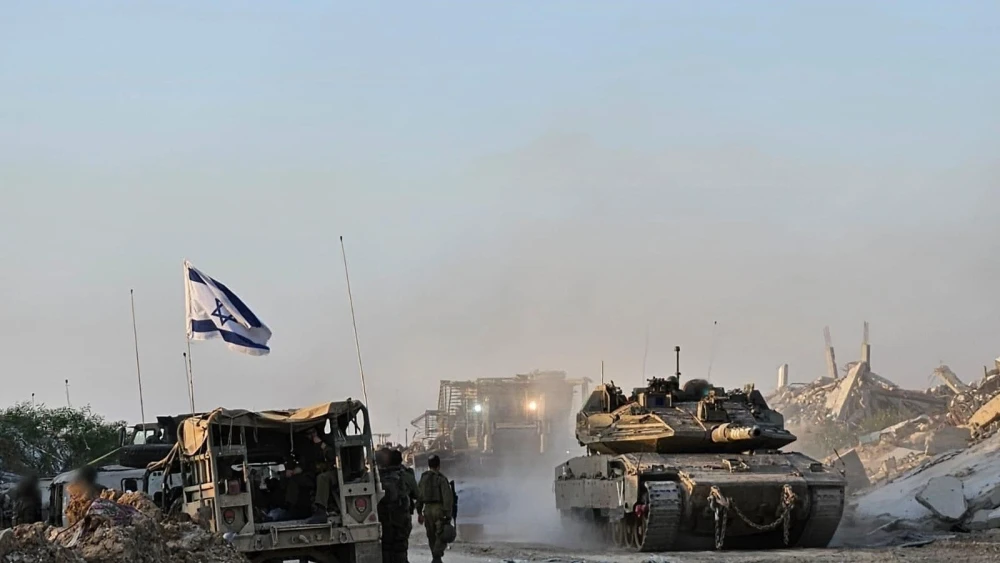
Israeli reserve soldiers from the Carmeli Infantry Brigade operating along the Yellow Line in the northern Gaza Strip during their sixth round of combat service since Oct. 7, 2023, in an undated handout photo released on Dec. 18, 2025. Credit: IDF.

Some 7,000 “lone soldiers” are serving in the Israel Defense Forces, including about half who immigrated to the Jewish state specifically to enlist, according to official figures released on Monday.

About one-third of these soldiers—service members who do not have immediate family in Israel—are serving in combat units, an Israeli military official told JNS.

Last year, 1,050 lone soldiers from Jewish communities in the Diaspora enlisted in the IDF, including 33% from the United States, 14% from France, 13% from Russia, 6% from Ukraine, 3% from Australia, 1.2% from Germany and 0.6% from Spain.

The number of lone soldiers has remained stable over the past several years, with a slight increase during the first year of the war sparked by the Hamas-led Oct. 7, 2023, massacre, the official said.

The length of their service depends on both age and the type of program in which they enlist and can range from shortened service to full military service for both men and women.

“We are committed to ensuring that no lone soldier ever stands alone,” Maj. Lior Peretz Sheleg, head of the IDF’s Lone Soldiers Section, Personnel Directorate, told JNS.

“We deeply value their meaningful contribution to the success of the war, as well as the values they and their families embody, and recognize the very profound challenges faced by parents living continents away from their children.”

IDF
Etgar Lefkovits, an award-winning international journalist, is an Israel correspondent and a feature news writer for JNS. A native of Chicago, he has two decades of experience in journalism, having served as Jerusalem correspondent in one of the world’s most demanding positions. He is currently based in Tel Aviv.
“I have to get even more involved because, apparently, the progressive movement is taking such a deep root in New York City, we have no choice,” Sid Winston, of Brooklyn, told JNS.
Darializa Avila Chevalier’s victory over incumbent Rep. Adriano Espaillat caps off a trio of wins for candidates who made opposition to Israel a focus of their campaigns for New York congressional seats.
AIPAC spokeswoman Deryn Sousa told JNS that Adrian Boafo “has made clear his vision to carry forward the strong pro-Israel legacy of Congressman Steny Hoyer, one of Congress’s most steadfast champions of the U.S.-Israel relationship.”
The Associated Press called the race early for the Jewish Democrat, whom the mayor has backed.
Marc Bloch, who was also a veteran and resistance fighter whom the Nazis tortured and killed in 1944, is now interred alongside Voltaire, Alexandre Dumas, Émile Zola and other national French heroes.
The report is “an embarrassment to the United Nations and a disservice to genuine human rights accountability,” Dina Rovner, of U.N. Watch, told JNS.
Benny Gantz, JNS editor-in-chief Jonathan S. Tobin, Gilad Erdan, Mosab Hassan Yousef, Nissim Black and leading voices in security, diplomacy, media, law and Jewish communal affairs headline the summit’s third day in Jerusalem.