Newsletter
Newsletter Support JNS

Iranian state TV warning: Virus could kill millions

Death toll increased again • Health Ministry spokesman said 135 more people died, raising total to 988.

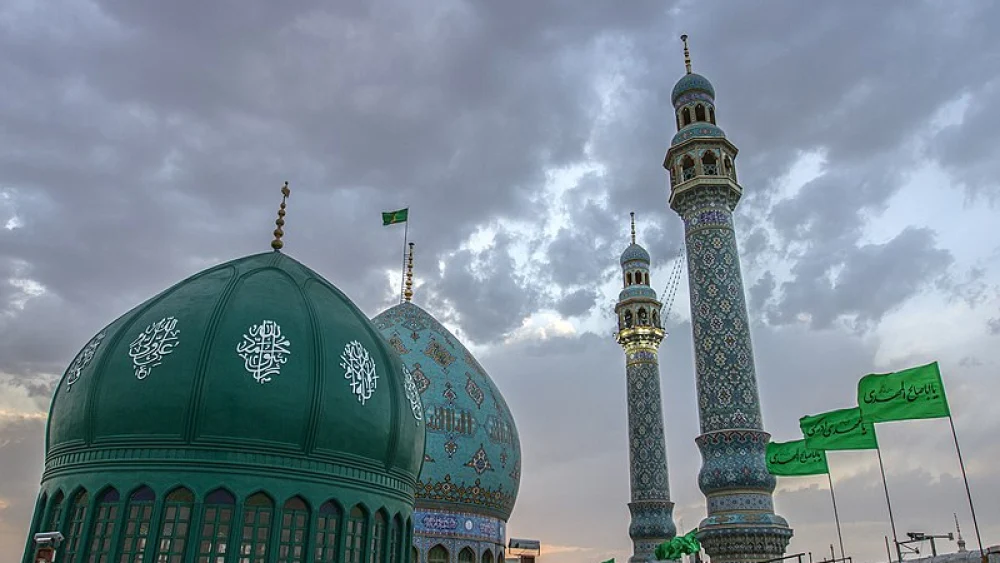
The Jamkaran Mosque in Qom, Iran, on Nov. 10, 2016. Credit: Mostafa Meraji via Wikimedia Commons.

An Iranian state TV journalist who is a medical doctor warned on Tuesday that the coronavirus (COVID-19) could kill “millions” if people did not stop traveling and kept ignoring social-distancing guidelines.

Journalist Dr. Afruz Eslami cited a study by Tehran’s Sharif University of Technology that predicted three possible scenarios with the worst one estimating that 300,000 people would get the virus and 110,000 would die, according to the AP report.

If the “medical facilities are not sufficient, there will be 4 million cases, and 3.5 million people will die,” she said.

Iran’s Supreme Leader Ayatollah Ali Khamenei issued a religious ruling prohibiting “unnecessary” travel.

The death toll increased again on Tuesday, with the Health Ministry spokesman announcing that 135 more people died, raising the total to 988, according to the report.

Separately, Jordan announced a state of emergency and banned gatherings of more than 10 people, and soldiers stopped travel between major cities. Newspapers were ordered closed and private-sector work was halted. In Syria, places for mass gatherings were closed, as well as restaurants and shops.

Oman announced that anyone arriving from abroad would be quarantined, the report added.

It’s “absurd and tragic that there are U.N. experts who are supposed to care about the rights of women, especially to combat sexual violence, and she’s one of the world’s major deniers of sexual violence against Israeli women,” Hillel Neuer told JNS.
“We’re going to keep pushing, and we’ll get there,” Rabbi Josh Joseph told JNS. “We’ll get to the $1 billion that we need.”
“We don’t need it. We need to teach real, honest history,” Sonja Shaw, school board president of Chino Valley Unified School District, told JNS.
The Israeli ambassador accused Vanessa Frazier, the U.N. special representative for children and armed conflict, of amplifying antisemitic content and unverified claims about Israel, and called for a review of her continued suitability for office.
A federal judge found that efforts to remove Hassan Suleiman Khalaf to Gaza or an Arab village in Judea and Samaria via Israel remain viable.
Speaking to local authority leaders, the Israeli premier said bold military decisions changed the regional balance of power and averted existential threats.
Benny Gantz, JNS editor-in-chief Jonathan S. Tobin, Gilad Erdan, Mosab Hassan Yousef, Nissim Black and leading voices in security, diplomacy, media, law and Jewish communal affairs headline the summit’s third day in Jerusalem.